
TL;DR:
- Composite bonding is a minimally invasive, single-appointment cosmetic dental procedure that preserves natural tooth enamel. It provides aesthetic improvements for minor chips, gaps, and discoloration but lasts between 4 to 10 years and can stain over time. The treatment is reversible and ideal for patients seeking conservative, cost-effective smile enhancements with future options like veneers.
Composite bonding is defined as a cosmetic dental procedure in which a tooth-coloured resin material is applied directly to the surface of a tooth to repair, reshape, or improve its appearance. The technique is minimally invasive, preserves natural tooth enamel, and is typically completed in a single appointment. If you have a minor chip, a small gap, mild discolouration, or an uneven edge, composite bonding is often the most conservative way to address it. Unlike porcelain veneers or crowns, the procedure requires little to no removal of healthy tooth structure, which makes it a genuinely reversible option for patients who want cosmetic improvement without permanent commitment.
What is composite bonding and how does the procedure work?
A composite bonding appointment follows a clear, predictable sequence. Understanding each step helps you know exactly what to expect when you sit in the chair.
- Shade selection. Your dentist selects a composite resin shade that matches your surrounding teeth. This is done in natural light where possible, as artificial lighting can distort colour perception.
- Surface preparation. The tooth surface is lightly etched with a mild conditioning gel. This creates a slightly rough texture that helps the bonding agent grip the enamel securely.
- Bonding agent application. A liquid bonding agent is painted onto the prepared surface and left to penetrate the enamel before curing begins.
- Resin layering and sculpting. The composite resin is applied in small increments and shaped by hand. Skilled clinicians layer in 2mm increments to build depth and translucency that mimics natural enamel. Moisture control at this stage is critical to the final result.
- LED curing. Each layer is hardened using a blue LED curing light. This takes only a few seconds per layer but must not be rushed.
- Finishing and polishing. Once the full shape is built, the dentist refines the contours and polishes the surface to a natural sheen.
The entire appointment typically takes 30–90 minutes per tooth. That means a single-visit treatment can address one or several teeth in the same session, which is one of the procedure’s most practical advantages.
Pro Tip: Ask your dentist to show you the shade guide before treatment begins. Seeing the options in person helps you make a confident choice and reduces the chance of surprises after polishing.

What are the benefits and limitations of composite bonding?
Composite bonding offers a genuinely strong set of advantages, but it also has real limitations that every patient should understand before committing.
Benefits
- Preserves natural tooth structure. The procedure requires minimal enamel removal, which means your natural teeth remain largely intact. This matters because enamel does not regenerate once removed.
- Reversible. Because so little tooth structure is altered, the treatment can be removed or modified in the future. This keeps your options open for more extensive treatments later if your needs change.
- Completed in one visit. There are no laboratory stages, no temporary restorations, and no waiting weeks for a result.
- Cost-effective. Composite bonding is consistently the least expensive cosmetic option compared to porcelain veneers or crowns, making it accessible to a wider range of patients.
- Customisable. Shade, shape, and surface texture are all adjusted chairside, allowing your dentist to match the result precisely to your natural teeth.
- Repairable. If a small chip or crack develops, the repair is straightforward and does not require replacing the entire restoration.
Limitations
- Lifespan of 4–10 years. Composite bonding lasts between 4 and 10 years on average before repairs or replacement become necessary. Porcelain restorations typically last longer.
- Staining over time. Composite resin is more porous than porcelain and will pick up colour from coffee, tea, red wine, and tobacco. The surface can be polished professionally, but it will not return to its original shade indefinitely.
- Chipping risk. Resin is durable but not indestructible. Biting nails, chewing ice, or using teeth as tools will shorten its lifespan considerably.
- Not suitable for major structural issues. Composite bonding addresses cosmetic concerns. Significant bite problems, heavily broken-down teeth, or teeth requiring root canal treatment need different solutions.
Pro Tip: Have your teeth professionally whitened before composite bonding is placed. Composite resin does not respond to whitening agents after it has been applied, so whitening first ensures the bonding shade is matched to your brightest natural tooth colour.
How does composite bonding compare to veneers and crowns?
Choosing between cosmetic options is easier when you understand what each one actually involves. The table below compares composite bonding, porcelain veneers, and crowns across the factors that matter most to patients.
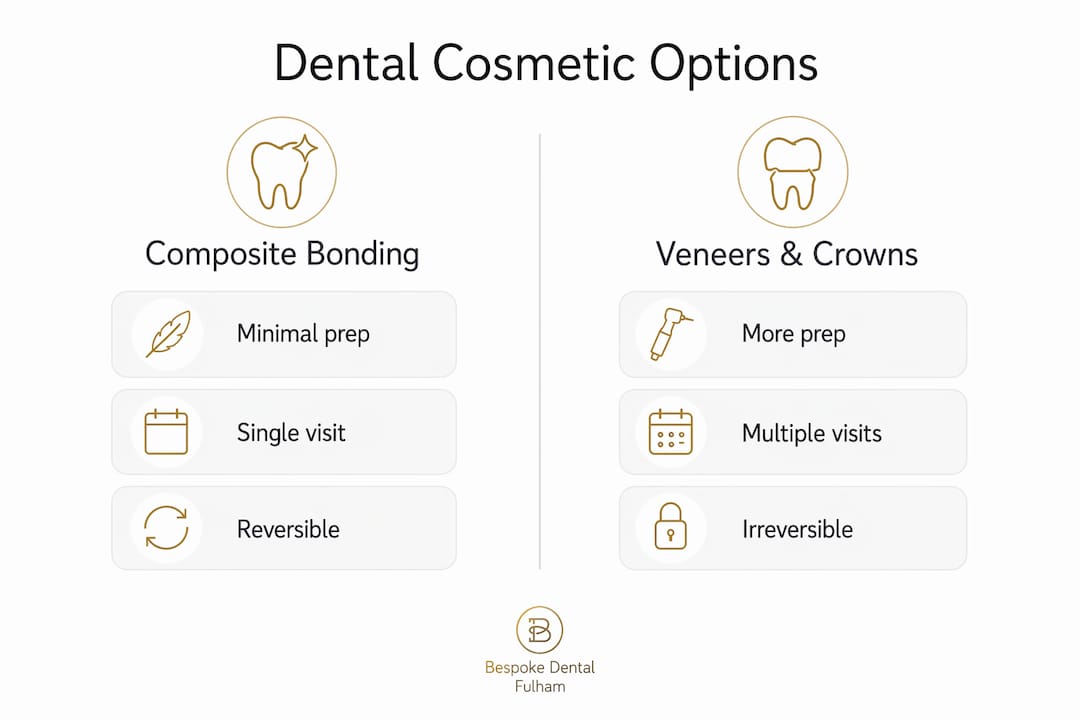
| Factor | Composite bonding | Porcelain veneers | Crowns |
|---|---|---|---|
| Tooth preparation | Minimal to none | Permanent enamel removal | Significant tooth reduction |
| Reversibility | Yes | No | No |
| Number of visits | One | Two or more | Two or more |
| Lifespan | 4–10 years | 10–20 years | 15–25 years |
| Cost | Lowest | Higher | Highest |
| Repairability | Easy chairside repair | Replacement required | Replacement required |
| Best suited for | Minor chips, gaps, discolouration | Larger cosmetic changes | Structural damage, heavy wear |
The most important distinction is irreversibility. Veneers permanently remove enamel, committing that tooth to further restorative treatment for life. Composite bonding does not. This is why many experienced clinicians recommend bonding as a first step, particularly for younger patients whose aesthetic goals may evolve over time.
Composite bonding is also the most under-recommended option in many practices, despite being the most conservative. Patients who are unsure whether they want a permanent change benefit enormously from trying bonding first. If the result is not quite right, it can be adjusted or removed. That flexibility simply does not exist with veneers or crowns.
For patients in Fulham and London considering their options, the porcelain veneers page at Bespokedentalfulham provides a detailed breakdown of when veneers become the more appropriate choice.
How to care for composite bonding and make it last
Good aftercare extends the life of your bonding significantly. The steps are straightforward, but consistency matters.
- Brush twice daily with a non-abrasive fluoride toothpaste. Abrasive whitening pastes scratch the resin surface and accelerate staining.
- Floss daily. Composite bonding does not protect the gum line or the spaces between teeth. Gum health directly affects how long any cosmetic treatment lasts.
- Avoid staining substances. Coffee, tea, red wine, and tobacco all discolour composite resin over time. Rinsing with water after consuming these helps, but it does not eliminate the effect.
- Do not bite hard objects. Ice, pens, fingernails, and bottle caps are the most common causes of chipping. These habits apply pressure at angles the resin is not designed to withstand.
- Attend regular check-ups. Your dentist can spot early signs of wear, staining, or edge lifting before they become larger problems. Professional polishing at a hygiene appointment restores surface lustre that brushing alone cannot achieve.
- Report chips promptly. Small chips are easy to repair chairside. Left untreated, they can grow or allow moisture to penetrate the bond, shortening the overall lifespan.
Understanding how long composite bonding lasts in practice, and what affects its durability, helps you set realistic expectations from the start.
Key takeaways
Composite bonding is the most conservative cosmetic dental option available, preserving natural tooth structure while delivering meaningful aesthetic results in a single appointment.
| Point | Details |
|---|---|
| Minimally invasive procedure | Requires little to no enamel removal, keeping the treatment fully reversible. |
| Single-visit treatment | Most appointments take 30–90 minutes per tooth with no laboratory wait. |
| Lifespan of 4–10 years | Routine maintenance and careful habits are the biggest factors in longevity. |
| Whitening before bonding | Composite resin cannot be whitened after placement, so whiten teeth first. |
| Conservative first step | Bonding preserves future options like veneers, which permanently remove enamel. |
Composite bonding in Fulham: what I have seen in practice
Composite bonding is genuinely one of the most misunderstood treatments in cosmetic dentistry. Patients often arrive expecting a permanent fix, and that expectation gap is where most dissatisfaction originates. The GDC has noted that complaints about bonding frequently stem from failed expectation management rather than any fault in the material itself. That tells you something important: the conversation before treatment matters as much as the technique during it.
What I find most valuable about composite bonding is precisely its conservatism. Patients who are nervous about committing to veneers, or who are not yet sure what result they want, can try bonding first without closing any doors. I have seen patients in Fulham who had bonding placed in their twenties and then transitioned to veneers a decade later, having had years to decide what they actually wanted from their smile. That flexibility is rare in cosmetic dentistry.
The skill of the clinician is not a minor variable. Layering technique, moisture control, and shade selection all determine whether the result looks natural or artificial. A well-placed bond is invisible. A poorly placed one is immediately obvious. If you are considering this treatment, ask to see before-and-after photographs from the specific dentist who will be treating you, not just generic practice images.
My honest recommendation: if you are weighing up composite bonding against veneers and your teeth are structurally sound, start with bonding. You can always move to a more permanent option later. You cannot undo enamel removal.
— Amit
Composite bonding at Bespokedentalfulham
Bespokedentalfulham is a private cosmetic dental practice in Fulham, London, offering composite bonding alongside a full range of aesthetic and restorative treatments. The practice applies Harley Street standard techniques in a calm, discreet clinic environment designed for patients who value quality and personal attention.
If you are considering composite bonding and want to understand whether it suits your teeth and goals, a consultation with Bespokedentalfulham gives you a clear, honest assessment. The team works with patients across Fulham, Parsons Green, Hammersmith, Putney, and Chelsea. Read more about the benefits of cosmetic dentistry or explore the full composite bonding treatment page to see what the procedure involves and what results are achievable.
FAQ
What is composite bonding used for?
Composite bonding is used to repair minor chips, close small gaps, correct mild discolouration, and reshape uneven or worn teeth. It is a cosmetic procedure suited to patients with structurally sound teeth who want aesthetic improvements without invasive treatment.
Is composite bonding safe for natural teeth?
Composite bonding is safe and requires minimal enamel removal, making it one of the least invasive cosmetic options available. Natural tooth structure is largely preserved throughout the procedure.
How long does composite bonding last?
Composite bonding lasts between 4 and 10 years on average, depending on oral hygiene habits, diet, and whether the patient avoids biting hard objects. Regular professional polishing helps maintain the appearance throughout its lifespan.
Can composite bonding stain?
Yes. Composite resin is more porous than porcelain and will absorb colour from coffee, tea, red wine, and tobacco over time. Professional polishing at hygiene appointments reduces surface staining, but patients with high consumption of staining substances should factor this into their decision.
Is composite bonding reversible?
Composite bonding is reversible because it requires little to no permanent alteration of the underlying tooth. This distinguishes it clearly from porcelain veneers, which involve irreversible enamel removal and commit the tooth to ongoing restorative care.