TL;DR:
- A dental emergency requires immediate professional care to save teeth, control bleeding, or reduce pain.
- Knowing proper first aid steps and when to seek a dentist or hospital improves outcomes significantly.
A dental emergency is defined as any condition requiring same-day professional intervention to save a tooth, stop uncontrolled bleeding, or relieve severe pain. Knocked-out teeth, dental abscesses, facial swelling, and exposed nerve trauma all qualify. Knowing how to handle dental emergencies correctly in the first hour can mean the difference between saving and losing a permanent tooth. This guide gives you clear, practical steps for the most common urgent situations, tells you when to call a dentist versus go to hospital, and helps you prepare before anything goes wrong.
What should you have in a dental emergency kit?
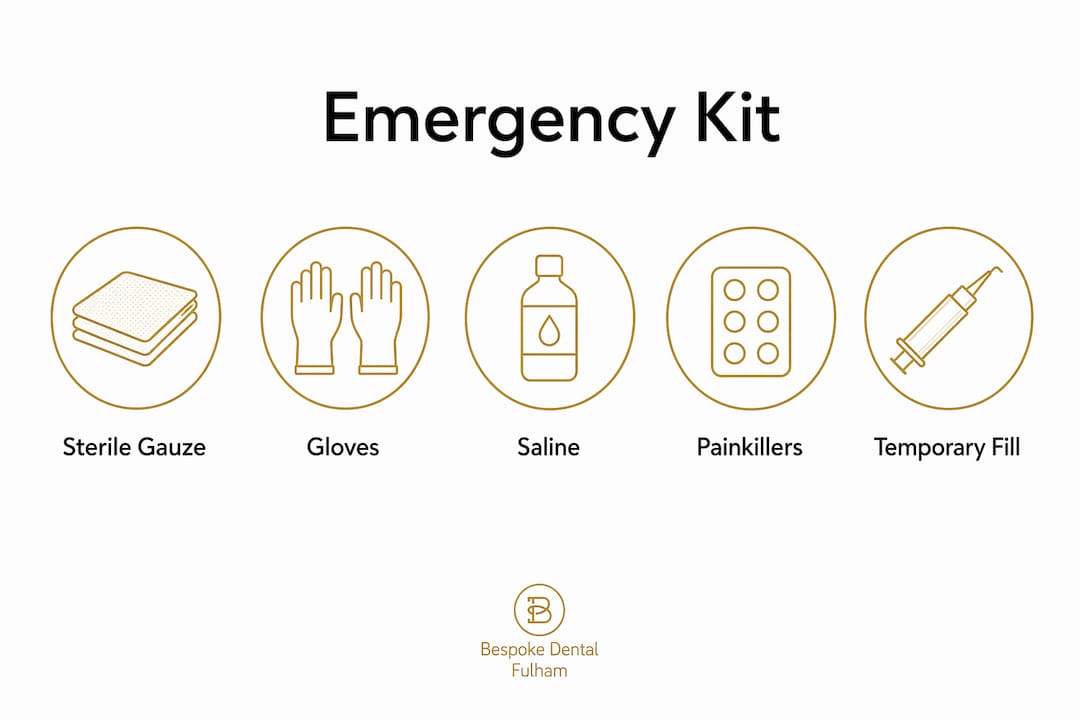
Preparation is the single most underrated part of emergency dental care. Most people reach for whatever is nearby when pain strikes, which often makes things worse. A small, dedicated kit stored in an accessible place removes that guesswork entirely.
Essential items to keep ready:
- Sterile gauze pads — apply pressure to bleeding sites and protect exposed tissue
- Cold compress or ice pack — reduce swelling and numb pain on the outside of the face
- Saline solution or clean milk — store a knocked-out tooth to preserve ligament cells
- Dental mirror — examine the mouth without straining or using a phone torch awkwardly
- Disposable gloves — protect both you and the patient from cross-contamination
- Over-the-counter pain relief — ibuprofen or paracetamol for oral use only (never place tablets directly on gum tissue)
- Temporary dental cement — available from most pharmacies; covers a broken tooth or lost filling temporarily
| Item | Purpose | Usage note |
|---|---|---|
| Sterile gauze | Control bleeding | Apply steady pressure for 10–15 minutes without lifting |
| Cold compress | Reduce swelling | Use in 10-minute on/off intervals on the cheek |
| Milk or saline | Store knocked-out tooth | Submerge tooth fully; do not scrub or dry it |
| Temporary dental cement | Protect broken tooth | Apply over exposed area; seek dental care the same day |
| Ibuprofen or paracetamol | Manage pain | Take orally as directed; never place on gum tissue |
Pro Tip: Store your emergency kit in a small labelled pouch in your bathroom cabinet. Tell every adult in your household where it is. Speed matters more than improvisation when a tooth is knocked out.
Wearing a custom night guard during sleep also reduces the risk of cracked teeth from bruxism, which is one of the more common causes of after-hours dental pain.
How to handle dental emergencies: step-by-step care
Knocked-out permanent tooth
A knocked-out tooth must be handled by the crown only. Never touch the root. The ligament cells attached to the root are what allow the tooth to reattach, and they die quickly if damaged or dried out.
- Pick up the tooth by the white crown portion only.
- If the tooth is dirty, rinse it gently under cold water for no more than ten seconds. Do not scrub it.
- If possible, place the tooth back into its socket immediately and bite down gently on gauze to hold it.
- If reimplantation is not possible, submerge the tooth in cold milk or hold it between your cheek and gum to keep it moist.
- Call your dentist immediately and travel to the practice without delay.
“Reimplantation success decreases sharply after 60 minutes. The single most important thing you can do for a knocked-out permanent tooth is get to a dentist within that window, with the tooth kept moist the entire time.”
Pro Tip: Milk is the best storage medium because its pH and protein content preserve the tooth’s ligament cells far better than water. Tap water is a last resort only.
Broken or cracked tooth

Save any fragments you can find. Rinse your mouth with warm water to clean the area. Avoid chewing on the affected side entirely. Apply temporary dental cement from a pharmacy kit to cover any sharp edges or exposed dentine. Call your dentist the same day, as early dental evaluation prevents the crack from deepening and reduces infection risk.
Severe toothache and swelling
Rinse your mouth thoroughly with warm salt water. Apply a cold compress to the outside of your cheek in 10-minute on/off intervals to reduce swelling. Take ibuprofen or paracetamol orally at the recommended dose. Do not place any tablet or gel directly onto the gum or tooth, as this causes chemical burns to soft tissue. Contact your dentist as soon as possible, as swelling around a tooth often signals an abscess that will worsen without treatment.
Mouth bleeding
Apply firm, steady pressure to the bleeding site using a folded gauze pad. Uninterrupted pressure for at least 10–15 minutes is required for a blood clot to form. Do not lift the gauze to check progress during this time. Lifting the pad too early disrupts the clot and restarts the bleeding cycle. If bleeding continues beyond 30 minutes, seek urgent care immediately.
When should you go to hospital versus an emergency dentist?
The distinction between these two routes matters. Hospital emergency rooms are not equipped to perform dental procedures. They can provide pain relief and antibiotics, but they cannot reimplant a tooth, drain an abscess surgically, or repair a fracture. That means a hospital visit for a dental problem often results in a follow-up dental appointment anyway, with the tooth in a worse condition.
Go directly to hospital if you experience:
- Difficulty breathing or swallowing
- Facial swelling spreading rapidly towards your neck or eye
- Fever above 38.3°C (101°F)
- Uncontrolled bleeding that has not responded to 30 minutes of firm pressure
These symptoms suggest a spreading infection or systemic involvement that requires medical, not dental, management.
Contact an emergency dentist for:
- A knocked-out or broken tooth
- A dental abscess with localised swelling
- Severe toothache with no systemic symptoms
- A lost crown or filling causing sharp pain
| Situation | Best route | Reason |
|---|---|---|
| Difficulty breathing or swallowing | Hospital A&E | Possible airway compromise |
| Spreading facial or neck swelling | Hospital A&E | Risk of systemic infection |
| Fever above 38.3°C | Hospital A&E | Systemic involvement likely |
| Knocked-out tooth | Emergency dentist | Reimplantation requires dental skill |
| Severe localised toothache | Emergency dentist | Dentist can treat the source directly |
| Broken tooth or lost filling | Emergency dentist | Requires dental repair, not medical care |
Calling your dental provider first is the right move in most situations. Many practices have emergency protocols and can advise you on the correct route before you travel anywhere.
Common mistakes that make dental emergencies worse
Panic leads to poor decisions. These are the mistakes that most commonly worsen outcomes, and they are all avoidable.
- Placing aspirin or painkillers directly on the gum. Direct contact with gum tissue causes chemical burns. Always take pain relief orally.
- Lifting the gauze too soon. Checking the bleeding site before 10–15 minutes have passed disrupts clot formation and prolongs bleeding.
- Handling a knocked-out tooth by the root. This destroys the ligament cells needed for reimplantation. Hold the tooth by the crown only.
- Scrubbing a knocked-out tooth. Aggressive cleaning removes the cells that make reattachment possible. A gentle rinse is all that is needed.
- Waiting to see if symptoms improve. Delays in treatment allow infections to spread and mechanical injuries to worsen. There is no safe window for a “wait and see” approach with a dental abscess or knocked-out tooth.
- Going straight to A&E for a toothache. This wastes critical time. An emergency dentist treats the cause; a hospital only manages the symptoms.
Pro Tip: When you call an emergency dentist, describe your symptoms clearly: location of pain, whether there is swelling, any fever, and how the injury happened. This helps the practice prepare the right treatment before you arrive.
Good dental maintenance reduces the likelihood of emergencies significantly. Regular check-ups catch cracks, decay, and gum disease before they become urgent problems.
Key takeaways
Handling a dental emergency correctly in the first 60 minutes is the single most important factor in saving a knocked-out permanent tooth and preventing complications.
| Point | Details |
|---|---|
| Act within 60 minutes | Reimplantation success for a knocked-out tooth drops sharply after one hour. |
| Handle teeth by the crown | Never touch the root; store the tooth in milk or saliva to preserve ligament cells. |
| Apply pressure without interruption | Hold gauze on a bleeding site for 10–15 minutes without lifting to allow clot formation. |
| Know when to go to hospital | Breathing difficulty, spreading swelling, or fever above 38.3°C requires A&E, not a dentist. |
| Avoid direct painkiller contact | Never place aspirin or gel directly on gum tissue; take pain relief orally only. |
What I have learned from dental emergencies in Fulham
Patients who do well in dental emergencies share one trait: they act quickly and call ahead. The ones who struggle are almost always the ones who waited overnight hoping the pain would settle, or who went to A&E for a toothache and lost two hours they could not afford.
Regular check-ups and custom mouthguards prevent a significant proportion of the emergencies I see. Sports injuries, cracked teeth from grinding, and abscesses that could have been caught at a routine appointment account for the majority of urgent calls. Prevention is not glamorous advice, but it is the most effective one.
The other thing I would stress is this: do not underestimate a dental abscess. Patients in Fulham and across London sometimes treat a swollen jaw as a nuisance rather than an urgent problem. An untreated abscess can spread to the neck and airway. That is a medical emergency, not a dental inconvenience. If you have facial swelling alongside a fever, go to hospital. If you have localised swelling with no fever, call your dentist that day without delay.
Prepare your emergency kit now, save your dentist’s number in your phone, and know the two-route rule: dentist for dental problems, hospital for systemic ones. That knowledge alone puts you ahead of most people.
— Amit
Emergency dental care at Bespokedentalfulham in Fulham
Bespokedentalfulham provides private emergency dental care for patients across Fulham, Parsons Green, Hammersmith, Putney, and Chelsea. The practice operates at Harley Street standards and sees urgent cases including knocked-out teeth, dental abscesses, broken teeth, and severe pain.
When you call during an emergency, the team will guide you through immediate first aid steps while preparing for your arrival. Treatments available include tooth reimplantation, abscess drainage, pain management, and temporary and permanent restorations. If you are looking for a trusted practice that handles both urgent care and longer-term smile restoration after an injury, Bespokedentalfulham is ready to help. Contact the clinic directly to speak with the team.
FAQ
What counts as a true dental emergency?
A true dental emergency requires same-day care to save a tooth, stop uncontrolled bleeding, or relieve severe pain. Knocked-out teeth, dental abscesses, facial swelling, and exposed nerve trauma all qualify.
How long do I have to save a knocked-out tooth?
Reimplantation success decreases sharply after 60 minutes. Keep the tooth moist in milk or saliva and get to an emergency dentist as quickly as possible.
Can I take painkillers for a dental emergency?
Yes, but take ibuprofen or paracetamol orally only. Placing any painkiller directly onto gum tissue causes chemical burns and does not relieve pain effectively.
When should I go to A&E instead of a dentist?
Go to A&E if you have difficulty breathing or swallowing, rapidly spreading facial swelling, a fever above 38.3°C, or bleeding that has not stopped after 30 minutes of firm pressure.
Does Bespokedentalfulham offer same-day emergency appointments?
Bespokedentalfulham offers private emergency dental care in Fulham and surrounding SW6 areas. Contact the practice directly for same-day availability and guidance on your specific situation.