TL;DR:
- Dental aesthetics influence professional perception, confidence, and career advancement.
- Advanced digital tools ensure personalized, natural, and predictable smile improvements.
- Complex cases like gummy smiles require interdisciplinary, patient-specific treatments for optimal results.
Your smile is often the first thing people notice, and for professionals in Fulham, that first impression carries real weight. Whether you are presenting to a boardroom, meeting a new client, or simply networking at a Fulham event, your teeth quietly communicate confidence, care, and credibility. Cosmetic dentistry is far from trivial. It addresses genuine psychosocial needs, and the results can be profoundly transformative. In this article, we explore why dental aesthetics matter professionally, what principles create a truly harmonious smile, which innovative techniques deliver the most discreet and predictable results, and how even complex cases can be resolved with a bespoke approach.
Table of Contents
- Why dental aesthetics matter for professionals
- Core principles of dental aesthetics: balance, symmetry, and proportion
- Innovative techniques for outstanding, discreet results
- Handling challenging cases: ‘gummy smiles’, deviations and custom solutions
- Trends and controversies in dental aesthetics
- Why bespoke, discreet dental aesthetics benefit Fulham professionals most
- Take the next step toward your bespoke smile
- Frequently asked questions
Key Takeaways
| Point | Details |
|---|---|
| Aesthetics impact confidence | Dental aesthetics strongly affect how professionals feel and are perceived in social and work settings. |
| Digital planning is key | Using tools like Digital Smile Design allows you to preview and approve changes for truly bespoke results. |
| Tailored solutions for edge cases | Advanced treatments manage even complex issues such as gummy smiles or midline deviations with high success. |
| Professional involvement matters | Active participation and a multidisciplinary approach ensure results blend seamlessly with your image and lifestyle. |
| Trends demand expertise | Choosing providers experienced in the latest techniques ensures discreet, long-lasting, and natural-looking enhancements. |
Why dental aesthetics matter for professionals
For many people, dental aesthetics feel like a personal indulgence. In reality, they carry measurable professional and social consequences. Research consistently shows that the appearance of your teeth affects how others perceive your competence, warmth, and trustworthiness, often before you have spoken a word.
In London’s competitive professional environment, image matters. Whether you work in finance, law, media, or consultancy, your appearance is part of your professional brand. A smile that looks healthy and well-maintained signals that you take care of yourself, and by extension, that you take care of your work.
The psychological dimension is equally significant. Dental aesthetics and self-esteem are closely linked, with research showing that people who are unhappy with their teeth tend to smile less, speak with reduced confidence, and avoid social situations where their teeth might be visible. Over time, this affects career progression in ways that are subtle but real.
“Dental aesthetics plays a crucial role in enhancing facial harmony, psychosocial well-being, self-esteem, and social perceptions for professionals seeking cosmetic enhancements.”
Understanding these impacts helps clarify why aesthetic dental treatment benefits go well beyond vanity. For professionals, the returns on a well-planned smile enhancement are tangible.
Here are the key professional benefits of high-quality dental aesthetics:
- Greater confidence in presentations and meetings, particularly when speaking in front of groups
- Stronger first impressions and trust-building with clients, colleagues, and senior stakeholders
- Discreet enhancements that look entirely natural, avoiding the over-treated appearance that can undermine credibility
- Improved psychosocial wellbeing, leading to better focus, reduced social anxiety, and increased overall satisfaction
These outcomes are not incidental. They are the direct result of cosmetic dentistry confidence that comes from knowing your smile is working for you, not against you. Having established the importance of dental aesthetics for your professional and social life, let us look at the specific features that contribute to an attractive, harmonious smile.
Core principles of dental aesthetics: balance, symmetry, and proportion
A truly beautiful smile is not simply about white teeth. It is about how all the elements work together in harmony. Dental professionals use a set of well-established principles to evaluate and design smiles that look natural and proportionate.
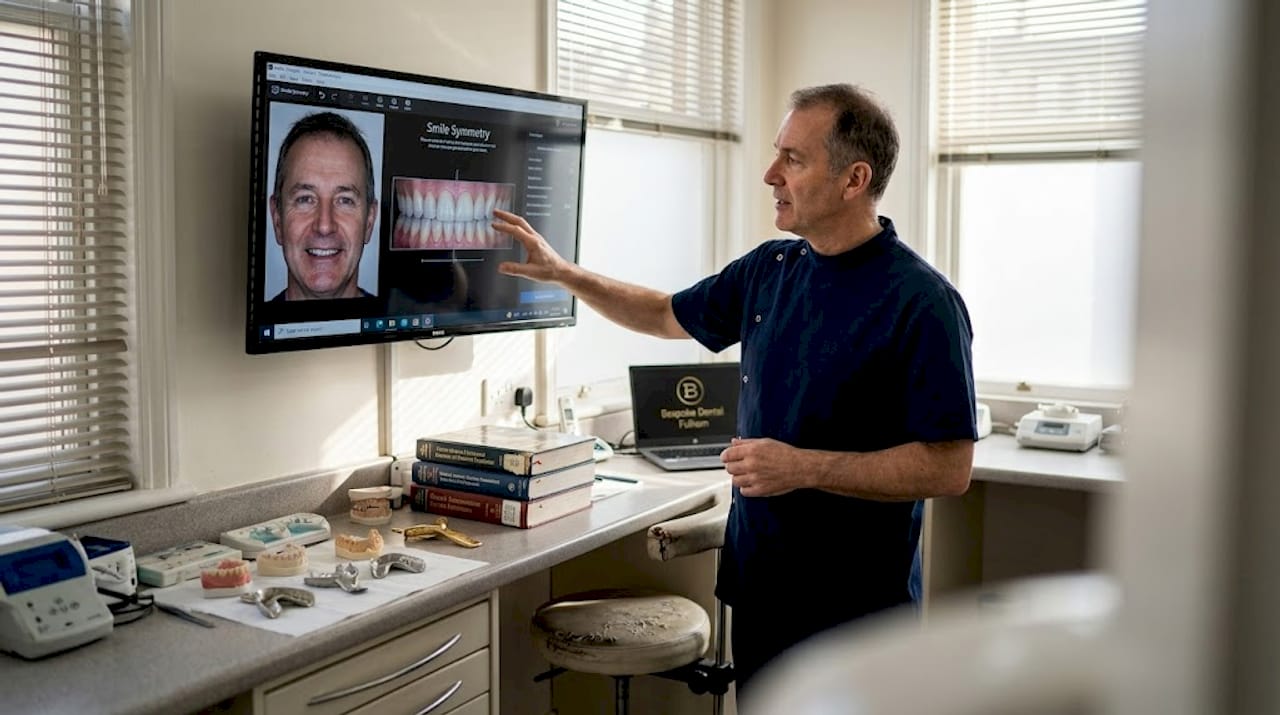
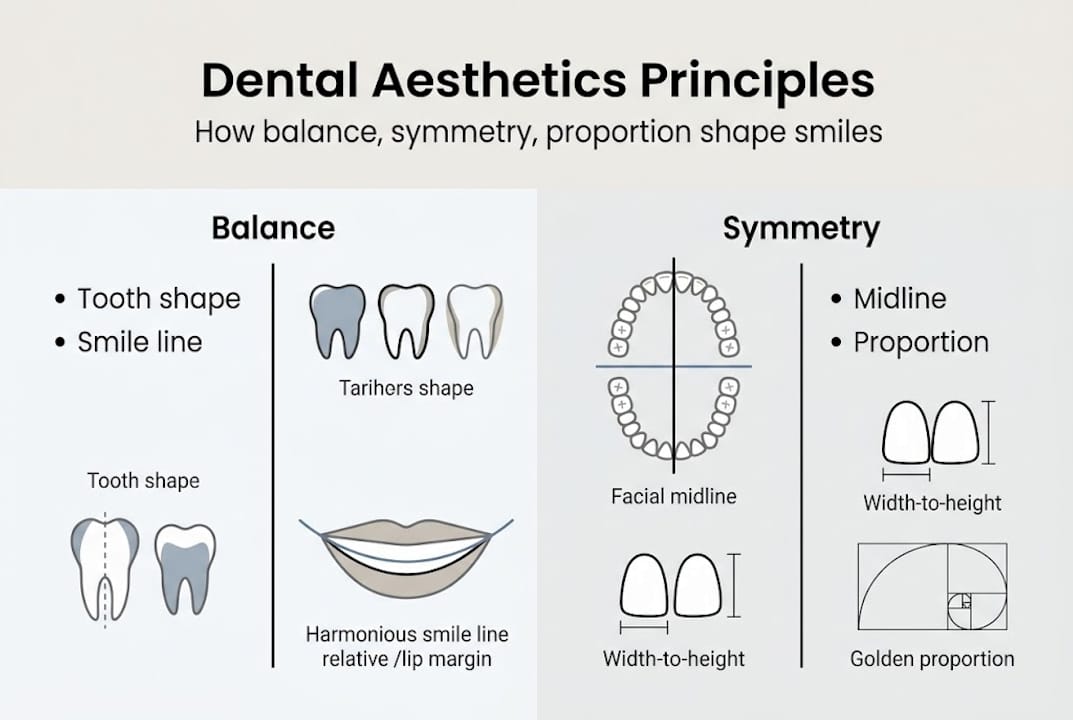
Midline alignment refers to the vertical line that divides your upper front teeth, which should ideally align with the centre of your face. Even a slight deviation can draw attention and create a sense that something is subtly off, even if the viewer cannot identify exactly why.
Tooth proportions are equally critical. Research on Digital Smile Design (DSD) confirms that the ideal width-to-height ratio for central incisors sits between 75 and 80 percent, giving teeth a natural, full appearance without looking blocky or narrow.
The incisal curve, which is the arc formed by your upper front teeth, should follow the contour of your lower lip when you smile. When this relationship is lost through wear or misalignment, smiles can appear aged or flat.
Key elements of dental harmony include:
- Dental midline position and facial symmetry
- Correct width-to-height ratio of central and lateral incisors
- Gingival (gum) levels that frame teeth evenly
- A natural incisal curve that complements the lips
- Consistent tooth colour and translucency
Modern technology has made it far more achievable to meet these standards predictably. Digital Smile Design and CAD/CAM tools allow clinicians to map facial proportions digitally, simulate outcomes, and fabricate restorations with extraordinary precision.
| Feature | Conventional approach | DSD-driven approach |
|---|---|---|
| Smile preview | None before treatment | Digital mock-up shown before any work |
| Tooth proportions | Estimated visually | Calculated using facial analysis software |
| Symmetry | Assessed by eye | Measured against facial landmarks |
| Patient involvement | Minimal | Full preview and approval |
| Predictability | Variable | Highly consistent |
The private dental care results achievable with DSD are demonstrably superior to traditional approaches, particularly for patients who value accuracy and want to see what they are agreeing to before treatment begins.
Pro Tip: Always request a digital mock-up or wax model preview before committing to any aesthetic treatment. This single step dramatically reduces the chance of dissatisfaction and gives you genuine input into the final design.
By understanding these aesthetic principles, you can see how advanced methods create smiles tailored to your individuality.
Innovative techniques for outstanding, discreet results
Knowing the principles is one thing. Knowing how those principles are applied in practice is what separates a good cosmetic result from an exceptional one. Modern aesthetic dentistry follows a structured, stepwise process:
- Digital facial and smile analysis using DSD software to map proportions and identify goals
- Mock-up creation, either digitally or using composite material placed directly on teeth, so you can preview changes
- Interdisciplinary planning, involving orthodontic, periodontal, and prosthodontic considerations where necessary
- Tooth preparation, kept as minimal as possible to preserve natural tooth structure
- Ceramic or composite restoration fabricated using CAD/CAM for precision fit and natural appearance
- Final fitting and adjustment, with fine-tuning to ensure comfort, bite, and aesthetics are perfect
The data supporting these approaches is compelling. Patient-reported outcomes show DSD yields 92% excellent results compared to 78% with conventional techniques, with ceramic restorations achieving a visual analogue scale aesthetic score of 9.1 out of 10 and only a 5% issue rate over time.
Ceramics and composite materials each have a role. Porcelain offers exceptional translucency and durability, closely mimicking natural enamel. Composite bonding is faster and reversible, making it ideal for initial improvements or patients who want to assess a change before committing to a permanent solution.
| Technique | Aesthetic score | Durability | Downtime | Best suited for |
|---|---|---|---|---|
| DSD with ceramics | 9.1/10 | Excellent (95%+) | Minimal | Complex or full-arch changes |
| Composite bonding | 8.2/10 | Good (80% at 5 yrs) | None | Minor corrections, colour |
| Conventional veneers | 7.8/10 | Good | Low | Single arch improvements |
Interdisciplinary planning matters enormously for complex cases. A cosmetic smile design process that integrates orthodontics for alignment, periodontal care for gum health, and prosthodontics for restorations produces outcomes that are both more stable and more aesthetically refined than single-discipline approaches.
For professionals considering a smile makeover, patient involvement in the design stage is not optional. It is what separates a result you love from one you merely tolerate. Porcelain dental veneers in particular benefit enormously from this co-design approach, ensuring the final shade, shape, and size reflect your preferences. With innovative methods available, it is also important to know how edge cases and special considerations are addressed for truly bespoke results.
Handling challenging cases: ‘gummy smiles’, deviations and custom solutions
Not every case is straightforward, and some of the most common aesthetic concerns for patients involve issues that go beyond simple whitening or reshaping. A gummy smile, where more than 3mm of gum tissue is visible when smiling, is one of the most frequently cited concerns among aesthetically aware patients.
According to research on gummy smile treatment, the cause can be altered passive eruption, vertical maxillary excess, or a hyperactive upper lip. Each cause requires a different treatment approach:
- Crown lengthening: Removes excess gum tissue to expose more of the tooth. Success rate of approximately 95%
- Lip repositioning: A surgical procedure that limits how high the lip rises when smiling. Success rates of 60 to 70%
- Botox injections: Temporarily reduces lip elevation. Useful for patients who prefer a non-surgical first step
- Orthognathic surgery: Reserved for skeletal causes such as vertical maxillary excess. Highly effective but involves longer recovery
Midline deviations and asymmetric gum levels present similar complexity. The interdisciplinary management of these conditions benefits from a team approach, ensuring that orthodontic, surgical, and restorative steps complement each other rather than working in isolation.
Pro Tip: If you have a low smile line, where little of your teeth is visible when smiling, resist the urge to over-treat. Many patients in this group undergo extensive work that delivers no visible improvement. A bespoke assessment will clarify whether treatment is genuinely beneficial for your specific anatomy.
Treatment decisions must also account for age, gender, and professional role. A clinical solution appropriate for one patient may not suit another. A bespoke cosmetic dentist will consider all of these factors before recommending any course of action. Now that you know how both typical and complex cases are managed, it is worth considering trends and debates shaping the field of dental aesthetics.
Trends and controversies in dental aesthetics
The field of dental aesthetics is evolving rapidly, and not all developments are without controversy. Understanding the current landscape helps you make informed decisions and choose providers who practise responsibly.
Emerging trends include:
- Botox and dermal fillers increasingly offered by dentists to complement smile enhancements, addressing lip volume and perioral lines alongside teeth
- Facial aesthetics integration, where dental and facial treatments are planned together for a harmonious overall result
- Digital workflow from scan to fabrication, reducing chair time and improving precision for busy patients
- Minimally invasive techniques, driven by patient preference for smaller interventions and faster recovery
However, smile attractiveness perception research highlights a significant professional-layperson divide. Dental professionals detect subtle deviations, such as minor midline shifts or slight asymmetries, that most patients and their social contacts would never notice. This raises an important ethical question: should clinicians treat what they see, or what actually bothers the patient?
“The expansion of dentists into facial aesthetics brings genuine benefits for smile harmony, but requires clear boundaries of competence and patient safety that go beyond traditional dental scope.”
The debate around whether dentists should offer Botox and fillers remains active. Advocates argue it allows for truly comprehensive dental aesthetics and psychosocial care. Critics emphasise the importance of appropriate training, regulation, and patient safety. For you as a patient, the key is ensuring any provider offering facial aesthetics has verifiable, specialist-level training, not simply a weekend course. Let us draw these threads together with a professional perspective on what makes bespoke, discreet dental aesthetics genuinely valuable for Fulham professionals.
Why bespoke, discreet dental aesthetics benefit Fulham professionals most
There is a fundamental problem with the generic ‘smile makeover’ model: it assumes that one aesthetic standard suits everyone. It does not. Professionals in client-facing roles, in particular, need results that look effortlessly natural, not obviously treated.
What sets a genuinely bespoke approach apart is the combination of digital preview tools, high-quality materials, and genuine patient involvement in every stage of the design. When you can see and approve your new smile before any irreversible work begins, the outcome reflects your preferences, not just your clinician’s aesthetic judgement.
Subtle corrections tend to have the greatest professional impact. Correcting a minor midline deviation or refreshing worn incisal edges can transform how confident you feel in meetings without anyone pinpointing exactly what has changed. That is the goal: visible confidence, invisible treatment.
Pro Tip: Always choose a provider using DSD and interdisciplinary planning. These tools ensure your result integrates seamlessly with your facial features, age, and professional image. Visit choosing bespoke care to understand what to look for in a provider before booking.
Take the next step toward your bespoke smile
If you are ready to invest in a smile that works as hard as you do, Bespoke Dental Fulham offers the discreet, tailored experience that busy professionals deserve. Our approach combines advanced digital smile design, premium ceramic restorations, and genuine patient involvement to deliver results that feel authentically yours.
Explore the full range of cosmetic dentistry benefits that modern techniques now make possible, or discover what makes boutique dentistry different from a standard practice. When you are ready to speak with our team and begin your personalised consultation, visit Bespoke Dental Fulham to book your appointment. Natural, long-lasting results, designed around you.
Frequently asked questions
What is Digital Smile Design (DSD) and how does it help with cosmetic dental treatments?
DSD is a software tool that creates a digital preview of your prospective smile, allowing for tailored planning using facial analysis, tooth proportions at 75 to 80% width-to-height ratio, and precise midline alignment before any treatment begins.
Are discreet dental aesthetics possible without major procedures?
Yes. Modern techniques such as veneers, composite bonding, and digital mock-up previews deliver natural improvements with minimal intervention, and DSD achieves 92% excellent outcomes compared to 78% with conventional approaches, with very little downtime involved.
How are ‘gummy smiles’ professionally treated?
Treatments depend on the underlying cause, ranging from crown lengthening at 95% success to lip repositioning at 60 to 70%, Botox injections for temporary correction, or orthognathic surgery for skeletal causes.
Do professionals notice small deviations in dental aesthetics more than the general public?
Yes. Dental professionals detect subtle misalignments and cosmetic inconsistencies that laypersons typically overlook, which is why clinical recommendations should always be balanced against what genuinely concerns the patient.
What are the main benefits of bespoke, private dental aesthetic services for professionals?
You receive a tailored design process with mock-up previews, minimal downtime, full discretion, and long-lasting natural results. High satisfaction rates of 85 to 94% reflect the value of patient-centred planning, particularly for busy professionals who value precision and privacy.
Recommended
- The full benefits of aesthetic dental treatments in 2026
- Top benefits of cosmetic dentistry: confidence & smile
- Smile makeover treatments for a confident, bespoke look
- Teeth Whitening: Aesthetic Confidence, Safely Achieved
- The Life-Changing Benefits of Dental Implants: Restore Your Smile
- Estetica facială dentară – Cum transformă zâmbetul și încrederea