TL;DR:
- Restorative dentistry repairs or replaces damaged teeth to restore function, health, and appearance. It includes treatments like fillings, crowns, implants, and bridges to improve oral health and systemic well-being. Proper planning and maintenance ensure long-lasting results and overall health benefits.
Restorative dentistry is defined as the branch of dental care focused on repairing or replacing damaged and missing teeth to restore function, health, and appearance. It covers a wide spectrum of treatments, from simple composite fillings to dental implants and full-mouth rehabilitation. Approximately 91% of adults aged 20–64 have experienced dental caries in permanent teeth. That figure alone shows how common the need for restorative care truly is. Whether you are dealing with a cracked molar, a lost tooth, or years of untreated decay, restorative dental procedures exist to bring your mouth back to full working order.
What is restorative dentistry and what does it treat?
Restorative dentistry addresses any condition that compromises the structure, function, or integrity of your teeth. The term covers both simple and complex treatments, all united by one goal: giving you a healthy, functional mouth. Unlike purely aesthetic work, restorative care is clinically driven. Your dentist recommends it because your teeth or supporting tissues need repair, not simply because you want a whiter smile.
The treatments that fall under restorative dentistry include:
- Composite fillings. Used for small to moderate cavities, composite resin bonds directly to the tooth and matches its natural colour.
- Inlays and onlays. These are laboratory-made restorations that fit precisely into or over a damaged tooth. Modern restorative practice prioritises preserving as much healthy enamel as possible, and inlays or onlays achieve this better than a full crown in many cases.
- Dental crowns. A crown covers the entire visible portion of a tooth. It is recommended when a tooth is cracked, heavily filled, or has had root canal therapy.
- Root canal therapy. This removes infected pulp tissue from inside the tooth, relieving pain and saving the tooth from extraction. A crown typically follows to protect the treated tooth.
- Dental bridges. A bridge replaces one or more missing teeth by anchoring an artificial tooth to the adjacent natural teeth.
- Dental implants. A titanium post is placed into the jawbone to act as an artificial root, then topped with a crown. Implants are the closest modern dentistry gets to replacing a natural tooth. You can read more about implants in Fulham if this option interests you.
- Partial and full dentures. Removable appliances that replace multiple or all missing teeth, restoring chewing function and facial support.
| Treatment | Best suited for | Key benefit |
|---|---|---|
| Composite filling | Small to moderate decay | Preserves natural tooth structure |
| Inlay or onlay | Moderate damage, intact cusps | Conservative; laboratory precision |
| Crown | Cracked or heavily restored tooth | Full structural protection |
| Root canal | Infected or abscessed tooth | Saves the tooth from extraction |
| Bridge | One or two missing teeth | Fixed, non-removable solution |
| Dental implant | Single or multiple missing teeth | Permanent; preserves jawbone |
| Denture | Multiple or all missing teeth | Restores function and facial shape |
How does restorative dentistry improve oral health and well-being?
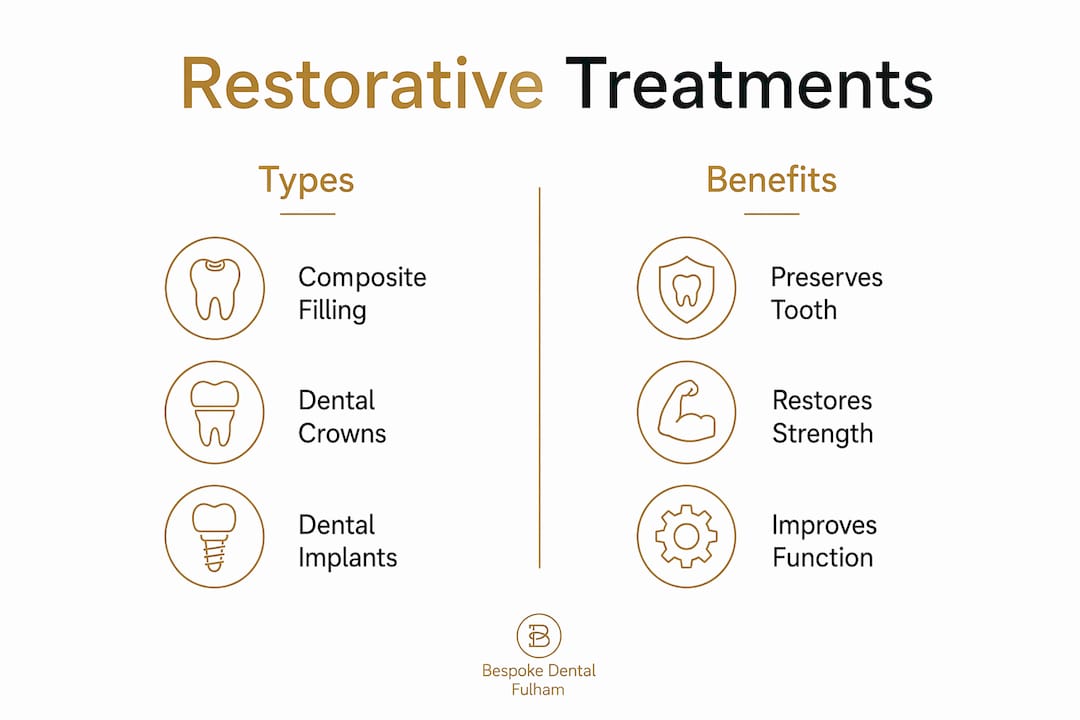
Restorative dental procedures do far more than fix a broken tooth. The benefits extend to your nutrition, your confidence, and your long-term systemic health.
Chewing efficiency is the most immediate gain. A missing back tooth forces you to chew on one side, which strains your jaw joint and limits the foods you can eat comfortably. Restoring that tooth removes those restrictions and supports a balanced diet. Patients who regain full chewing function often report eating a broader range of foods, which directly supports nutritional health.
The psychological impact is equally significant. Restorative care leads to measurable improvements in self-esteem, confidence, and quality of life. That finding is reinforced by the fact that 99.7% of adults consider a smile a significant social asset. Feeling self-conscious about missing or damaged teeth affects how you speak, smile, and engage with others. Restoring your teeth removes that barrier.
Systemic health is a less obvious but critical benefit. Restorative treatments reduce chronic inflammation by controlling oral infections, and chronic oral inflammation is linked to conditions including heart disease and diabetes. Treating a tooth infection is not just about saving the tooth. It is about reducing a source of inflammation that affects your whole body.
“Restorative dentistry addresses oral infections and bite stability, reducing chronic inflammation linked to heart disease and diabetes. Treating the mouth is treating the body.”
Pro Tip: After any restorative treatment, maintain a consistent hygiene routine. Restorative materials do not decay, but the tooth structure around them can. Brushing twice daily, flossing, and attending regular hygiene appointments protects your investment for years to come.
You can also explore clear retainer benefits as part of a broader approach to maintaining your restored smile and bite alignment.
What distinguishes restorative dentistry from cosmetic dentistry?
Restorative dentistry and cosmetic dentistry overlap more than most patients realise, but their starting points differ. Restorative care is driven by clinical need. Cosmetic dentistry is driven by aesthetic preference. In practice, many treatments serve both purposes at once.
The key distinctions are:
- Primary goal. Restorative dentistry aims to repair function and prevent further damage. Cosmetic dentistry aims to improve appearance.
- Clinical necessity. Restorative treatments are recommended because something is wrong. Cosmetic treatments are chosen because a patient wants a change.
- Material choice. Both disciplines now use porcelain and ceramic materials that are biologically compatible and mimic natural enamel. Porcelain and ceramic restorations provide durability alongside a natural appearance that supports patient confidence.
- Insurance and cost. Restorative care is more likely to be covered by dental insurance due to its medical necessity. Cosmetic treatments are typically self-funded.
A crown is a good example of a treatment that sits in both camps. It restores a damaged tooth structurally, but it is also shaped and shaded to match your natural teeth perfectly. Similarly, a porcelain veneer can correct a chipped tooth while also improving its appearance. The benefits of cosmetic dentistry and restorative dentistry are not mutually exclusive. The best outcomes often combine both.
What can patients in Fulham expect during restorative treatment?
Restorative treatment in Fulham begins with a thorough assessment. Your dentist will examine your teeth, gums, and jawbone, often using digital X-rays or a CBCT scan to understand the full picture before recommending any treatment. This stage is not a formality. The quality of your assessment directly determines the quality of your treatment plan.
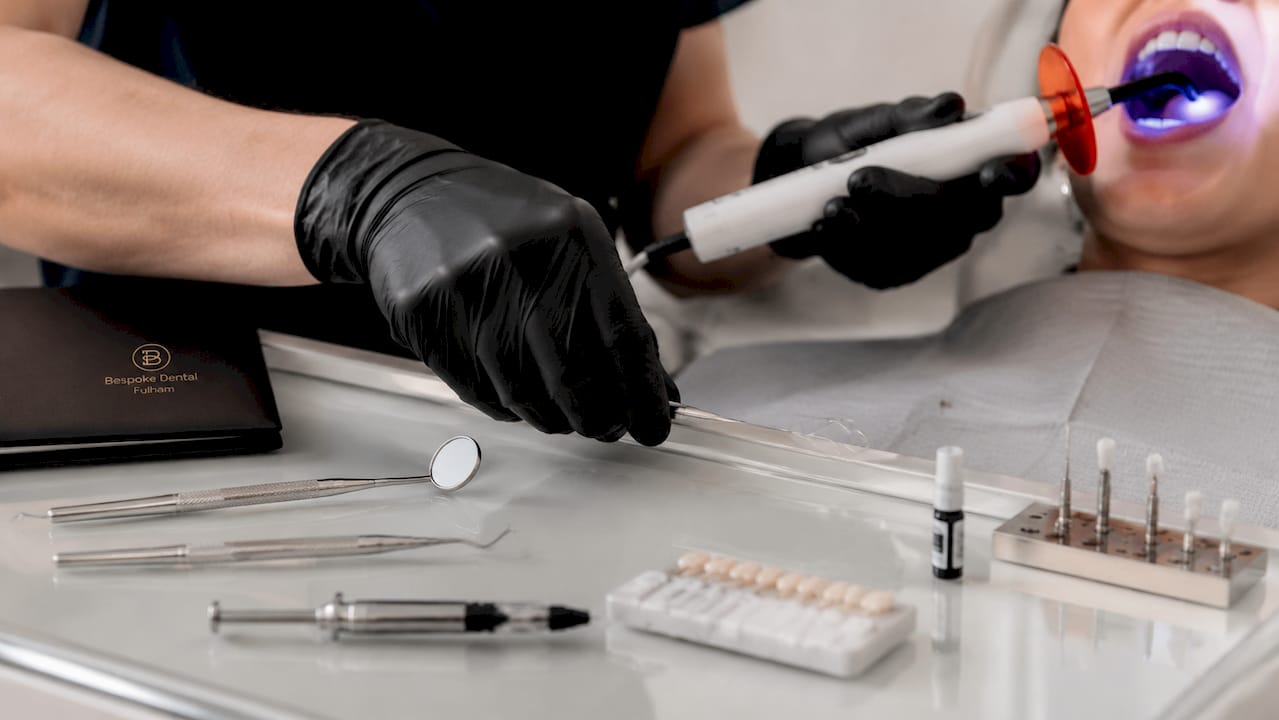
Complex cases are typically treated in phases. Gum disease or bone loss must be addressed before crowns or implants are placed. Treating gum and jawbone health is a prerequisite for lasting restorations. Placing an implant into an unhealthy jawbone, or fitting a crown over inflamed gum tissue, leads to failure. Your dentist will sequence your treatment to give each restoration the best possible foundation.
Common questions patients ask before starting treatment:
- How long will treatment take? A single filling takes one appointment. A full implant case, from placement to final crown, typically spans several months to allow the implant to integrate with the bone.
- Will it be painful? Most restorative procedures are carried out under local anaesthetic. You should feel pressure but not pain during treatment. Post-procedure sensitivity is normal and usually resolves within a few days.
- How long will restorations last? With proper care, crowns and implants can last well over a decade. Composite fillings typically last 7–10 years before they need replacing.
Aftercare is not optional. Restorations require regular hygiene appointments and check-ups to prevent secondary decay or disbonding. Restorative materials respond differently to wear and bacteria than natural enamel does. Your dentist and hygienist will advise you on the specific care your restorations need.
Pro Tip: If you have had a crown or bridge fitted, ask your hygienist about interdental brushes and floss threaders. Standard flossing technique does not clean effectively beneath a bridge pontic, and plaque build-up in that area is the most common cause of bridge failure.
For patients in Fulham, Parsons Green, Hammersmith, and Chelsea, you can find a full breakdown of available treatments in the 2026 Fulham restorative guide.
Key takeaways
Restorative dentistry is the most clinically important branch of dental care, because untreated damage compounds over time and affects your systemic health, not just your teeth.
| Point | Details |
|---|---|
| Function before aesthetics | Restorative care prioritises chewing, bite stability, and oral health above appearance. |
| Treat the foundation first | Gum and bone health must be addressed before crowns or implants are placed. |
| Materials matter | Porcelain and ceramic restorations offer durability and a natural appearance simultaneously. |
| Maintenance is non-negotiable | Regular hygiene visits protect restorations and prevent secondary decay around them. |
| Systemic benefits are real | Controlling oral infections through restorative care reduces inflammation linked to heart disease and diabetes. |
Why I believe restorative dentistry deserves more attention than it gets
Patients often come to me focused on whitening or straightening, and I understand why. Aesthetic results are visible and immediate. But in my experience, the patients who see the most lasting improvement in their quality of life are those who addressed their restorative needs first.
A beautifully whitened smile with an untreated cracked molar is a problem waiting to worsen. Restoring function, eliminating infection, and stabilising the bite creates the foundation that makes every aesthetic result last longer and look better. I have seen patients avoid implants for years out of cost concerns, only to need more extensive bone grafting later because the jawbone had resorbed. Acting earlier is almost always less expensive and less complex.
Choosing a trusted practice in Fulham for your restorative care matters too. Personalised treatment planning, proper sequencing, and a dentist who takes time to explain your options are not luxuries. They are what separates a restoration that lasts a decade from one that fails in two years. View restorative dentistry as an investment in your health, your comfort, and your confidence. It is one of the few areas of healthcare where the return is both measurable and lasting.
— Amit
Restorative dentistry at Bespokedentalfulham in Fulham
Bespokedentalfulham is a private practice in Fulham, London, offering a full range of restorative dental treatments tailored to each patient’s clinical needs and aesthetic goals.
From composite fillings and porcelain crowns to dental implants and full-mouth rehabilitation, every treatment plan at Bespokedentalfulham is built around your specific situation. The practice uses digital imaging and Harley Street standard techniques to plan treatment accurately and deliver results that last. If you are ready to restore your oral health and confidence, explore the restorative dentistry options available at Bespokedentalfulham, or find out how dental aesthetics transform confidence alongside functional repair.
FAQ
What is restorative dentistry in simple terms?
Restorative dentistry is dental care that repairs or replaces damaged and missing teeth to restore chewing function and oral health. Treatments range from fillings and crowns to implants and dentures.
Is restorative dentistry the same as cosmetic dentistry?
Restorative dentistry focuses on function and clinical need, while cosmetic dentistry focuses on appearance. Many treatments, such as crowns and veneers, serve both purposes at the same time.
How long do restorative dental treatments last?
With proper hygiene and regular check-ups, crowns and implants can last well over a decade. Composite fillings typically need replacing after 7–10 years.
Is restorative dental treatment covered by insurance?
Major restorative treatments such as crowns, implants, and root canal therapy are more likely to be covered by dental insurance because they are medically necessary. Purely cosmetic procedures are usually self-funded.
Do I need restorative treatment before cosmetic work?
Yes, in most cases. Gum disease, decay, and structural damage must be treated before cosmetic procedures are carried out. Placing veneers or whitening over unhealthy teeth produces poor and short-lived results.