
TL;DR:
- Dental implants are titanium posts that fusewith the jawbone to replace missing tooth roots, offering a reliable long-term solution. They preserve bone density, function like natural teeth, and have a success rate exceeding 95 percent when properly planned. Most healthy adults can qualify for implants, especially with advancements like 3D imaging and bone grafting, ensuring predictable outcomes.
Dental implants are titanium posts surgically placed into the jawbone to replace missing tooth roots, and they are widely regarded as the gold standard for tooth replacement by board-certified periodontists. Unlike dentures or bridges, implants fuse directly with living bone through a process called osseointegration, preserving both jaw structure and facial appearance. Clinical evidence shows a 98.6% survival rate at 12 months, with patient satisfaction rising from 48% to 92% after treatment. That figure reflects not just durability but a genuine transformation in how patients eat, speak, and feel about their smiles. If you are considering tooth replacement in Fulham or London, understanding why choose dental implants starts with knowing what sets them apart at a biological level.
Why choose dental implants over bridges and dentures?
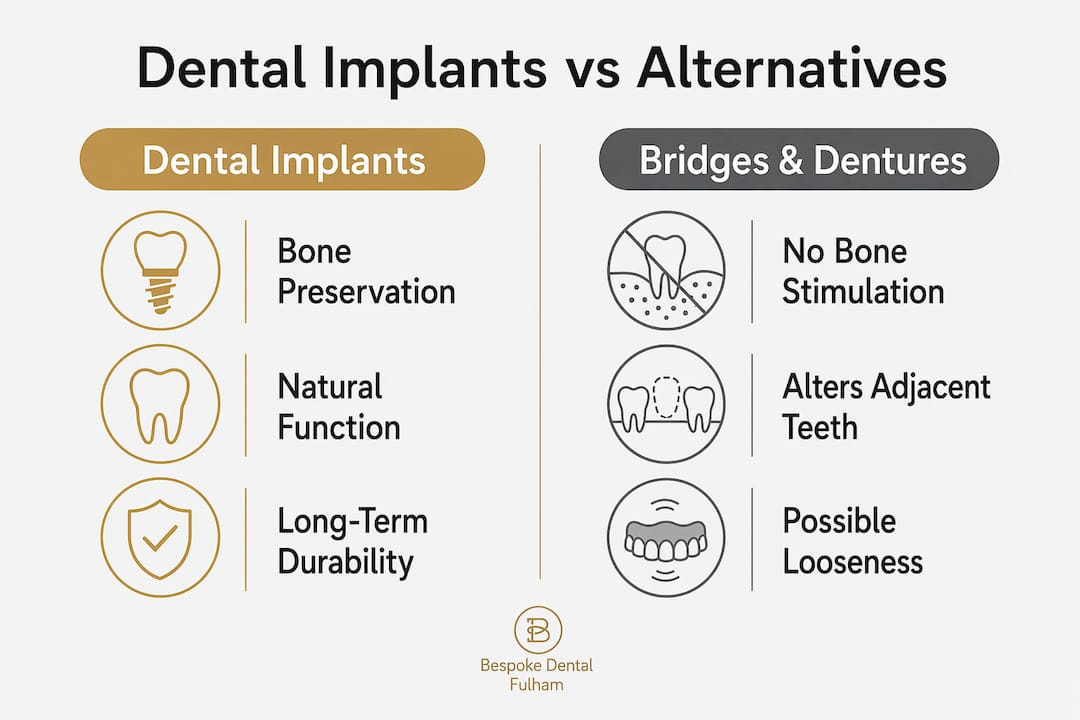
Osseointegration is the defining advantage of implants. The titanium post bonds with your jawbone over several weeks, creating a stable foundation that preserves bone density and prevents the facial shrinkage that denture wearers often experience over time. No other tooth replacement method achieves this.
Bridges require the dentist to file down the two healthy teeth on either side of the gap to anchor the restoration. That permanent alteration weakens otherwise sound teeth and creates future risk. Dentures rest on the gum surface, providing no bone stimulation at all, which is why long-term denture wearers frequently develop a sunken appearance around the mouth.
Implants also deliver superior day-to-day function. Patients report that chewing ability after implant treatment closely matches that of natural teeth, and speech clarity improves significantly compared with removable dentures. The table below summarises the key differences.
| Feature | Implants | Bridges | Dentures |
|---|---|---|---|
| Bone preservation | Yes, full stimulation | No | No |
| Adjacent teeth affected | No | Yes, filed down | No |
| Longevity | 15+ years with care | 10–15 years | 5–10 years |
| Appearance | Natural | Good | Variable |
| Daily removal required | No | No | Yes |
| Chewing strength | Close to natural | Reduced | Significantly reduced |
Pro Tip: Ask your dental provider whether they use guided surgery and 3D cone beam CT imaging. Digital planning technology is directly linked to safer placement and more predictable results.
What are the main benefits of dental implants for your health and confidence?
The advantages of dental implants extend well beyond aesthetics. Implants stimulate the jawbone in the same way natural tooth roots do, preventing the resorption that causes bone loss and a prematurely aged facial appearance. This is a benefit no bridge or denture can replicate.
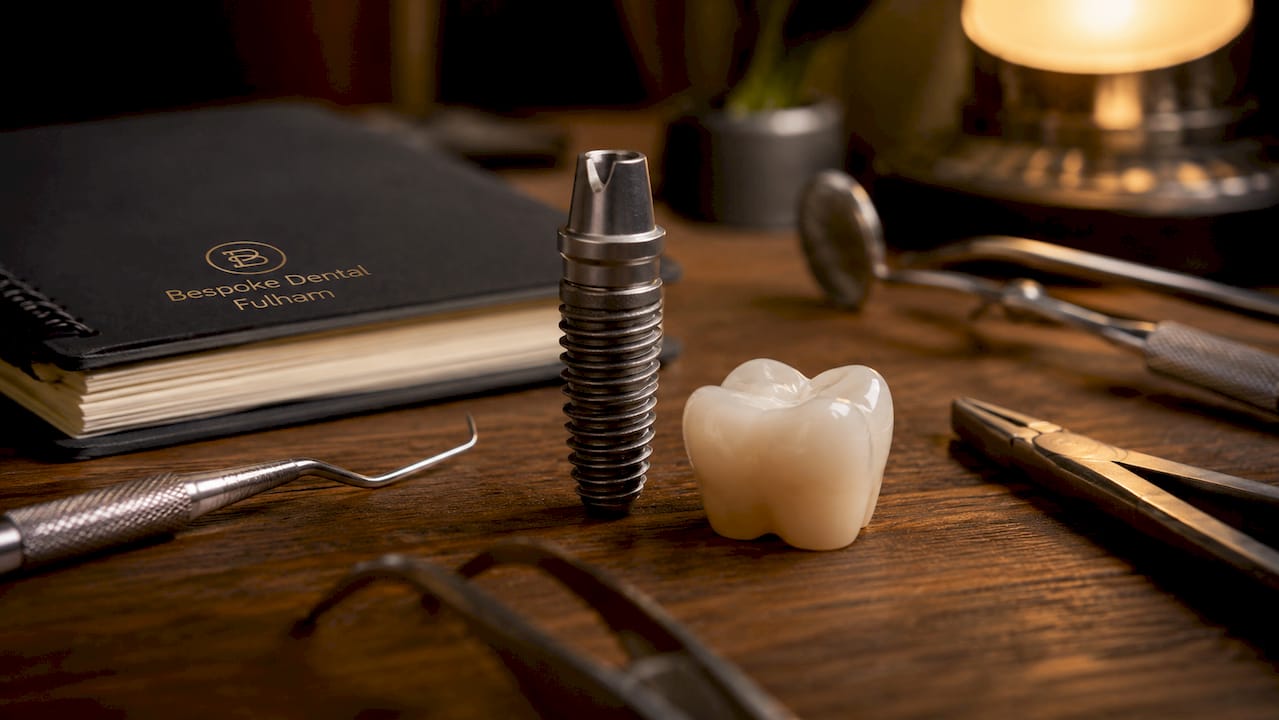
Functionally, the clinical data is compelling. Chewing scores in one study improved from 4.1 to 8.7 out of 10, and speech scores rose from 6.3 to 9.0 within 12 months of treatment. Aesthetic satisfaction scores climbed from 5.5 to 9.2 over the same period. These are not marginal gains; they represent a measurable shift in quality of life.
Confidence is another dimension that patients consistently highlight. A fixed, natural-looking tooth means you do not need to worry about a denture shifting when you laugh or eat in public. For many patients in Fulham and London, that psychological relief is as significant as the physical restoration.
The key patient-centred benefits of dental implants include:
- Bone preservation: Prevents jawbone resorption and the sunken facial appearance associated with long-term tooth loss.
- Natural chewing: Restores eating comfort close to that of natural teeth, including harder foods.
- Improved speech: Eliminates the slurring or clicking that removable dentures can cause.
- Aesthetic result: Implant crowns are matched to your natural tooth colour and shape for a discreet finish.
- Long-term cost-effectiveness: A well-maintained implant can last 15 years or more, reducing the cumulative cost of repeated replacements.
- No impact on neighbouring teeth: Adjacent healthy teeth remain untouched throughout the process.
- Oral hygiene: You brush and floss an implant exactly as you would a natural tooth, with no special soaking or adhesives required.
Considering the long-term value of dental restoration makes the investment easier to contextualise. A single implant placed correctly today avoids the cascading costs of bone loss, further tooth movement, and repeated prosthetic replacements over the following decades.
Who is suitable for dental implants and what affects success?
Most healthy adults are suitable candidates for dental implants. The two primary requirements are adequate jawbone volume and good general health. Age alone is rarely a barrier; patients in their seventies and eighties receive implants successfully when their bone and health profile supports it.
The following factors influence whether implants are the right choice for you:
- Jawbone volume: Sufficient bone depth and width are needed to anchor the implant securely. Where bone has been lost, bone grafting is often performed first to rebuild the site before implant placement.
- Systemic health: Conditions such as uncontrolled diabetes or autoimmune disorders affect healing and can reduce success rates. Your dentist will review your medical history thoroughly before proceeding.
- Smoking: Smoking significantly impairs blood flow to the gum tissue and bone, slowing osseointegration and increasing the risk of implant failure. Many clinics advise patients to stop smoking before and after surgery.
- Gum health: Active gum disease must be treated and resolved before implant placement. Placing an implant into an infected site risks immediate failure.
- Commitment to aftercare: Long-term implant success depends on consistent brushing, flossing, and regular professional check-ups.
Dental implant success rates exceed 95% over the first 5–10 years for healthy patients when treatment is planned with modern 3D imaging. That figure drops when risk factors like smoking or uncontrolled systemic disease are present and unmanaged.
Pro Tip: If you have been told you lack sufficient bone for implants, do not assume the treatment is off the table. Bone grafting options have advanced considerably, and many patients who were initially unsuitable become excellent candidates after a preparatory procedure.
What does the dental implant process involve and how do you care for them?
The implant process follows a structured sequence, and understanding each stage helps you plan realistically. The typical treatment pathway runs as follows:
- Initial consultation: Your dentist takes a full medical and dental history, examines your mouth, and orders 3D cone beam CT imaging to assess bone volume and anatomy.
- Treatment planning: Digital imaging allows the surgical team to map the exact position, angle, and depth of each implant before any procedure begins.
- Surgical placement: The titanium post is placed into the jawbone under local anaesthetic. Most patients report the procedure is more comfortable than they expected.
- Osseointegration: The bone fuses with the implant surface over a period of roughly 3–6 months. This phase is passive; you simply follow aftercare instructions and attend review appointments.
- Restoration: Once integration is confirmed, an abutment and custom crown, bridge, or denture is fitted to complete the tooth replacement.
- Long-term maintenance: Daily brushing and flossing, combined with professional hygiene visits every 6 months, keep the implant and surrounding tissue healthy.
Post-placement peri-implantitis, an inflammatory condition affecting the tissue around the implant, occurs in 8%–20% of cases long term. Vigilant aftercare and professional maintenance reduce this risk substantially. Catching early signs at a routine check-up prevents the condition from progressing to implant loss.
Pro Tip: Treat your implant crown like a natural tooth. Interdental brushes and water flossers are particularly effective at cleaning around the implant base where a standard toothbrush cannot reach. Read more about managing implants long term for a full aftercare guide.
Key takeaways
Dental implants are the only tooth replacement option that preserves jawbone density, restores near-natural chewing function, and delivers long-term aesthetic results supported by clinical survival rates above 95%.
| Point | Details |
|---|---|
| Osseointegration is unique | Only implants fuse with bone, preventing the resorption that dentures and bridges cannot stop. |
| Clinical success is high | A 98.6% survival rate at 12 months and patient satisfaction rising to 92% confirm implant reliability. |
| Suitability depends on bone and health | Bone grafting and health management can make many initially unsuitable patients good candidates. |
| Technology improves outcomes | 3D imaging and guided surgery are directly linked to safer placement and more predictable results. |
| Aftercare determines longevity | Peri-implantitis affects 8%–20% of cases long term; consistent hygiene and check-ups minimise this risk. |
Why I believe implants are worth it for patients in Fulham and London
Having seen the before-and-after reality for many patients, I find the debate about whether implants are worth the cost largely settles itself once you look at the long game. A patient who opts for a denture at 50 often faces repeated adjustments, bone loss, and a changing facial profile over the following two decades. The patient who chooses an implant at the same age frequently still has that implant functioning well at 70.
What strikes me most is the confidence shift. Patients who have lived with a gap or an ill-fitting denture often underestimate how much it has affected their social behaviour. They avoid certain foods, they smile with their mouth closed, they feel self-conscious in professional settings. After implant treatment, those habits quietly disappear.
The technology available in London now makes the process far more predictable than it was even a decade ago. Providers using advanced digital planning can show you a virtual outcome before the first incision is made. That transparency changes the patient experience entirely.
My honest view is that the upfront cost concern is real but often misframed. Patients compare the implant price to the denture price without accounting for the cumulative cost of denture replacements, bone grafts that become necessary later, and the adjacent tooth work that bridges eventually require. When you factor in the full cost picture, implants frequently represent the more economical choice over a 15-year horizon.
If you are in Fulham, Parsons Green, Chelsea, or anywhere across SW6, the access to high-quality implant care locally means there is no reason to delay a consultation.
— Amit
Dental implants at Bespokedentalfulham in Fulham
Bespokedentalfulham offers dental implants in Fulham with a treatment approach built around digital planning, personalised care, and Harley Street standard techniques. Every patient receives a thorough assessment, including 3D imaging, before any treatment is recommended.
The clinic serves patients across Fulham, Parsons Green, Hammersmith, Putney, and Chelsea, providing a discreet, comfortable environment for those who value privacy alongside clinical excellence. Whether you are replacing a single tooth or considering a full-arch restoration, the team at Bespokedentalfulham will walk you through every option clearly and without pressure. You can also explore the restorative dentistry options available to find the right path for your specific situation. Book a consultation to discuss your suitability and get a clear treatment plan tailored to you.
FAQ
What makes dental implants better than dentures?
Dental implants fuse with the jawbone through osseointegration, preserving bone density and facial structure in a way dentures cannot. Dentures rest on the gum surface and provide no bone stimulation, leading to progressive bone loss over time.
Are dental implants worth the cost?
For most patients, yes. A well-maintained implant can last 15 years or more, making it more cost-effective over time than repeated denture replacements or bridge repairs. The long-term value becomes clear when you account for all future treatment costs avoided.
What is the success rate for dental implants?
Dental implants show a 98.6% survival rate at 12 months and success rates above 95% over 5–10 years for healthy patients when planned with modern 3D imaging. Smoking and uncontrolled systemic conditions reduce these figures.
How long does the dental implant process take?
The full process typically takes 6–9 months from initial placement to final restoration, with the osseointegration phase alone taking 3–6 months. Complex cases requiring bone grafting will extend the timeline further.
Can anyone get dental implants?
Most healthy adults are suitable candidates. Adequate jawbone volume and good general health are the primary requirements. Conditions like uncontrolled diabetes or active gum disease must be addressed first, and bone grafting can resolve insufficient bone volume in many patients.