TL;DR:
- Cosmetic dentistry in 2026 emphasizes natural aesthetics, minimally invasive procedures, and digital precision. Patients benefit from AI-driven digital smile design, no-prep veneers, and same-day restorations, which improve outcomes and reduce chair time. The focus is now on preserving healthy tooth structure and achieving subtle, harmonious smiles tailored to individual features.
Cosmetic dentistry in 2026 is defined by a clear shift: patients want natural-looking results, less chair time, and treatments that preserve healthy tooth structure. The global cosmetic dentistry market is valued at $31.31 billion this year, growing at 8.55% annually, with 90.7% of that demand driven by social media influence. That is a remarkable figure. It means the way people see smiles online is directly shaping what they ask for in the dental chair. The leading aesthetic dentistry trends 2026 centres on five areas: AI-assisted digital smile design, advanced biomaterials, no-prep veneers, same-day restorations, and the rise of natural, understated aesthetics. Bespokedentalfulham, based in Fulham, London, is already working with these advances to deliver personalised, lasting smile improvements.
1. How AI and digital smile design are changing treatment planning
Digital Smile Design (DSD) is now one of the most significant tools in cosmetic dentistry. It uses AI to analyse your facial features, lip dynamics, and gum levels, then maps out the ideal tooth shapes and proportions before any treatment begins.
The practical benefit is significant. You see a 3D simulation of your result before a single tooth is touched. That reduces expectation gaps between what a patient imagines and what the dentist delivers. It also makes the consultation far more collaborative, because you can give feedback on the proposed design in real time.
Digital smile design has moved from a luxury add-on to a standard part of treatment planning. Clinics that use it report better patient satisfaction and fewer revision requests. The technology also integrates with intraoral scanners and milling machines, which is what makes same-day restorations possible.
- AI analyses facial symmetry, midline alignment, and gum architecture
- 3D simulations let you approve your smile before treatment starts
- Digital records support precise, repeatable results across multiple visits
- Integration with CAD/CAM technology enables same-day crowns and veneers
Pro Tip: Ask your dentist to show you a DSD simulation at your consultation. If they cannot, ask why. A practice that uses advanced dental technology will always be able to show you your result before you commit.
2. Minimal-prep and no-prep veneers: preserving what you have
No-prep veneers are now as thin as 0.2mm, which is a genuine engineering achievement. At that thickness, the veneer bonds to the existing enamel without requiring the dentist to grind the tooth down first. The result is a natural appearance with minimal biological cost.
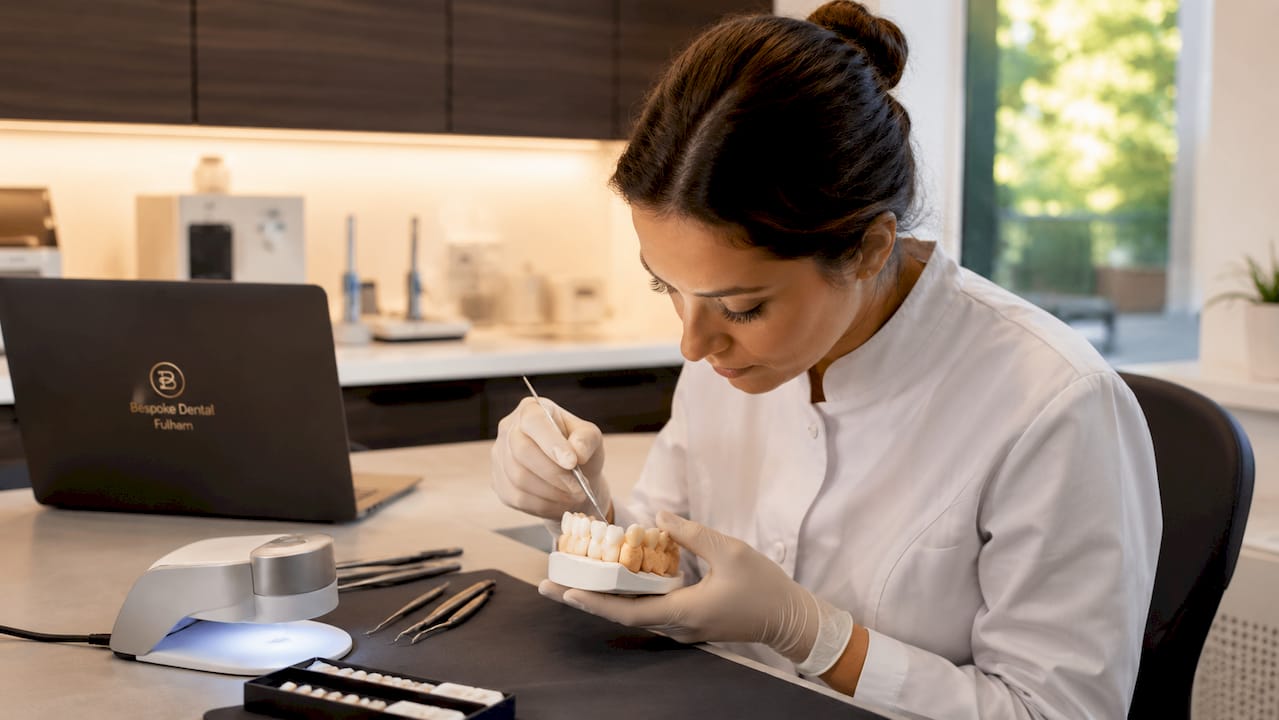
This matters because enamel does not grow back. Traditional veneers required removing 0.5mm to 1.5mm of tooth surface, which is permanent. No-prep and minimal-prep options protect that structure, making them a far more conservative choice for the right patient.
The key phrase is “the right patient.” These veneers work best when teeth are already well-aligned, lightly discoloured, or have minor chips. They are not appropriate for patients with significant crowding, severe discolouration, or deep bite issues. Applying them in the wrong case produces a bulky, unnatural result.
“No-prep veneers require cautious patient selection. Inappropriate cases risk bulky or unnatural results, making candid consultation critical. The best outcomes come from dentists who are honest about when this option is not suitable.”
- Ideal for: minor chips, light staining, small gaps, well-aligned teeth
- Not suitable for: crowding, deep bites, heavy staining, or large restorations
- Bonding technology improvements mean stronger adhesion with less tooth preparation
- Porcelain veneers cost between £900 and £2,500 per tooth, depending on material and complexity
Pro Tip: Before agreeing to any veneer treatment, ask specifically whether you need preparation and why. A dentist who recommends porcelain veneers in Fulham should explain the preparation level and show you the planned result digitally.
3. Biomaterials and sustainable dental materials in 2026
The materials used in cosmetic dentistry have changed substantially. Composite resins, zirconia, and bioactive materials now dominate the best cosmetic dental treatments in 2026, each offering a different balance of aesthetics, durability, and biological compatibility.
Zirconia is particularly notable. It is strong enough for back teeth but translucent enough to mimic natural enamel at the front. Bioactive materials go further: they interact with saliva and surrounding tissue to support remineralisation, meaning they actively contribute to oral health rather than simply filling a space.
| Material | Key benefit | Best used for |
|---|---|---|
| Composite resin | Natural colour matching, repairable | Bonding, small restorations |
| Zirconia | High strength, tooth-like translucency | Crowns, bridges, implant crowns |
| Bioactive glass | Supports remineralisation | Fillings, preventive restorations |
| Lithium disilicate | Excellent aesthetics, good strength | Veneers, anterior crowns |
Sustainability is also entering the conversation. Patients in London are increasingly asking about the environmental credentials of their dental materials. Practices that use digitally milled restorations produce less waste than traditional laboratory methods, and some biomaterials are now manufactured with reduced chemical by-products.
Pro Tip: When discussing materials with your dentist, ask about the long-term durability of each option. A material that lasts 15 years costs less per year than one that needs replacing in five, even if the upfront price is higher.
4. Same-day restorations and minimally invasive procedures
Same-day dentistry is one of the most patient-friendly developments in the field. CAD/CAM (computer-aided design and manufacturing) technology allows a dentist to design, mill, and fit a crown or veneer in a single appointment. That removes the need for temporary restorations and multiple visits.
Same-day restorations reduce patient downtime and make cosmetic treatments far more accessible for people with busy schedules. For London patients who cannot take multiple days off work, this is a meaningful practical benefit.
Minimally invasive dentistry runs alongside this. The goal is to remove as little healthy tooth structure as possible during any procedure. This applies to veneers, crowns, and even implant placement, where guided surgery now allows precise positioning with smaller incisions.
- CAD/CAM milling produces crowns and veneers in under two hours
- Fewer appointments mean less time off work and less anaesthetic exposure
- Guided implant surgery reduces healing time and post-operative discomfort
- Dental implants carry a 95–97% clinical success rate with a 3–6 month healing period
For patients considering implants, the healing period remains the main time commitment. The procedure itself is minimally invasive, but osseointegration (the process of the implant fusing with the jawbone) takes 3–6 months. That timeline has not shortened, but the surgery itself has become considerably less disruptive.
5. Natural aesthetics and the ‘quiet luxury’ trend in smile design
The 2026 aesthetic paradigm has moved firmly away from the uniform, brilliant-white “Hollywood Smile.” Patients now ask for teeth that look like theirs, only better. That means preserving natural variation in shade, texture, and translucency rather than erasing it.
This shift is sometimes called “quiet luxury” in smile design. The idea is that a beautiful smile should not announce itself. It should look like you simply have excellent, healthy teeth. Achieving that requires a different set of skills from the dentist and ceramist than producing a bright, uniform result.
- Micro-anatomy: Natural teeth have surface texture, ridges, and subtle grooves. Veneers and crowns that replicate this look far more realistic than smooth, flat restorations.
- Translucency: The incisal edges of natural teeth are slightly see-through. Matching this quality requires careful material selection and hand-finishing by a skilled ceramist.
- Gum contouring: Smile aesthetics include the gum line. Laser gum contouring can correct uneven gum levels and improve the proportions of the smile without touching the teeth.
- Shade gradation: Natural teeth are not one uniform colour. They are darker at the gum line and lighter towards the tip. Good cosmetic work replicates this gradient.
- Facial harmony: The best smile makeovers in Fulham consider lip shape, facial width, and the way the teeth show when you speak, not just when you smile for a photo.
The artistry involved in this approach is significant. AI and digital tools provide the framework, but master ceramists hand-finish restorations to replicate the micro-textures that machines cannot perfectly produce. Technology and craftsmanship work together, not in place of each other.
Key takeaways
The most important shift in cosmetic dentistry trends 2026 is the move towards natural aesthetics, digital precision, and treatments that preserve healthy tooth structure rather than replace it.
| Point | Details |
|---|---|
| Digital planning is now standard | AI-assisted DSD reduces surprises and improves patient satisfaction before treatment begins. |
| No-prep veneers suit specific cases | Ultra-thin 0.2mm veneers protect enamel but require careful patient selection to avoid poor results. |
| Biomaterials support oral health | Zirconia and bioactive materials offer durability and biological compatibility beyond simple aesthetics. |
| Same-day technology saves time | CAD/CAM restorations reduce chair visits and make cosmetic treatment more accessible for busy patients. |
| Natural aesthetics define 2026 | The “quiet luxury” trend prioritises micro-anatomy, translucency, and facial harmony over uniform whiteness. |
What I have learned watching cosmetic dentistry change in Fulham
The most striking change I have observed is not the technology. It is the conversation. Patients used to arrive with a photo of a celebrity smile and ask for that. Now they arrive asking how to make their own smile look its best. That is a meaningful shift, and it produces far better outcomes.
The technology matters, but only when it serves that goal. Digital smile design is genuinely useful because it puts the patient in control of the decision before any irreversible work begins. I have seen patients change their minds about shade, shape, and even which teeth to treat once they see the simulation. That is the point.
What concerns me slightly is the speed at which some practices are adopting AI tools without the clinical judgement to use them well. A 3D simulation is only as good as the dentist interpreting it. And a veneer is only as good as the ceramist who finishes it by hand. The artistry of the ceramist remains irreplaceable, regardless of how sophisticated the digital workflow becomes.
My honest advice: choose a practice that combines digital tools with genuine aesthetic skill. Ask to see real patient cases, not just rendered simulations. And if a dentist recommends a full smile makeover at your first appointment without a phased plan, treat that as a warning sign. The best outcomes come from phased treatment planning that considers your teeth, your face, and your long-term oral health together.
— Amit
Cosmetic dentistry at Bespokedentalfulham in Fulham, London
Bespokedentalfulham offers the full range of treatments covered in this article, from AI-assisted digital smile design to no-prep veneers, zirconia restorations, and minimally invasive implant placement. Every treatment plan is built around your face, your teeth, and your goals, not a template.
The practice operates to Harley Street standards in Fulham, serving patients from Parsons Green, Hammersmith, Putney, Chelsea, and SW6. If you are ready to understand what cosmetic dentistry can do for your smile, a consultation with Bespokedentalfulham is the right starting point. You can also explore the full range of available treatments to understand which options suit your situation before you book.
FAQ
What are the biggest cosmetic dentistry trends in 2026?
The leading trends are AI-assisted digital smile design, no-prep veneers, advanced biomaterials such as zirconia and bioactive composites, same-day CAD/CAM restorations, and a shift towards natural “quiet luxury” aesthetics over uniform bright-white smiles.
Are no-prep veneers suitable for everyone?
No-prep veneers are not suitable for every patient. They work best for well-aligned teeth with minor chips or light staining, and are not appropriate for cases involving crowding, deep bites, or heavy discolouration.
How long do dental implants take in 2026?
Dental implants require a 3–6 month healing period for osseointegration, though the surgical procedure itself is minimally invasive. Clinical success rates remain at 95–97%, making implants one of the most reliable long-term tooth replacement options.
What is digital smile design and how does it work?
Digital Smile Design uses AI to analyse your facial features and propose ideal tooth shapes and proportions, then generates a 3D simulation you can review before any treatment begins. It improves communication between patient and dentist and reduces the risk of unexpected results.
How much do cosmetic dental treatments cost in London?
Porcelain veneers range from approximately £900 to £2,500 per tooth depending on material and complexity. Full smile makeovers covering 6–10 teeth can range considerably higher. Bespokedentalfulham provides detailed cost information at consultation, with no NHS treatment offered.