
TL;DR:
- Dental restoration involves repairing or replacing teeth to restore function and health, preventing decay and structural deterioration. It includes procedures like fillings, crowns, bridges, and implants, each suited for different levels of damage, with preservation of natural teeth generally preferred. Early intervention with restorations enhances oral health, facial structure, and confidence while reducing long-term costs and complications.
Dental restoration is defined as the clinical process of repairing or replacing damaged, decayed, or missing teeth to recover their function, structure, and appearance. It is the foundation of restorative dentistry, a discipline distinct from cosmetic dentistry in that it prioritises mouth mechanics and structural health above aesthetics alone. Over 90% of adults aged 20–64 have experienced dental caries, which means the reasons for dental restoration are relevant to almost everyone reading this. Whether you are considering a filling, a crown, or a dental implant in Fulham or London, understanding why dental restoration matters will help you make a confident, informed decision.
Why dental restoration is critical for oral health
Restorative dentistry does far more than fix a broken tooth. It stops disease progression and preserves natural teeth and jawbone, which are the two structural pillars of a healthy mouth. When decay or damage goes untreated, the consequences extend well beyond the affected tooth.
The benefits of dental restoration for your daily health include:
- Preventing decay from spreading. A cavity left untreated reaches the pulp, causing infection and, eventually, tooth loss. A simple filling stops that process early.
- Maintaining your bite and jaw alignment. When a tooth is missing or severely damaged, neighbouring teeth drift into the gap. This shifts your bite and places uneven pressure on your jaw joints.
- Supporting comfortable eating. Pain or missing teeth limit what you can chew. Restoring full dental function means you can eat a varied, nutritious diet without discomfort.
- Improving speech clarity. Teeth shape the sounds you make. Missing front teeth or poorly fitting restorations affect pronunciation, particularly with sounds like “s,” “f,” and “th.”
- Protecting systemic health. Untreated oral infections can spread bacteria beyond the mouth, affecting the immune system and contributing to wider health problems. Oral health is directly connected to systemic wellness.
Pro Tip: If you notice sensitivity to hot or cold that lingers for more than a few seconds, book a check-up promptly. That symptom often signals early pulp involvement, which is far simpler to treat at that stage than later.
The importance of dental restoration also lies in what it prevents. Addressing a small problem now avoids a cascade of larger ones. Delaying restorative treatment increases the risk of complex, costly procedures. Early, smaller restorations are both cost-effective and protective.
What are the common dental restoration procedures?
Restorative dentistry covers a range of treatments, each suited to a different level of damage. Understanding how they differ helps you have a more productive conversation with your dentist.
| Procedure | Best Used For | Typical Lifespan | Invasiveness |
|---|---|---|---|
| Dental filling | Minor to moderate decay | 7–15 years | Low |
| Dental crown | Severely damaged or root-treated tooth | 10–15+ years | Moderate |
| Dental bridge | One or two missing teeth | 10–15 years | Moderate |
| Dental implant | Single or multiple missing teeth | Lifetime with care | Higher |
| Composite bonding | Chips, minor gaps, surface damage | 5–10 years | Low |
Dental fillings are the most common restorative procedure. Tooth-coloured composite resin has largely replaced amalgam in private practice, offering a natural appearance and a strong bond to the remaining tooth structure.
Dental crowns cap a tooth that is too damaged for a filling alone. They are commonly placed after root canal treatment or when a large portion of the tooth has fractured. Ceramic and zirconia crowns are the standard in private dentistry, matching the colour and translucency of natural teeth.
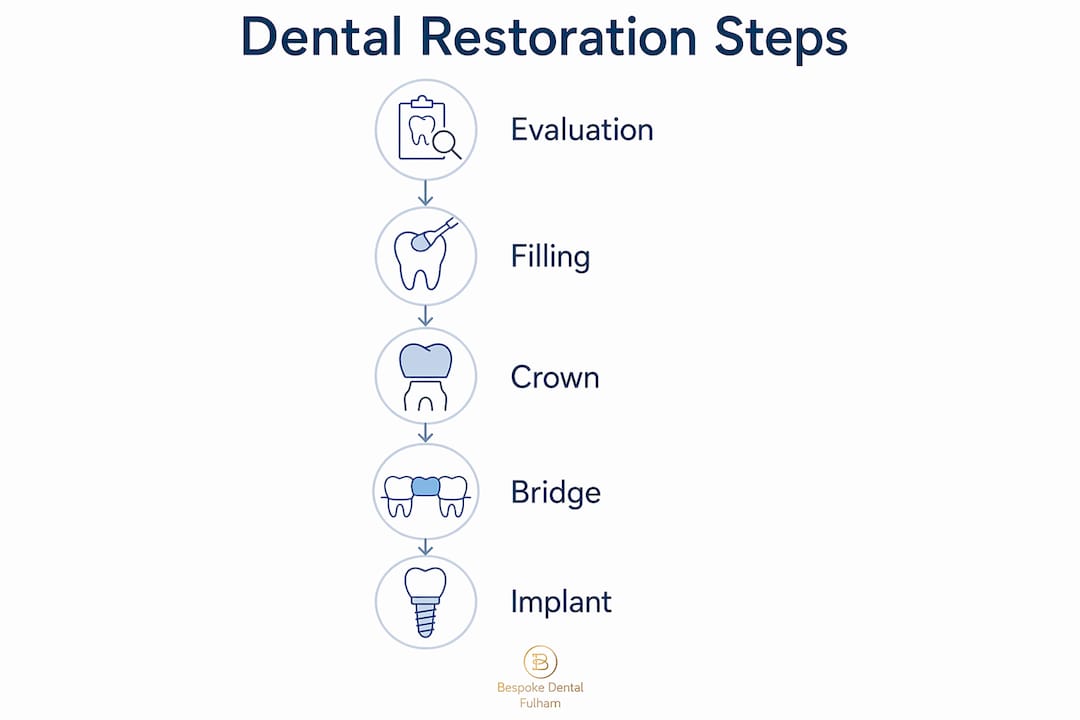
Bridges replace one or two missing teeth by anchoring a false tooth to the crowns placed on adjacent teeth. They are fixed, feel natural, and restore chewing function effectively. The trade-off is that the neighbouring teeth must be prepared, which removes some healthy enamel.
Dental implants replace the entire tooth, including the root. A titanium post is placed into the jawbone, which fuses with it over several months. A crown is then attached on top. Titanium implants can last a lifetime with proper care, making them the most durable long-term solution for tooth loss. You can read more about managing implants for lasting results to understand what aftercare involves.
Pro Tip: Ask your dentist about the material used for your crown or bridge. Zirconia and lithium disilicate (e-max) are the current gold standard in private practice for strength and aesthetics combined.
Natural teeth vs implants: which is better to preserve?
The clinical evidence strongly favours preserving natural teeth wherever possible. This is not simply a conservative preference. There is a biomechanical reason rooted in how teeth actually function under load.
Natural teeth move 25–100 microns under chewing force. Implants move only 3–5 microns. That difference is significant. Natural teeth flex slightly, which distributes chewing forces across the jawbone more evenly and protects adjacent teeth from overload.
| Feature | Natural Restored Tooth | Dental Implant |
|---|---|---|
| Movement under force | 25–100 microns | 3–5 microns |
| Bone stimulation | Natural periodontal ligament | Direct osseointegration |
| Sensitivity feedback | Present | Absent |
| Adjacent tooth impact | Minimal | Can increase load on neighbours |
| Long-term bone health | Preserved if healthy | Preserved if integrated |
“Restorative dentistry rebuilds the occlusal system rather than just fixing individual teeth, supporting long-term balanced chewing and oral function.” — Apple Wellness Dental
When a tooth is restorable, saving it is almost always the better clinical choice. Root canal treatment combined with a crown, for example, preserves the natural root and the periodontal ligament that surrounds it. That ligament provides sensory feedback and bone stimulation that an implant cannot fully replicate. If you are weighing up your options, the implants vs root canal comparison at Bespokedentalfulham offers a clear clinical breakdown.
Implants become necessary when a tooth cannot be saved or has already been lost. In those cases, they are the best available option. Missing teeth cause jawbone resorption, and implants prevent bone loss by mimicking natural root stimulation. Acting promptly after tooth loss is critical to preserving the bone volume needed for a successful implant.
What are the long-term impacts of dental restoration?
The long-term advantages of dental restoration extend across your physical health, your facial structure, and your confidence. Patients who address dental damage early consistently experience better outcomes than those who delay.
Here is what restored teeth do for you over the long term:
- They are easier to clean. A well-fitted crown or filling has smooth, sealed margins. Damaged or decayed teeth trap food and bacteria, making effective cleaning difficult and accelerating further decay.
- They prevent gum disease. Gaps and rough surfaces around damaged teeth create pockets where plaque accumulates. Restoring the tooth removes those risk sites.
- They preserve facial structure. Bone loss following tooth loss causes the face to appear sunken around the cheeks and jaw. Implants and well-maintained restorations maintain the bone volume that supports your facial contours.
- They protect against jaw pain. An uneven bite caused by missing or damaged teeth places asymmetric pressure on the temporomandibular joint. Over time, this leads to jaw pain, headaches, and muscle tension.
- They support your confidence. Restorative dentistry prioritises mouth mechanics and structural health, which often greatly improves patient confidence and social comfort. This goes well beyond cosmetic improvements. When your mouth functions properly, you speak, eat, and smile without self-consciousness.
Silent dental damage, such as micro-cracks and failing restoration seals, is a particular concern. These issues cause no pain initially but allow bacteria to penetrate the tooth structure gradually. By the time symptoms appear, the damage is often significant. Routine check-ups at a practice like Bespokedentalfulham in Fulham catch these problems before they become irreversible. The sustainable oral care habits you maintain between appointments directly affect how long your restorations last.
Early intervention is the single most cost-effective decision you can make for your oral health. A filling costs a fraction of a crown. A crown costs a fraction of an implant. Addressing problems at each stage before they progress is the practical logic behind prioritising restorative care.
Key takeaways
Dental restoration is the most cost-effective way to preserve oral function, prevent systemic health complications, and maintain the facial structure that supports your confidence long term.
| Point | Details |
|---|---|
| Restoration prevents escalation | Early fillings and crowns stop decay before it requires extraction or implants. |
| Natural teeth are biomechanically superior | Restored natural teeth move 25–100 microns under force, distributing load better than implants. |
| Implants protect bone when teeth are lost | Missing teeth cause jawbone resorption; implants prevent this by stimulating the bone directly. |
| Oral health affects systemic health | Untreated infections spread bacteria beyond the mouth, linking dental neglect to wider health risks. |
| Early care is cost-effective | Delaying treatment increases complexity and cost; smaller restorations protect long-term tooth health. |
Restoration is about more than your smile
I have seen patients arrive at the practice having avoided dental care for years, often out of anxiety or the assumption that a problem is not serious enough to address. What strikes me every time is how much they have adapted their lives around the damage. They chew on one side. They avoid certain foods. They cover their mouth when they laugh. They do not realise they have been doing it until the problem is fixed.
Restorative dentistry is not about perfection. It is about giving you back a mouth that works. The distinction between cosmetic and restorative dentistry matters here. Cosmetic work enhances what is already healthy. Restorative work rebuilds the foundation. You cannot build confidence on a compromised structure, and you cannot maintain aesthetics without addressing the mechanics underneath.
The patients I find most satisfied are those who acted before the situation became urgent. They came in with a cracked tooth or a failing old filling, had it addressed cleanly, and left with a mouth that felt whole again. That is the real value of restorative care. Not the material or the technology, though both matter. The value is in not losing ground you cannot easily recover.
If you are in Fulham, Chelsea, Putney, or anywhere across SW6 and you have been putting off a dental concern, the right time to act is before the symptoms worsen.
— Amit
Restorative dentistry at Bespokedentalfulham in fulham
Bespokedentalfulham offers a full range of restorative treatments from composite fillings and ceramic crowns to dental implants in Fulham, all delivered using Harley Street standard techniques in a calm, discreet environment. Every treatment plan is built around your specific clinical needs, not a one-size-fits-all approach.
Whether you are exploring your options for the first time or returning to address a long-standing concern, the team at Bespokedentalfulham will guide you through every step. From your initial consultation to your final restoration, the focus is on function, longevity, and a result you feel genuinely comfortable with. Discover how cosmetic and restorative dentistry work together to give you a smile that is both healthy and confident. Book your consultation online or call the Fulham practice directly.
FAQ
What is dental restoration in simple terms?
Dental restoration is the repair or replacement of damaged, decayed, or missing teeth using treatments such as fillings, crowns, bridges, or implants. The goal is to restore normal function, appearance, and oral health.
How does dental restoration help prevent further damage?
Restorations seal damaged tooth structure against bacteria, stopping decay from reaching the pulp and preventing infection. Early treatment also maintains bite alignment, which protects surrounding teeth from additional wear.
Is it better to save a tooth or get an implant?
Saving a natural tooth is clinically preferable where possible, as natural teeth move 25–100 microns under chewing force compared to 3–5 microns for implants, providing better load distribution and sensory feedback. Implants are the best option when a tooth cannot be saved.
How long do dental restorations last?
Modern restorations vary in lifespan: composite fillings typically last 7–15 years, ceramic crowns 10–15 years or more, and titanium implants can last a lifetime with proper care and regular check-ups.
Can dental restoration improve confidence as well as health?
Restorative dentistry rebuilds mouth mechanics and structural health, which consistently improves patient confidence and social comfort beyond purely cosmetic changes. When your mouth functions properly, speaking, eating, and smiling all feel natural again.