TL;DR:
- Digital Smile Design creates a personalized preview of your ideal smile before treatment by combining facial photography, intraoral scanning, and simulation software. It involves multiple stages, including consultation, digital analysis, mock-up trials, and final restorations, all driven by patient collaboration and approval. This approach enhances communication, reduces uncertainty, and ensures a facially harmonious, tailored smile outcome.
Digital Smile Design (DSD) is a patient-centred digital planning process that creates a tailored preview of your ideal smile before any treatment begins. The step by step digital smile design process combines facial photography, intraoral scanning, and simulation software to map your unique facial geometry and propose a smile that fits you specifically. This guide walks you through every stage, from your first consultation to the moment your final restorations are fitted, so you know exactly what to expect and why each step matters.
What are the essential tools used in digital smile design?
The digital smile design process depends on a precise set of technologies working together. Without accurate data at the start, even the most skilled clinician cannot produce a reliable preview.
The core tools used at Bespokedentalfulham and similar practices include:
- High-resolution facial and intraoral photography: Standardised front and profile face views, full smile shots, and retracted tooth images provide the visual foundation. Standardised photography captures the detail needed for precise aesthetic analysis.
- Digital intraoral scanners: These devices create a 3D model of your teeth and gums without the need for traditional impressions. The result is a highly accurate digital replica of your mouth.
- Facial mapping and smile analysis software: Programs such as those used within the DSD workflow overlay reference lines including the midline, smile line, lip curvature, and gum contours. This facial analysis guides tooth size, shape, and position to harmonise with your facial geometry.
- 3D CBCT scanning: For more complex cases involving implants or bone assessment, cone beam computed tomography provides a full 3D view of the jaw structure.
Pro Tip: Ask your clinician to show you the facial mapping lines on screen during your consultation. Seeing how your midline and lip curvature influence tooth proportions makes the design process far more meaningful.
| Technology | Purpose |
|---|---|
| Intraoral digital scanner | Creates a 3D model of teeth and gums |
| Facial mapping software | Analyses smile line, midline, and proportions |
| High-resolution camera | Captures standardised facial and dental images |
| CBCT scanner | Provides 3D jaw and bone data for complex cases |
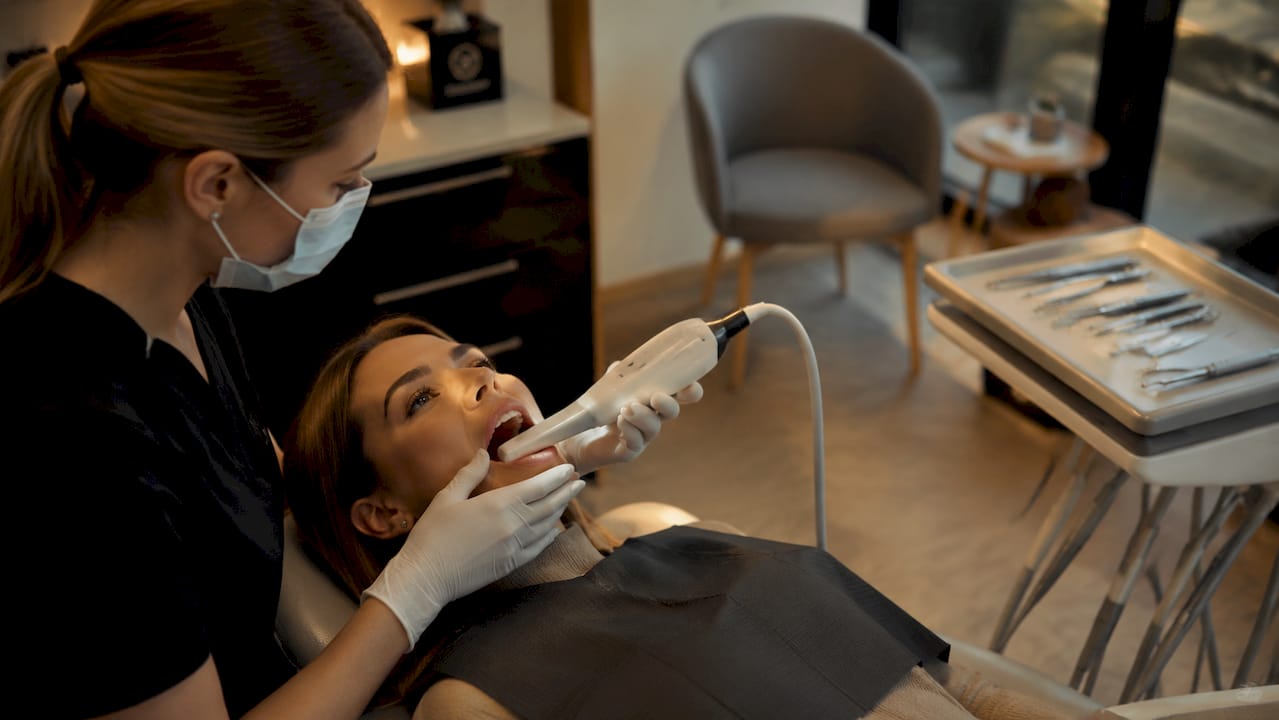
Together, these tools collect the data that builds an accurate foundation for your personalised smile design. No guesswork is involved.
What are the step by step stages in the digital smile design process?
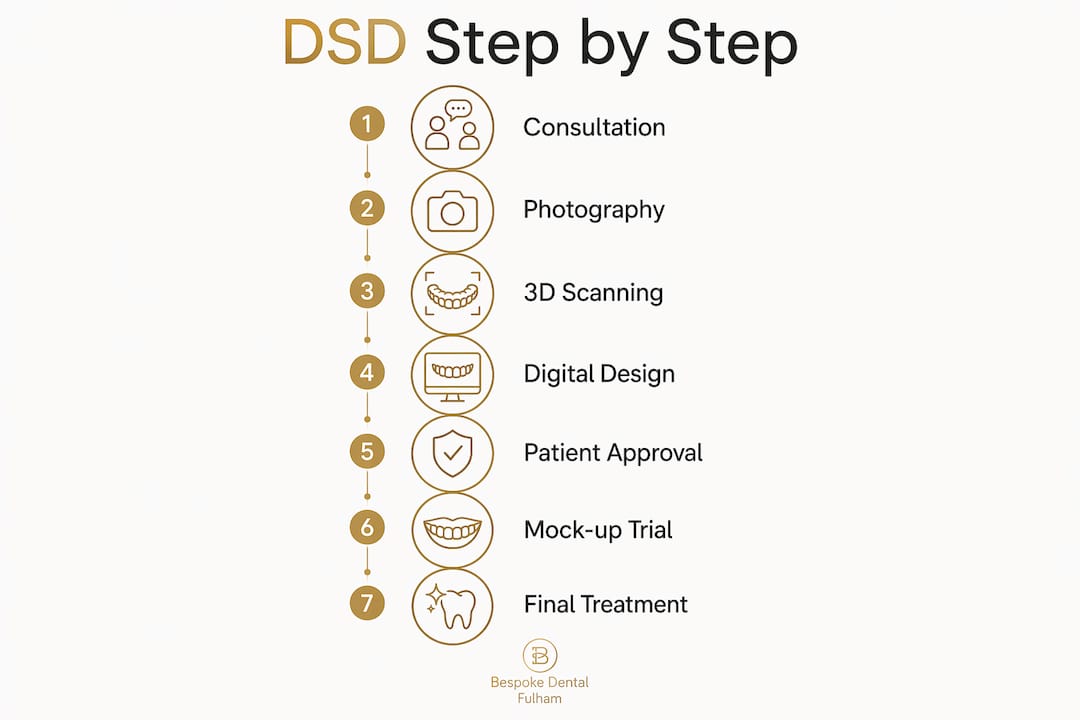
The digital smile design process follows a clear sequence. Each stage builds on the last, and no treatment begins until you have reviewed and approved the proposed outcome.
-
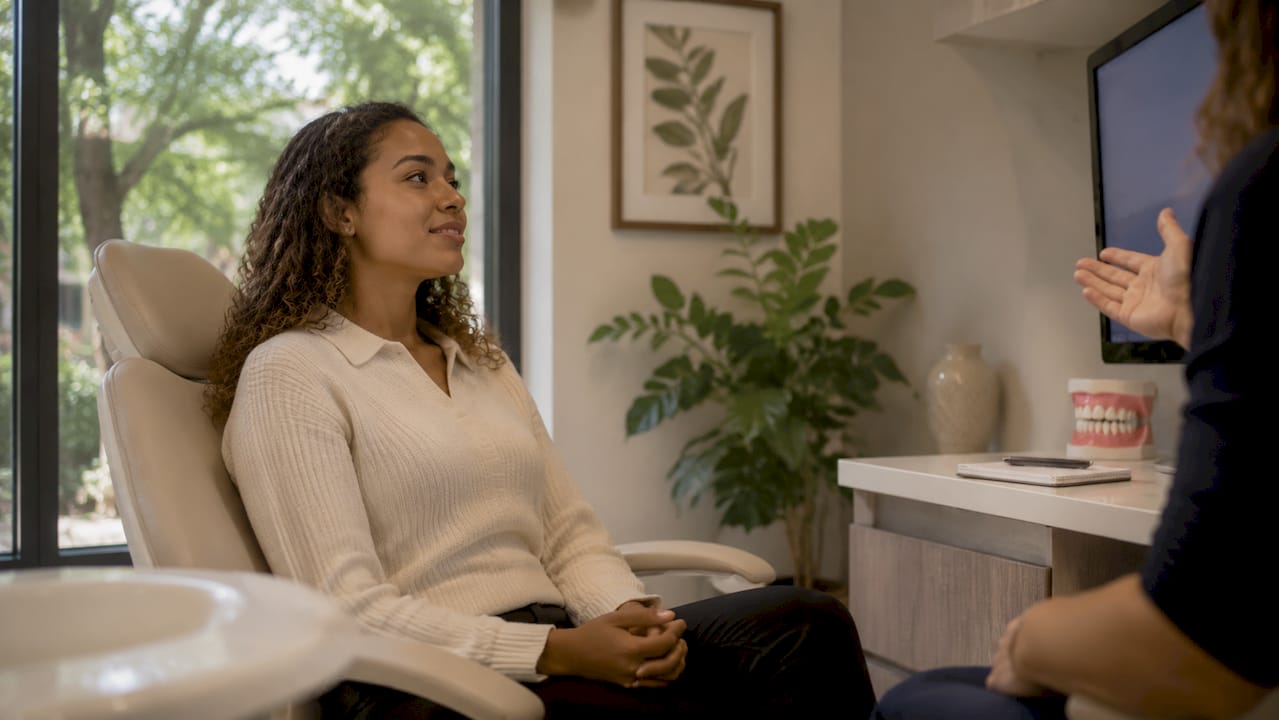
Initial consultation and patient interview. Your clinician discusses your aesthetic goals, concerns, and lifestyle. This conversation shapes the design brief before any technology is used.
-
Standardised photography and video capture. High-resolution images are taken from multiple angles, including front face, profile, full smile, and retracted teeth. Short video clips of your natural smile and speech patterns are also recorded. Captures include front and profile face views, smile and retracted tooth views, plus 3D scans for precise analysis.
-
Digital facial analysis and smile mapping. The software overlays reference lines onto your photographs. Your clinician analyses how your teeth relate to your lips, facial midline, and gum levels. This stage defines the proportions and position of your ideal teeth.
-
Creation of the digital smile simulation. Using the facial analysis data, your clinician builds a digital preview of your proposed smile. Tooth length, shade, shape, and spacing are all adjustable. You view this on screen and provide feedback in real time.
-
Patient collaboration and digital approval. No treatment proceeds without your sign-off on the digital preview. Iterative adjustments to tooth length, shade, and proportions continue until you are satisfied. This stage is where the design becomes truly yours.
-
Mock-up trial in the mouth. Temporary materials are used to replicate the approved digital design directly on your teeth. Mock-ups may be worn for days, allowing you to evaluate the smile in natural light, during conversation, and in photographs before committing to permanent work.
-
Final treatment planning and execution. DSD workflows separate diagnostic digital design approval from clinical execution. Teeth are prepared only after final digital approval, and re-scans confirm the geometry for laboratory fabrication. Depending on your plan, this stage may involve porcelain veneers, composite bonding, teeth whitening, or a combination of treatments.
| Stage | What Happens |
|---|---|
| Consultation | Goals discussed; design brief established |
| Photography and scanning | Standardised images and 3D scans collected |
| Facial analysis | Software maps smile line, midline, proportions |
| Digital simulation | Preview created; patient reviews and adjusts |
| Mock-up trial | Temporary smile worn in real life for feedback |
| Final treatment | Permanent restorations fitted after approval |
How does digital smile design improve the patient experience?
Traditional cosmetic dentistry often required patients to trust the outcome without seeing it first. Digital smile design changes that entirely.
DSD improves communication, reduces surprises, and supports patient engagement by giving you a visual reference before any irreversible work begins. You are not approving a verbal description. You are approving an image of your own face with the proposed smile applied to it.
The key benefits for patients include:
- Expectation alignment: You and your clinician share the same visual reference, which removes ambiguity about the intended outcome.
- Personalised, facially driven design: Christian Coachman, the founder of the DSD protocol, emphasises a facially driven approach where smile design defines surgical or implant planning, prioritising facial harmony over generic templates.
- Faster decision-making: Seeing the result on screen speeds up the approval process compared with verbal explanations alone.
- Multiple design iterations: You can request adjustments to shade, length, or spacing without any clinical work having taken place.
- Reduced treatment anxiety: Knowing what the outcome will look like before treatment starts significantly reduces the uncertainty that many patients associate with cosmetic dentistry.
Collaborative design between patient and clinician during digital simulation is the most practical advantage over traditional methods. It transforms the consultation from a one-way briefing into a genuine dialogue.
Pro Tip: Bring photographs of smiles you admire to your DSD consultation. Your clinician can use these as reference points within the software to understand your aesthetic preferences more precisely.
The role of technology in dental clinics has expanded significantly, and DSD represents one of the clearest examples of digital tools directly improving patient outcomes rather than simply clinical efficiency.
What should you expect regarding timelines and follow-up steps?
Understanding the timeline helps you plan and removes uncertainty from the process. The duration varies considerably depending on the complexity of your treatment.
Here is what a typical journey looks like:
- Initial consultation: Consultations typically last 20–30 minutes and include photography and a design preview. Simple cases may allow a simulation to be shown at the same appointment.
- Mock-up creation and trial period: Once the digital design is approved, temporary mock-up materials are applied. You may wear these for several days to assess the smile in everyday situations.
- Laboratory fabrication: Porcelain veneers and ceramic restorations require laboratory time, typically two to four weeks. Complex treatments involving orthodontics or gum surgery extend this considerably.
- Coordinating preparatory treatments: Teeth whitening should be completed before final veneers are made, as the shade of your natural teeth affects the final colour match. Gum disease treatment or gum reshaping must also be finalised before permanent restorations are placed.
- Patient feedback loop: Physical mock-ups may look slightly different from digital previews due to lighting and natural movement. Your feedback at this stage is critical before any permanent work proceeds.
| Treatment Stage | Typical Duration |
|---|---|
| Initial consultation and design | 20–30 minutes |
| Mock-up trial period | Several days to one week |
| Laboratory fabrication (porcelain) | Two to four weeks |
| Orthodontic preparation (if needed) | Three to eighteen months |
| Final fitting and review | One to two appointments |
Many protocols combine 2D and 3D stages, with trial phases sometimes spread across multiple visits. Combined 2D and 3D workflows allow clinicians to refine the design progressively rather than committing to a single version early on. For a clearer picture of what the full schedule looks like, the smile makeover treatment guide at Bespokedentalfulham outlines typical timelines from initial analysis to final restorations.
Key takeaways
The digital smile design process delivers its greatest value through patient collaboration, visual approval, and the separation of design from clinical execution.
| Point | Details |
|---|---|
| Design before treatment | No clinical work begins until you have approved the digital smile preview. |
| Facial harmony drives design | Tooth proportions are mapped to your unique facial geometry, not a generic template. |
| Mock-up trials are critical | Temporary smiles worn in real life reveal adjustments needed before permanent work. |
| Timelines vary by complexity | Simple composite cases may proceed quickly; porcelain and orthodontic cases take longer. |
| Preparatory treatments come first | Whitening and gum treatments must be completed before final restorations are made. |
Why i believe digital smile design changes everything for patients in fulham
I have seen patients arrive at consultations genuinely anxious about cosmetic dentistry. The most common fear is not the treatment itself. It is not knowing what they will look like afterwards.
Digital smile design addresses that fear directly. When a patient can sit in the chair, look at a screen, and see their own face with a proposed smile applied to it, something shifts. The conversation changes from “I hope this works” to “can we adjust the length slightly?” That shift is significant. It moves the patient from passive recipient to active collaborator.
What I find most compelling about the DSD approach is the facially driven philosophy behind it. The design is not built around what looks good in isolation. It is built around what harmonises with your specific facial structure, your lip line, your midline. That level of personalisation is what separates a genuinely bespoke outcome from a generic cosmetic result.
AI and 3D integration are evolving rapidly, promising even more precise smile designs with enhanced patient communication. The technology will only improve. But the core principle, that you should see and approve your smile before treatment begins, is already delivering real results for patients across London.
My advice: when you consult any practice about cosmetic dentistry, ask specifically whether they use a full DSD workflow including mock-up trials. A digital preview alone is useful. A physical mock-up you can wear for a week is transformative.
— Amit
Explore digital smile design at Bespokedentalfulham in fulham
Bespokedentalfulham offers a full digital smile design service from its Fulham clinic, combining advanced intraoral scanning, facial mapping, and personalised simulation to create a smile that is built around your face. Every treatment plan is designed collaboratively, with no permanent work proceeding until you are completely satisfied with the proposed outcome.
Whether you are considering veneers, composite bonding, or a complete smile makeover, the team at Bespokedentalfulham guides you through each stage with clarity and care. Discover the benefits of cosmetic dentistry and see how a personalised digital approach can transform both your smile and your confidence. Book a consultation at Bespoke Dental Fulham today to take the first step.
FAQ
What is digital smile design?
Digital Smile Design (DSD) is a planning process that uses facial photography, intraoral scanning, and simulation software to create a digital preview of your proposed smile before any treatment begins.
How long does the digital smile design process take?
Initial consultations including photography and a design preview typically last 20–30 minutes. Full treatment timelines range from a few weeks for simple cases to several months for complex plans involving orthodontics or gum surgery.
Can i request changes to my digital smile preview?
Yes. The digital approval stage is iterative, meaning tooth length, shade, shape, and spacing are all adjustable until you are satisfied. No treatment proceeds without your sign-off.
Is a physical mock-up always included in the process?
A mock-up trial is a standard part of a thorough DSD workflow. Temporary materials replicate the approved digital design in your mouth, allowing you to assess the smile in real life before permanent restorations are made.
Does digital smile design work for all cosmetic treatments?
DSD is used to plan veneers, composite bonding, teeth whitening, and more complex cases involving implants or orthodontics. The process adapts to the complexity of your individual treatment plan.