
TL;DR:
- Holistic dental care treats your mouth as part of your overall health, emphasizing systemic well-being. It involves longer consultations, biocompatible materials, advanced diagnostics, and a focus on root causes rather than symptoms. This approach aims to improve long-term health outcomes by connecting oral health to systemic conditions like cardiovascular disease and diabetes.
Holistic dental care is defined as an approach that treats your mouth as an integral part of your entire body’s health, not as an isolated system. The connection between oral conditions and systemic diseases is well-supported by science, with gum inflammation identified as a significant risk factor for cardiovascular disease and diabetes. This means that what happens in your mouth directly influences what happens in your heart, your immune system, and your long-term wellbeing. For adults in Fulham and across London who want more than a routine check-up, understanding why holistic dental care offers a fundamentally different path is the starting point for better health decisions.
Why holistic dental care differs from conventional dentistry
Conventional dentistry treats the tooth or the gum. Integrative dental care, the recognised clinical term for what is broadly called holistic dentistry, treats the person. The distinction shapes everything from the length of your first appointment to the materials placed in your mouth.
The most visible difference is in the consultation itself. Holistic consultations last 60 to 90 minutes and include a full review of your systemic health, medications, nutritional habits, and airway function. That is roughly four times longer than a standard NHS check-up. The extra time exists because a dentist practising integrative care needs to understand your whole health picture before recommending any treatment.
Material choices are equally distinct. Mercury amalgam fillings contain approximately 50% mercury, a known neurotoxin, which is why integrative practitioners use BPA-free composites and ceramic restorations instead. The shift is not cosmetic preference. It reflects a commitment to avoiding long-term systemic toxicity from materials that sit in your mouth for decades.
Diagnostics also go further. 3D CBCT scans identify silent infections in root canals and necrotic cavitations that standard two-dimensional X-rays routinely miss. These hidden infections can drive chronic inflammation throughout the body without producing obvious dental symptoms, making advanced imaging a clinical necessity rather than an optional upgrade.
Key differences at a glance:
- Longer, whole-health intake appointments covering medications, sleep, stress, and nutrition
- Mercury-free, BPA-free, and biocompatible restorative materials
- Advanced 3D CBCT imaging to detect asymptomatic infections
- Root-cause focus rather than symptom management
- Airway and jaw alignment assessment as part of standard care
Pro Tip: When researching integrative dental practices in London, ask whether the dentist holds membership with the International Academy of Oral Medicine and Toxicology (IAOMT) or the Holistic Dental Association (HDA). Holistic dentistry is not a formal recognised specialty, so professional affiliations are the clearest indicator of training standards and safety protocols.
How does oral health affect your overall body health?
The mouth is the gateway to the rest of the body, and the evidence for this is no longer theoretical. Oral bacteria and inflammatory markers produced by gum disease travel through the bloodstream, triggering systemic responses that affect the heart, pancreas, and immune system.
“Patients with untreated gum disease carry a 40 to 90% higher risk of developing heart disease. Treating that gum disease measurably decreases overall body inflammation.”
That figure reframes what a hygiene appointment actually means. It is not a cosmetic service. It is a cardiovascular intervention. For patients in Fulham managing conditions like Type 2 diabetes or hypertension, the state of their gums is directly relevant to how well those conditions are controlled.
The table below summarises the most clinically significant mouth-body connections:
| Oral condition | Systemic health impact |
|---|---|
| Periodontal disease | Elevated cardiovascular disease and stroke risk |
| Chronic gum inflammation | Impaired blood glucose regulation in diabetic patients |
| Silent root canal infections | Chronic immune activation and systemic inflammation |
| Airway obstruction from jaw misalignment | Disrupted sleep, reduced oxygen intake, cardiovascular strain |
| Oral bacteria entering bloodstream | Increased risk of endocarditis and respiratory infections |
The airway connection is particularly underappreciated. Correcting jaw alignment and palate structure opens airways, improving oxygen intake during sleep and reducing the cardiovascular strain associated with obstructive sleep apnoea. This is why integrative dental care options now routinely include airway assessments alongside standard periodontal checks.
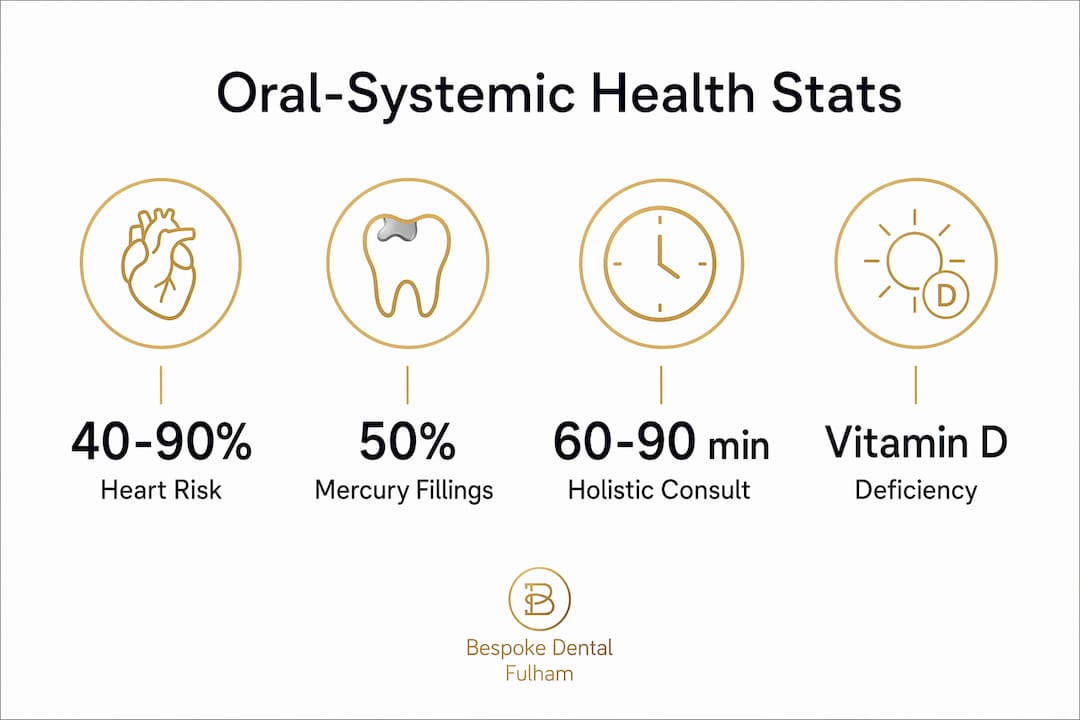
Treating oral conditions does not just improve your smile. It reduces the systemic inflammatory burden that underpins many chronic diseases. That is the core argument for why choosing integrative dentistry produces outcomes that extend well beyond the mouth.
What preventive strategies support holistic dental health?
Prevention in integrative dentistry goes beyond brushing twice daily. It addresses the biological environment in which your teeth and gums exist, including what you eat, how you sleep, and how your body manages stress.

Nutritional balance is foundational. A diet rich in fat-soluble vitamins such as D3 and K2, along with adequate magnesium and calcium, supports the remineralisation of enamel and the repair of periodontal tissue. Processed sugars and refined carbohydrates do the opposite, feeding the bacterial biofilm that drives gum disease. Holistic dental care integrates nutritional optimisation as a clinical tool, not an afterthought.
Stress management matters more than most patients realise. Chronic stress elevates cortisol, which suppresses immune function and accelerates periodontal breakdown. Patients who manage stress through practices such as yoga, mindfulness, or structured rest programmes, including those offered at wellness centres like Amrita Yoga and Wellness, often show measurably better gum health at follow-up appointments.
Minimally invasive therapies such as ozone treatment are another pillar of the integrative approach. Ozone is a naturally occurring gas with powerful antimicrobial properties. Applied to early-stage decay or infected gum tissue, it eliminates bacteria without drilling or cutting, preserving healthy tooth structure and reducing patient discomfort.
Practical preventive steps to discuss at your next consultation:
- Request a nutritional assessment alongside your periodontal review
- Ask about ozone therapy for early caries management
- Discuss airway screening if you snore, grind your teeth, or wake feeling unrefreshed
- Review your sleep quality and stress levels as part of your dental health history
- Ask about dental hygiene therapy as a regular preventive measure rather than a reactive one
Pro Tip: Vitamin D deficiency is strongly associated with periodontal disease. Before your integrative dental consultation, ask your GP for a 25-hydroxyvitamin D blood test. Sharing those results with your dentist gives them a more complete picture of your oral tissue health.
How to prepare for a holistic dental consultation in Fulham or London
A thorough holistic dental consultation requires more preparation than a standard appointment. The more information you bring, the more personalised and effective your care plan will be.
-
Compile a full medication and supplement list. Include prescription drugs, over-the-counter medications, and any supplements you take regularly. Some medications affect saliva production, bone density, and gum tissue health in ways that directly influence treatment planning.
-
Prepare a brief health history summary. Note any diagnosed conditions, recent illnesses, surgeries, or hospitalisations. Conditions such as autoimmune disorders, cardiovascular disease, and diabetes are particularly relevant to integrative dental planning.
-
Record your sleep and stress patterns. Note whether you snore, clench your jaw, or wake frequently during the night. These are clinical indicators for airway assessment and bruxism management.
-
Reflect on your diet and hydration habits. A rough picture of your daily nutrition, including sugar intake, alcohol consumption, and hydration, helps your dentist identify dietary contributors to decay or gum disease.
-
List your questions in advance. Integrative consultations cover a great deal of ground. Writing down your concerns beforehand means you leave with clear answers rather than half-remembered advice.
Patient active participation is what makes integrative dental care work. Your dentist, GP, and any other treating clinicians function best as a coordinated team, and you are the person who connects them. Sharing relevant information across your healthcare providers is not optional. It is the mechanism through which whole-body health improvements actually happen.
Key takeaways
Holistic dental care produces better long-term health outcomes because it treats oral conditions as markers of systemic health, not as isolated problems.
| Point | Details |
|---|---|
| Oral and systemic health are linked | Untreated gum disease raises cardiovascular disease risk by 40 to 90%. |
| Materials matter for long-term safety | Mercury-free, BPA-free restorations reduce systemic toxicity from dental work. |
| Advanced imaging finds hidden problems | 3D CBCT scans detect silent infections that standard X-rays miss. |
| Prevention includes lifestyle, not just brushing | Nutrition, sleep, and stress management are clinical tools in integrative care. |
| Preparation improves consultation outcomes | Bringing a full health history enables truly personalised treatment planning. |
Why I believe integrative dentistry is the right direction for London patients
From what I observe in practice, the patients who benefit most from integrative dental care are those who arrive already managing a chronic condition and have never been told their mouth might be contributing to it. That conversation changes things. When someone with poorly controlled Type 2 diabetes learns that their periodontal disease is actively impairing their blood glucose regulation, they stop treating dental appointments as optional.
London patients are increasingly health-literate and willing to invest in preventive care. What they often lack is a clinical environment that connects the dots between their dental health and their GP’s concerns. Integrative dentistry fills that gap. It does not replace modern dental science or technology. It uses those tools with a broader frame of reference, one that includes the whole person rather than just the presenting tooth.
The most important shift is in patient mindset. Acting as the CEO of your own health means bringing your full health picture to every dental appointment, asking questions about materials and diagnostics, and expecting your dentist to communicate with your other healthcare providers. That level of engagement produces outcomes that a reactive, symptom-only approach simply cannot match.
— Amit
Holistic dental care at Bespokedentalfulham in Fulham
Bespokedentalfulham brings integrative dental principles to patients across Fulham, Parsons Green, Chelsea, and the wider SW6 area. Every consultation begins with a thorough review of your systemic health, medications, and lifestyle, giving you a care plan that reflects your whole health picture rather than just your most recent dental complaint.
The practice uses biocompatible, mercury-free restorative materials and advanced digital diagnostics as standard. Whether you are exploring cosmetic dentistry options with a focus on long-term tissue health, or you want a comprehensive assessment that connects your oral health to your general wellbeing, Bespokedentalfulham offers the depth of care that makes that possible. To arrange a consultation, contact the practice directly or book online through the Bespokedentalfulham website.
FAQ
What is holistic dental care in simple terms?
Holistic dental care, also called integrative dentistry, treats oral health as part of your overall physical health. It uses biocompatible materials, advanced diagnostics, and lifestyle-based prevention to address root causes rather than symptoms alone.
Does holistic dentistry use different materials to conventional dentistry?
Yes. Integrative practitioners use mercury-free, BPA-free composites and ceramic restorations instead of metal amalgam fillings. This avoids the long-term systemic exposure associated with materials that contain approximately 50% mercury.
How does gum disease affect heart health?
Patients with untreated periodontal disease carry a 40 to 90% higher risk of heart disease, according to research cited by DentalPedia. Treating gum disease reduces systemic inflammation and lowers that cardiovascular risk measurably.
Is holistic dentistry available in Fulham and London?
Yes. Practices such as Bespokedentalfulham in Fulham offer integrative dental consultations that include systemic health reviews, advanced imaging, and biocompatible treatment options for patients across SW6 and greater London.
How long does a holistic dental consultation take?
A comprehensive integrative dental consultation typically lasts 60 to 90 minutes, compared to a standard check-up of around 15 to 20 minutes. The additional time covers a full health history, nutritional assessment, and airway evaluation.