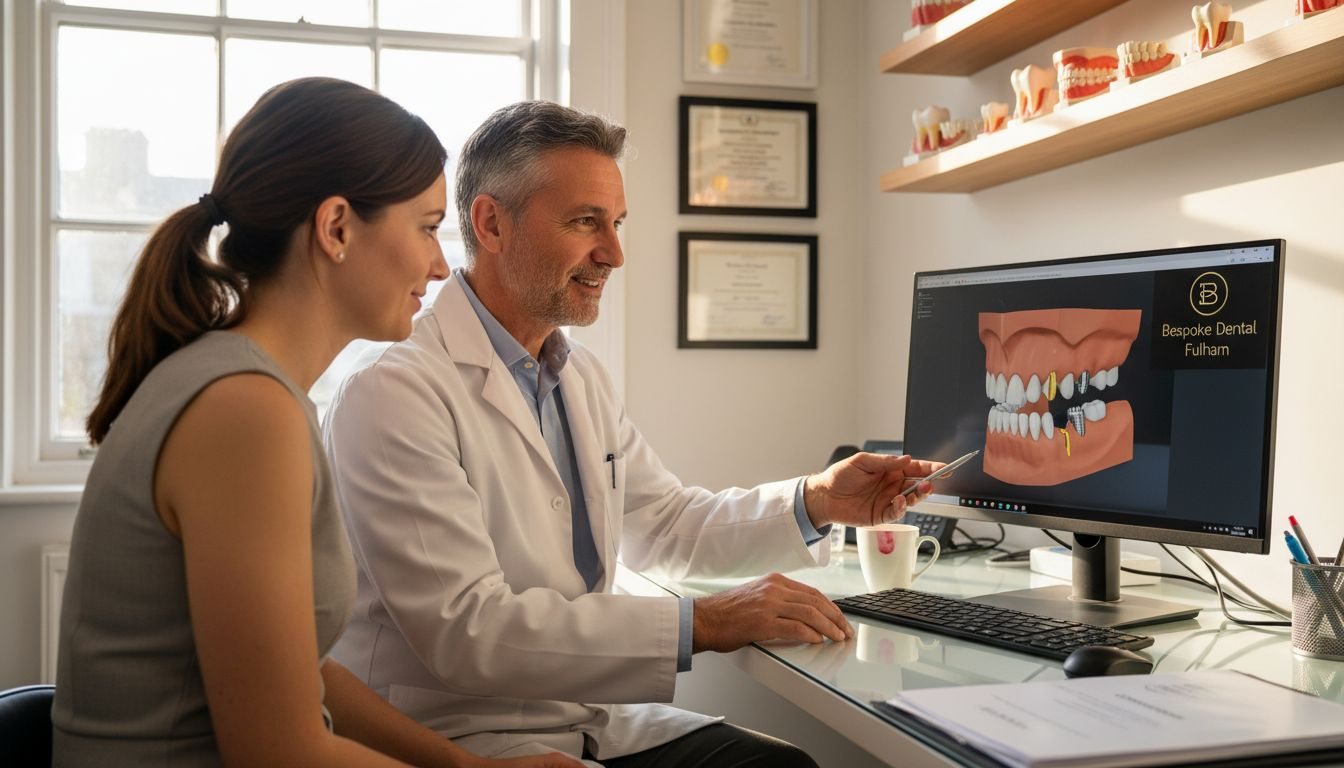
Deciding on the right dental implant can feel overwhelming, especially when every option seems to promise different benefits. If you’ve lost teeth or are facing major bone loss, understanding your choices is crucial to regaining confidence in your smile and daily comfort. Each type of implant offers its own blend of stability, aesthetics, and long-term results.
This guide cuts through confusion to reveal the key advantages of modern implant solutions. From the gold standard of osseointegration to custom-made options for the most complex cases, you’ll uncover practical insights for every jaw and situation. Get ready to discover the proven approaches that could give you a reliable, discreet, and lasting smile.
Table of Contents
ToggleTable of Contents
- 1. Endosteal Implants: The Gold Standard For Stability
- 2. Subperiosteal Implants: Solution For Minimal Bone
- 3. Zygomatic Implants: Advanced Option For Severe Bone Loss
- 4. All-on-4 Implants: Fixed Full-Arch Replacement
- 5. Mini Dental Implants: Minimally Invasive Option
- 6. Custom-Made Implants: Tailored For Aesthetic Perfection
Quick Summary
| Takeaway | Explanation |
|---|---|
| 1. Endosteal implants offer superior stability. | They integrate with the jawbone through osseointegration, creating a strong foundation for replacement teeth. |
| 2. Subperiosteal implants are ideal for minimal bone. | These implants sit on the jawbone surface, avoiding the need for bone grafting in patients with bone loss. |
| 3. Zygomatic implants bypass bone grafting altogether. | They anchor into the cheekbone, providing stability for patients with severe upper jawbone loss. |
| 4. All-on-4 implants enable immediate tooth replacement. | This approach uses four implants to support a full arch, allowing for immediate placement of replacement teeth. |
| 5. Custom-made implants offer aesthetic precision. | Designed using advanced imaging, they ensure perfect fit and natural appearance for unique anatomical structures. |
1. Endosteal Implants: The Gold Standard for Stability
Endosteal implants are the most widely used type of dental implant today. They’re placed directly into your jawbone, where they become an artificial tooth root that supports your replacement tooth or bridge.
These implants work through a biological process called osseointegration. Your jawbone grows around the titanium implant surface, creating a permanent bond that’s stronger than a natural tooth root. This stability is why they’re considered the gold standard for tooth replacement.
Osseointegration and surface properties of titanium implants ensure excellent long-term success rates. Modern surface treatments improve bone growth and reduce infection risk, offering you a durable solution that can last 20 years or longer.
Why Choose Endosteal Implants?
Several key advantages make these implants the preferred choice for patients in Fulham seeking a permanent tooth replacement:
- Superior stability – Your implant becomes part of your jawbone through osseointegration
- High success rates – Clinical evidence shows success rates exceeding 95% over ten years
- Natural appearance – The tooth sits at the gumline like your original tooth
- Long-lasting durability – With proper care, your implant can function for decades
- Bone preservation – The implant stimulates your jawbone, preventing bone loss that occurs after tooth loss
Unlike removable dentures or bridges, endosteal implants don’t require special cleaning routines. You brush and floss them exactly like natural teeth.
The procedure does require sufficient jawbone volume. If your bone has deteriorated due to years without teeth, your dentist might recommend bone grafting first. This ensures your implant has a solid foundation for integration.
Recovery typically takes three to six months for complete osseointegration, though you can resume normal activities within a few weeks. During this healing period, your bone is bonding with the implant surface at the microscopic level.
When comparing treatment options, dental implants offer distinct advantages over alternatives like root canals when tooth loss has already occurred.
Endosteal implants integrate directly with your jawbone, creating a foundation as stable as your original tooth root and eliminating the need for replacement every decade.
Pro tip: Ask your dentist about the implant’s surface treatment during your consultation, as newer optimised surfaces can reduce healing time and improve long-term stability.
2. Subperiosteal Implants: Solution for Minimal Bone
If you’ve experienced significant bone loss after tooth loss or gum disease, a traditional endosteal implant might not be possible. This is where subperiosteal implants offer a viable alternative that doesn’t require bone grafting.
Subperiosteal implants rest on top of your jawbone, beneath the gum tissue layer called the periosteum. Rather than integrating into the bone like endosteal implants, they anchor into the bone’s surface, making them ideal when you have minimal bone height or width available.
The key advantage is avoiding lengthy reconstructive surgery. Bone grafting procedures can take months to heal before you can even begin implant placement. With subperiosteal implants, you skip this step entirely and move directly toward your replacement teeth.
How Modern Subperiosteal Implants Work
Advancements in digital technology have transformed these implants from a rarely used option into a practical solution. Your dentist uses 3D printing and digital imaging to create a custom implant that matches your bone anatomy precisely.
The process involves several stages:
- Detailed scanning – Cone beam CT scans create a three-dimensional map of your jawbone
- Customised design – Your implant is tailored to your unique bone shape and size
- Surgical placement – The custom fixture is positioned on your bone surface through a single surgical procedure
- Integration – Bone grows around and through the implant framework, securing it permanently
This precision engineering means your implant conforms perfectly to your available bone, maximising stability without requiring grafting procedures.
Who Benefits from Subperiosteal Implants?
These implants work best for patients with moderate to severe bone loss who want to avoid lengthy bone reconstruction. They’re particularly valuable if you’ve worn dentures for many years and experienced significant bone resorption.
Subperiosteal implants can support multiple teeth on a single framework, making them cost-effective for replacing several missing teeth. Custom-made fixtures provide stable support for your dental prostheses whilst maintaining your facial structure.
Recovery typically takes three to four months for complete healing. You’ll experience less post-operative discomfort than with bone grafting, allowing you to return to normal activities more quickly.
Subperiosteal implants offer patients with minimal bone a path to permanent tooth replacement without the months of bone grafting recovery.
Pro tip: Request detailed 3D bone scans during your consultation so your dentist can determine whether a custom subperiosteal implant will give you the stability and aesthetics you’re seeking.
3. Zygomatic Implants: Advanced Option for Severe Bone Loss
When severe bone loss makes traditional implants impossible, zygomatic implants represent an advanced surgical solution. Rather than anchoring into your jawbone, these implants anchor directly into your zygomatic bone (cheekbone), which remains dense even when your upper jaw has deteriorated significantly.
This approach is revolutionary for patients facing extreme maxillary atrophy. You avoid bone grafting altogether and can often receive your replacement teeth immediately, transforming your smile in a single treatment plan.
Zygomatic implants are longer than traditional implants, extending from your upper teeth area into your cheekbone. The bone density in this region is considerably greater, providing exceptional stability without requiring months of bone reconstruction surgery.
Why Zygomatic Implants Work for Severe Cases
If you’ve experienced years of bone loss from missing teeth or severe gum disease, your upper jawbone may be too thin or short for conventional implants. Zygomatic implants bypass this problem entirely by utilising the bone structure that remains intact.
The surgical technique requires specialised training and advanced imaging, but the outcomes justify the complexity. Survival rates average around 96% over the long term, with many patients achieving success rates exceeding 94 to 100% within five years.
These implants enable immediate loading protocols, meaning your dentist can place your replacement teeth on the day of surgery or shortly after. You won’t spend months without teeth waiting for healing.
Key Advantages for Your Situation
Zygomatic implants solve multiple challenges simultaneously:
- No bone grafting required – Eliminates months of preparatory surgery and recovery
- Exceptional stability – Anchors into dense cheekbone rather than atrophic jawbone
- Faster treatment – Complete rehabilitation in weeks rather than a year or more
- Immediate teeth – You can have functional replacement teeth immediately or very soon after surgery
- Avoids complex reconstructions – Significantly simpler than attempting maxillary bone restoration
These implants work particularly well for patients who’ve worn dentures for many years and experienced substantial bone resorption. They’re also ideal if you want to avoid prolonged treatment timelines.
Recovery is typically straightforward. Most patients experience mild swelling that resolves within two weeks and can return to normal activities within a month.
Understanding the Investment
Zygomatic implant costs reflect the advanced surgical expertise required, but you’re gaining a graftless solution that saves time and complexity. When you calculate the costs of bone grafting, healing time, and additional procedures, zygomatic implants often represent better value.
Zygomatic implants anchor into your cheekbone, offering patients with extreme bone loss a sophisticated alternative to years of bone grafting and reconstruction.
Pro tip: Request cone beam CT imaging during your initial consultation so your dentist can assess whether your cheekbone density supports zygomatic implants and can plan optimal placement.
4. All-on-4 Implants: Fixed Full-Arch Replacement
If you’ve lost most or all of your upper or lower teeth, All-on-4 implants offer a transformative solution that replaces an entire arch of teeth with just four strategically placed implants. This approach gives you a fixed, permanent smile without the hassle of removable dentures.
The technique uses two implants placed straight in the front and two tilted implants at the back, maximising your existing bone volume. Your replacement teeth are attached the same day, meaning you walk out of surgery with a functioning, aesthetic smile.
How All-on-4 Works
The genius of this treatment lies in implant placement strategy. Rather than needing six to eight implants as in traditional full-mouth reconstruction, four implants positioned at precise angles distribute forces evenly and provide exceptional stability.
Tilted posterior implants bypass the need for bone grafting by using your existing bone more efficiently. The anterior implants anchor vertically whilst the rear implants angle backward, creating a stable foundation for your fixed prosthesis.
This graftless approach is revolutionary for patients with moderate bone loss. You avoid months of bone reconstruction surgery and move directly to having permanent teeth.
Why Choose All-on-4 for Full-Arch Tooth Loss
If you’re currently wearing dentures or have been living with missing teeth, All-on-4 addresses multiple frustrations simultaneously:
- Immediate teeth – Your replacement teeth are placed same day or within 24 hours
- Fixed solution – Your teeth are permanently attached, not removable like dentures
- Cost-effective – Uses fewer implants than traditional methods, reducing overall expense
- Fewer surgeries – One procedure replaces what might have taken multiple operations
- Better bone preservation – The implants stimulate your jawbone, preventing continued deterioration
- Natural appearance – Your new teeth are custom-designed to match your desired smile
The treatment significantly improves quality of life. You can eat normally, speak clearly, and smile confidently without worrying about dentures shifting or falling out.
The Timeline and Recovery
Unlike traditional implant treatments that span 9 to 12 months, All-on-4 compresses your timeline dramatically. You receive your complete replacement teeth within days of surgery, though your final prosthesis is typically delivered after a few months of healing.
Initial recovery takes about two weeks for swelling to subside. Most patients return to normal activities within a month and enjoy their new smile immediately.
All-on-4 treatment provides edentulous patients62041-9/fulltext) with a stable, aesthetic solution that improves function and confidence. The high primary stability ensures your teeth work beautifully from day one.
All-on-4 implants transform full-mouth tooth loss into a permanent solution in a single procedure, giving you your smile back immediately.
Pro tip: During your consultation, ask your dentist to show you 3D treatment planning images so you can visualise exactly how your new teeth will look before surgery begins.
5. Mini Dental Implants: Minimally Invasive Option
Mini dental implants are smaller-diameter implants that offer a gentler, less invasive approach to tooth replacement. They’re particularly valuable if you have limited bone volume or want a quicker, simpler procedure than traditional implants.
These implants are about half the diameter of standard implants, requiring less bone and a less extensive surgical procedure. They work exceptionally well for stabilising dentures, supporting single teeth, or serving as temporary replacements whilst you plan larger implant work.
What Makes Mini Implants Different
The primary distinction is size and invasiveness. Standard implants require precise surgical sites and significant bone volume, but mini implants can often be placed with minimal incisions using less invasive techniques.
Mini implants excel at denture stabilisation. If you’re frustrated with loose dentures that move or slip when eating or speaking, just two or four mini implants can secure your denture permanently. Your denture clips onto the implants, eliminating the need for adhesives.
The minimally invasive approach means faster healing and recovery compared to traditional implant surgery. You experience less trauma to your tissues and can return to normal activities quickly.
Ideal Uses for Mini Implants
These implants solve specific problems effectively:
- Denture stabilisation – Secure loose dentures with permanent support
- Single tooth replacement – Support a replacement tooth where bone is limited
- Temporary prostheses – Provide interim teeth whilst waiting for comprehensive implant work
- Narrow spaces – Fill gaps where standard implants won’t fit
- Quick solutions – Get functional teeth in weeks rather than months
- Reduced surgical trauma – Minimally invasive placement with faster healing
Mini implants work brilliantly for patients who’ve worn dentures for years and want the security and comfort of fixed teeth without extensive bone grafting. They’re also excellent for those anxious about surgical procedures, as the operation is simpler and quicker.
Recovery and Expectations
Recovery is remarkably swift. Most patients experience minimal discomfort and can resume normal activities within days. Swelling is typically less pronounced than with larger implants.
Your denture can often be adapted to attach to mini implants immediately or within a few days. You’re not left without teeth during healing as you might be with other procedures.
Mini implants offer a minimally invasive pathway to stable, fixed teeth when traditional implants aren’t suitable.
Pro tip: If you’re currently struggling with loose dentures, ask your dentist whether mini implants can stabilise your existing denture rather than requiring a completely new prosthesis, which saves both time and cost.
6. Custom-Made Implants: Tailored for Aesthetic Perfection
If you want a dental implant designed specifically for your unique anatomy, custom-made implants represent the pinnacle of precision dentistry. These implants are fabricated from your individual patient data, ensuring perfect fit, optimal function, and exceptional aesthetics.
Unlike standard implants that come in predefined sizes, custom implants are created using advanced digital imaging and 3D printing technology. Your dentist uses detailed scans of your jawbone to design an implant that matches your anatomy precisely, resulting in superior integration and a smile that looks entirely natural.
How Custom Implants Are Made
The process begins with sophisticated imaging. Cone beam CT scans capture your jawbone structure in minute detail, creating a three-dimensional digital model. Your dentist then designs your implant to match your specific bone anatomy, considering factors like bone height, width, density, and angle.
Advanced manufacturing technology produces your implant with extraordinary precision. The custom design enhances how your implant integrates with your bone, improving both function and longevity.
This bespoke approach works brilliantly for complex cases where standard implants won’t provide optimal results. If you have irregular bone structure, previous surgical sites, or anatomical challenges, custom implants solve problems that might defeat standard solutions.
Why Customisation Matters for Your Smile
Custom implants offer advantages that extend far beyond functionality:
- Perfect fit – Designed specifically for your jawbone anatomy
- Enhanced integration – Optimised angles and shape improve osseointegration
- Superior aesthetics – Your restoration sits perfectly and looks entirely natural
- Longevity – Better biological compatibility means lasting results
- Complex case solutions – Handles irregular bone or challenging anatomy
- Predictable outcomes – Digital planning shows exactly how your implant will function
- Patient-specific design – Considers your unique anatomy, not generic dimensions
When your implant matches your bone structure perfectly, your replacement tooth sits at precisely the right angle and depth. This creates an aesthetic result that’s indistinguishable from a natural tooth.
The Aesthetic Advantage
For patients in Fulham seeking a discreet smile, custom implants deliver unparalleled results. Your replacement tooth emerges from your gum at the exact angle nature intended, and the underlying implant supports it with perfect biomechanical harmony.
Preserving your smile design ensures your new teeth harmonise with your facial features and existing dentition. With custom implants, your dentist controls every aesthetic parameter, from emergence angle to restoration contours.
The combination of precision engineering and aesthetic customisation means you get a smile that looks authentically yours. Your replacement teeth integrate seamlessly with your natural smile rather than appearing obviously restored.
Custom-made implants use your unique anatomy to create a restoration that’s optimised for both function and aesthetics, delivering a truly discreet smile.
Pro tip: Ask your dentist for a digital preview of your custom implant design before surgery so you can visualise exactly how your replacement tooth will look and function in your smile.
Below is a comprehensive table summarising the types of dental implants discussed in the article, including their characteristics, advantages, and indications.
| Type of Dental Implant | Characteristics | Advantages | Indications |
|---|---|---|---|
| Endosteal Implants | Placed within the jawbone and integrate through osseointegration. | Superior stability, long-term durability, and natural appearance. | Suitable for individuals with adequate jawbone volume. |
| Subperiosteal Implants | Rest on top of the jawbone beneath the gum tissue. | Avoidance of bone grafting and customised design for specific anatomy. | Ideal for patients with minimal bone height or width. |
| Zygomatic Implants | Anchored to the zygomatic bone (cheekbone). | High stability, eliminates the need for bone grafting, suitable for immediate teeth replacement. | Designed for cases of severe maxillary bone loss. |
| All-on-4 Implants | Utilises four strategically positioned implants per arch. | Immediate smile restoration, efficient use of bone, fewer components required. | Suitable for total replacement of upper or lower arches. |
| Mini Dental Implants | Smaller diameter implants with minimally invasive placement. | Quicker recovery, stabilisation of dentures, adaptable approach. | Best for narrow spaces, denture stabilisation, or temporary solutions. |
| Custom-Made Implants | Fabricated specifically for the patient’s unique anatomy using 3D imaging. | Enhanced osseointegration, superior function, and aesthetic outcomes. | Ideal for complex cases needing a personalised solution. |
Discover Your Perfect Dental Implant Solution at Bespoked Dental Fulham
Choosing the right type of dental implant can feel overwhelming, especially when facing challenges like bone loss, aesthetics, or the desire for a discreet, natural-looking smile. Whether you need the stable reliability of endosteal implants, the customised precision of bespoke solutions, or quicker options like mini implants, understanding each option is essential. At Bespoked Dental Fulham, we prioritise your unique dental anatomy and personal goals using advanced digital technology and Harley Street standard techniques to ensure exceptional function and aesthetics.
Experience compassionate care in a serene, private environment where your comfort and confidence come first. With our expertise in restorative treatments and commitment to bespoke smile transformations, you can finally regain your smile with a solution tailored to your needs.
Ready to explore which dental implant type suits you best Find out how our personalised approach can give you a discreet and durable smile by contacting Bespoked Dental Fulham today. Book your consultation now via https://wa.me/447745666181/ and take the first step towards confident, lasting dental restoration.
Frequently Asked Questions
What are the main types of dental implants?
The main types of dental implants include Endosteal, Subperiosteal, Zygomatic, All-on-4, Mini Dental Implants, and Custom-Made Implants. Understand each type to determine which best suits your needs by consulting with your dentist.
How does osseointegration work with dental implants?
Osseointegration is the process where your jawbone grows around the titanium implant, creating a solid bond that stabilises the implant. To ensure successful osseointegration, follow your dentist’s post-surgery care instructions closely and avoid hard foods during the healing period.
What advantages do All-on-4 implants offer for full-arch restoration?
All-on-4 implants provide a fixed, permanent solution for full-arch restoration using only four strategically placed implants. Schedule a consultation with your dentist to explore if this option is suitable for your dental health and can enhance your quality of life within days of the procedure.
Can mini dental implants stabilise loose dentures?
Yes, mini dental implants can effectively stabilise loose dentures, reducing movement and the need for adhesives. If you’re struggling with unstable dentures, contact your dentist to discuss the possibility of mini implants for a more secure fit.
How long is the recovery period after implant surgery?
Recovery time varies by implant type, but most patients can expect initial healing within 2 to 6 months. Discuss your specific circumstances with your dentist to get a clearer timeline for your recovery and aftercare needs.
What should I consider when choosing custom-made implants?
When considering custom-made implants, focus on their tailored design, optimal fit, and enhanced aesthetics specific to your jaw structure. Talk with your dentist about the detailed imaging and design process to achieve the best results tailored to your dental needs.
Recommended
- Dental implants in Fulham, London | Bespoke Dental Fulham
- HOW MUCH do dental implants cost? | Bespoke Dental Fulham
- Which dental treatment is right for you? Dental implants vs Root canal | Bespoke Dental Fulham
- Articles about dental treatments | Bespoke Dental Fulham
- A Comprehensive Guide to Dental Implants: Types, Procedure, and Aftercare – Paynless Dental Clinic
- Aesthetic Dentistry Explained: Transforming Smiles with Implants
- In What Ways Do Senior Dental Implants Improve Quality Of Life For Old – Y-Brush USA