TL;DR:
- Only 1% of UK dentists are registered specialists with advanced postgraduate training.
- Specialists focus on complex cases beyond routine general dental treatments.
- Choosing a specialist ensures higher precision, better aesthetic outcomes, and long-term success.
Not all dentists are the same. Most people assume that any qualified dentist can handle every dental need, but the reality is quite different. In the UK, specialist dentistry covers 13 recognised fields requiring years of advanced postgraduate training beyond a standard dental degree. Fewer than 1% of registered dentists hold specialist status with the General Dental Council (GDC). For patients in Fulham who expect precision, discretion, and genuinely outstanding aesthetic or restorative outcomes, understanding this distinction is not just useful — it is essential to making the right choice for your dental health.
Table of Contents
- How specialist dentistry is defined and regulated
- Specialist dentistry vs general dentistry: Key differences for patients
- Core specialties for cosmetic and restorative excellence
- Modern methods in specialist care: What sets the experience apart
- Why choosing a specialist makes all the difference in Fulham
- How to access specialist dentistry with confidence
- Frequently asked questions
Key Takeaways
| Point | Details |
|---|---|
| Specialist training depth | Dental specialists in the UK complete rigorous 3-5 year postgraduate programmes beyond routine dentistry. |
| Cosmetic and restorative focus | Prosthodontists and restorative dentists are crucial for advanced smile and function enhancements. |
| Modern, minimally invasive methods | Specialists use cutting-edge digital workflows and biomimetic materials for superior outcomes. |
| Value for Fulham patients | Choosing a specialist ensures discretion, comfort, and the highest standard of care for demanding cases. |
How specialist dentistry is defined and regulated
In the UK, the term “dental specialist” has a precise, protected meaning. It is not a marketing label any dentist can claim. To be listed on the GDC specialist register, a dentist must complete accredited postgraduate training lasting between three and five years in one of the 13 formally recognised specialties. This training goes far beyond what is covered in a standard dental degree, focusing on complex clinical scenarios, research, and advanced techniques specific to that field.
The GDC regulates these titles strictly. If a dentist calls themselves a “specialist” without being listed on the register, they are breaching professional regulations. This gives you, as a patient, a clear and reliable way to verify credentials before committing to treatment.
The 13 GDC-recognised specialties are:
| Specialty | Focus area |
|---|---|
| Dental and Maxillofacial Radiology | Advanced imaging and diagnosis |
| Dental Public Health | Population-level oral health |
| Endodontics | Root canal and pulp treatment |
| Oral and Maxillofacial Pathology | Diagnosis of oral disease |
| Oral Medicine | Medically complex oral conditions |
| Oral Microbiology | Infection and microbial disease |
| Oral Surgery | Surgical extractions and jaw procedures |
| Orthodontics | Teeth alignment and bite correction |
| Paediatric Dentistry | Dental care for children |
| Periodontics | Gum disease and supporting structures |
| Prosthodontics | Tooth replacement and reconstruction |
| Restorative Dentistry | Comprehensive oral rehabilitation |
| Special Care Dentistry | Treatment for patients with disabilities |
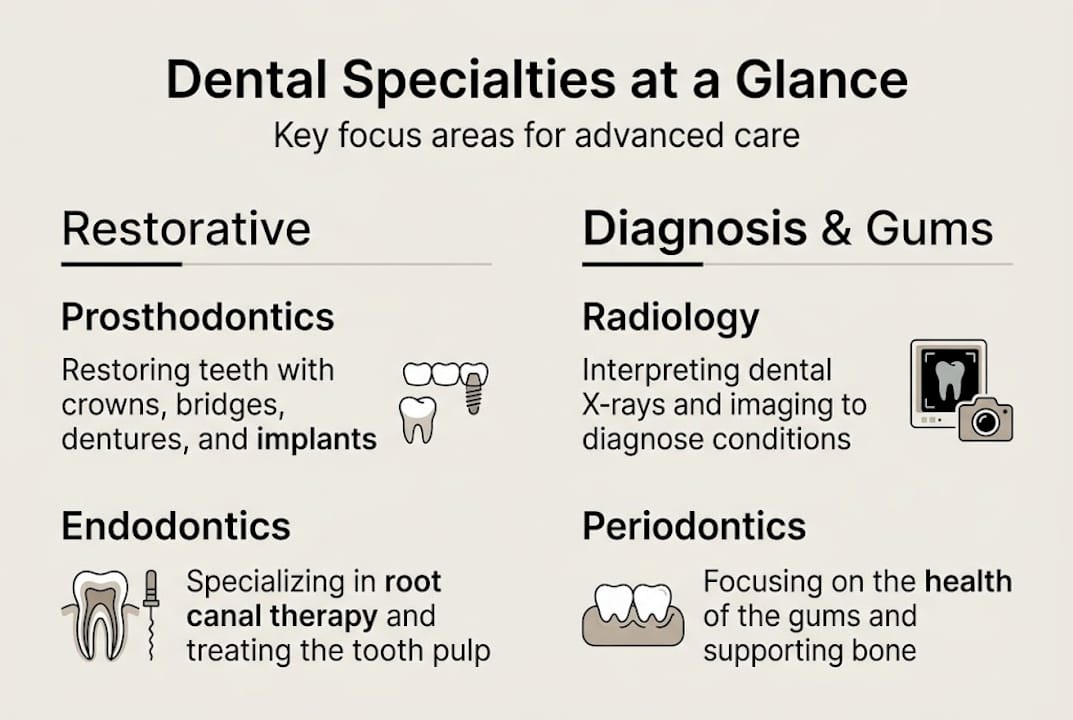
For patients seeking exceptional dental care in Fulham, knowing which specialty applies to your needs is the first step towards superior outcomes. The Parsons Green dental standards in the area reflect a growing expectation for this level of expertise. It is also worth noting that private dental fees for specialist-led care reflect the additional training, materials, and time involved in delivering truly advanced treatment.
Specialist dentistry vs general dentistry: Key differences for patients
Once you understand the framework, it becomes clear why the distinction between a general dentist and a specialist matters so much for patients with complex or cosmetic needs.
A general dentist is trained to provide a broad range of everyday care. This includes check-ups, fillings, basic extractions, hygiene appointments, and straightforward restorations. They are skilled and essential practitioners, but their training is designed for breadth rather than depth. General dental treatments cover the vast majority of routine dental needs effectively.
Specialists, by contrast, are trained to manage cases that fall outside the scope of routine care. These include:
- Full-mouth rehabilitation following trauma or severe wear
- Complex implant placement in patients with bone loss or medical complications
- Advanced gum disease requiring surgical intervention
- Aesthetic reconstructions involving multiple teeth and materials
- Cases where function and aesthetics must be restored simultaneously
The referral pathway matters too. When a general dentist encounters a case beyond their scope, they refer to a specialist. This referral process is not a failure — it is good clinical practice. Receiving specialist input often leads to a more predictable result and a longer-lasting outcome.
“Specialists handle the advanced, high-risk, and complex cases that general dentists refer for better patient outcomes.”
One telling statistic: fewer than 1% of UK dentists are registered prosthodontists, which is the specialty most closely linked to high-aesthetic tooth replacement and reconstruction. This scarcity underlines how rare genuine specialist expertise is. For those exploring the full benefits of aesthetic dental treatments, working with a specialist rather than a generalist can be the difference between a result that looks good and one that truly transforms. Patients with gum concerns should also consider periodontal specialist care as part of any comprehensive treatment plan.
Core specialties for cosmetic and restorative excellence
For Fulham patients focused on cosmetic and restorative outcomes, two specialties stand out above all others: Prosthodontics and Restorative Dentistry.
Prosthodontics is the specialty dedicated to replacing and restoring teeth using crowns, bridges, dentures, and implants. A prosthodontist completes three years of postgraduate training focused entirely on the science and artistry of tooth replacement. They understand not just how to place a restoration, but how it will function, wear, and look over decades.
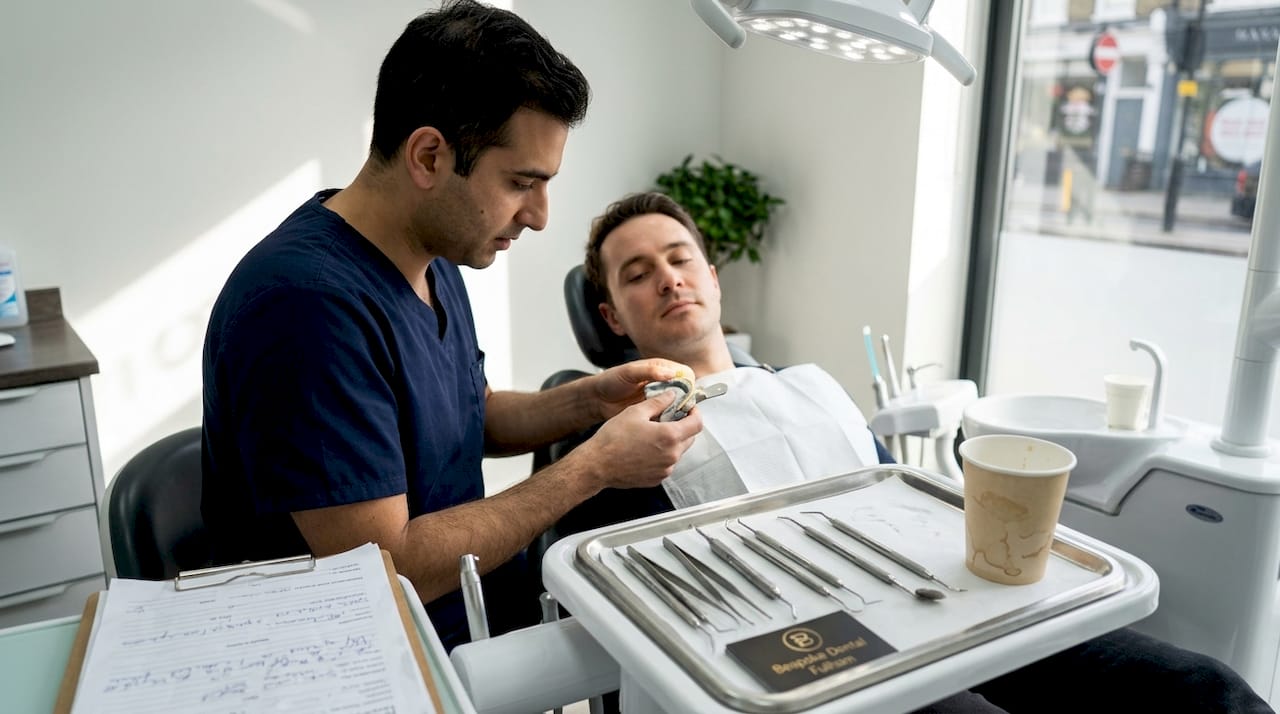
Restorative Dentistry is arguably the most demanding of all the specialties, requiring five years of postgraduate training. It combines elements of prosthodontics, periodontics, and endodontics into a single, holistic discipline. A restorative specialist can manage the full picture: gum health, root health, tooth structure, and aesthetic outcome, all within one treatment plan.
Key benefits of these specialties for patients seeking premium outcomes include:
- Precision planning using digital tools to map every aspect of your smile before treatment begins
- Material expertise to select the most natural-looking, durable options for your specific case
- Aesthetic sensitivity developed through years of focused cosmetic and restorative casework
- Multidisciplinary coordination with periodontists, orthodontists, and oral surgeons when needed
- Long-term thinking that prioritises the health and longevity of your teeth, not just the immediate result
Pro Tip: When researching practitioners, ask specifically whether they are on the GDC specialist register for Prosthodontics or Restorative Dentistry. This single question will tell you more than any marketing claim.
Patients with existing gum concerns should explore periodontal treatment options alongside restorative planning, as gum health forms the foundation of any lasting cosmetic result. General dental services can support ongoing maintenance once specialist work is complete.
Modern methods in specialist care: What sets the experience apart
Specialist training does not just mean more knowledge. It means access to, and mastery of, the most advanced techniques and technologies available in modern dentistry.
Here is how the specialist experience differs in practice:
- Intraoral scanning replaces messy traditional impressions with precise digital models of your teeth, improving both comfort and accuracy.
- CBCT imaging (cone beam computed tomography) provides three-dimensional views of bone, roots, and anatomy, enabling safer and more predictable implant planning.
- CAD-CAM technology allows crowns, veneers, and bridges to be designed and milled with computer precision, reducing human error and improving fit.
- Minimally invasive preparations preserve as much natural tooth structure as possible, which is better for long-term dental health.
- Biomimetic materials such as zirconia and advanced composite resins closely replicate the appearance and strength of natural enamel.
The result of minimally invasive digital workflows is treatment that is faster, more comfortable, and more predictable than traditional approaches. Patients experience less discomfort during procedures and shorter recovery periods.
Collaboration is another defining feature of specialist care. Complex cases rarely require just one discipline. A restorative specialist may coordinate with a periodontist to stabilise gum health before placing implants, or with an orthodontist to align teeth before final restorations are fitted. This joined-up approach produces results that hold up over time.
Pro Tip: If anxiety is a concern, ask about sedation techniques available at your chosen practice. Specialist clinics often offer conscious sedation options that make even complex procedures feel manageable.
Why choosing a specialist makes all the difference in Fulham
There is a view, still common among patients, that a good general dentist is sufficient for most needs. In many cases, that is true. But for anyone considering significant cosmetic or restorative work, this assumption can lead to disappointing or even costly outcomes.
Specialists are not simply more trained versions of general dentists. They think differently about complex cases. They have spent years managing the kinds of scenarios that most general practitioners rarely encounter, which means their clinical judgement in those situations is simply sharper.
For patients in Fulham, where GDC-registered prosthodontists and restorative specialists are available, the choice to seek specialist care is also a choice that aligns with the expectations of this community. Privacy, comfort, and a result that genuinely meets high aesthetic standards are not optional extras here — they are the baseline.
Many patients also underestimate the value of multidisciplinary planning. A specialist does not just treat what is in front of them. They consider the whole picture: how your bite functions, how your gums support your teeth, how your restorations will age. That level of thinking is what separates a good result from an exceptional one.
How to access specialist dentistry with confidence
If you are considering advanced cosmetic or restorative work, the quality of your practitioner matters as much as the treatment itself.
At Bespoke Dental Fulham, we bring Harley Street-standard techniques and specialist-led care to the heart of SW6. Whether you are exploring the benefits of aesthetic dental treatments or considering specialist veneers as part of a smile transformation, we offer discreet, personalised consultations designed around your goals. Our approach prioritises your comfort, your privacy, and the longevity of your results. Book a consultation today and take the first step towards care that truly reflects your expectations.
Frequently asked questions
What does it mean to be a dental specialist in the UK?
A dental specialist is a dentist who has completed 3 to 5 years of accredited postgraduate training in one of 13 recognised fields and is listed on the GDC specialist register. The title is protected and regulated, so you can verify it independently.
Which dental specialties are most important for cosmetic and restorative results?
In the UK, Prosthodontics and Restorative Dentistry are the key specialties for advanced cosmetic and restorative care, covering everything from implants and crowns to full-mouth rehabilitation.
How do I know if my dentist is a registered specialist?
You can check the General Dental Council’s online register at any time to confirm whether your dentist holds specialist status in a specific field. This is free, public, and takes only a few minutes.
When should I ask to see a specialist rather than a general dentist?
If you need complex cosmetic work, full-mouth rehabilitation, or treatment involving implants or significant bone and gum considerations, a specialist offers advanced care tailored precisely to your situation and long-term needs.
Recommended
- What is boutique dentistry? Personalised care explained
- Private Dentist Near Me: Exceptional Dental Care in Fulham, London SW6 | Bespoke Dental Fulham
- Private Dentist in Parsons Green: Elevating Dental Care in SW6 for 2026 | Bespoke Dental Fulham
- Cosmetic dentistry explained: Modern solutions for a confident smile | Paynless