TL;DR:
- A comprehensive dental consultation depends on proper preparation, including bringing essential documents and having clear questions ready. Knowing what to expect during each appointment stage reduces anxiety and encourages effective communication with your dental team. Early disclosure of anxiety and thoughtful questions ensure a tailored, comfortable experience that promotes trust and better oral health outcomes.
A well-prepared dental consultation is defined by three things: the right documents in hand, a clear understanding of what the appointment involves, and a list of questions ready before you sit in the chair. Knowing how to prepare for a dental consultation transforms what can feel like an uncertain experience into a productive, confidence-building conversation with your dental team. At Bespokedentalfulham in Fulham, London, the consultation is the foundation of every treatment plan. Whether you are attending your first private dental exam or returning after a gap, preparation determines how much value you take away from the appointment.
What to bring to your dental consultation
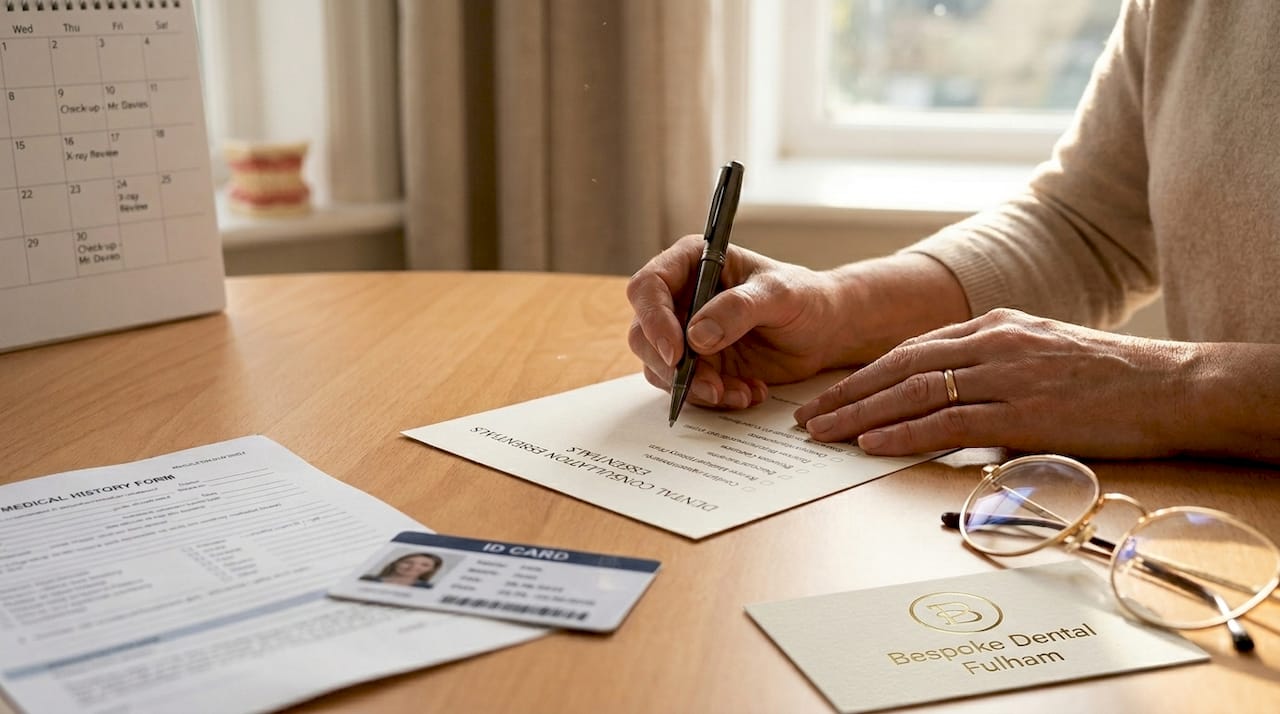
The practical side of preparation matters more than most patients realise. Bringing insurance details, photo ID, and a complete medication list to your appointment speeds up check-in and allows the dental team to plan safe, appropriate care from the outset.
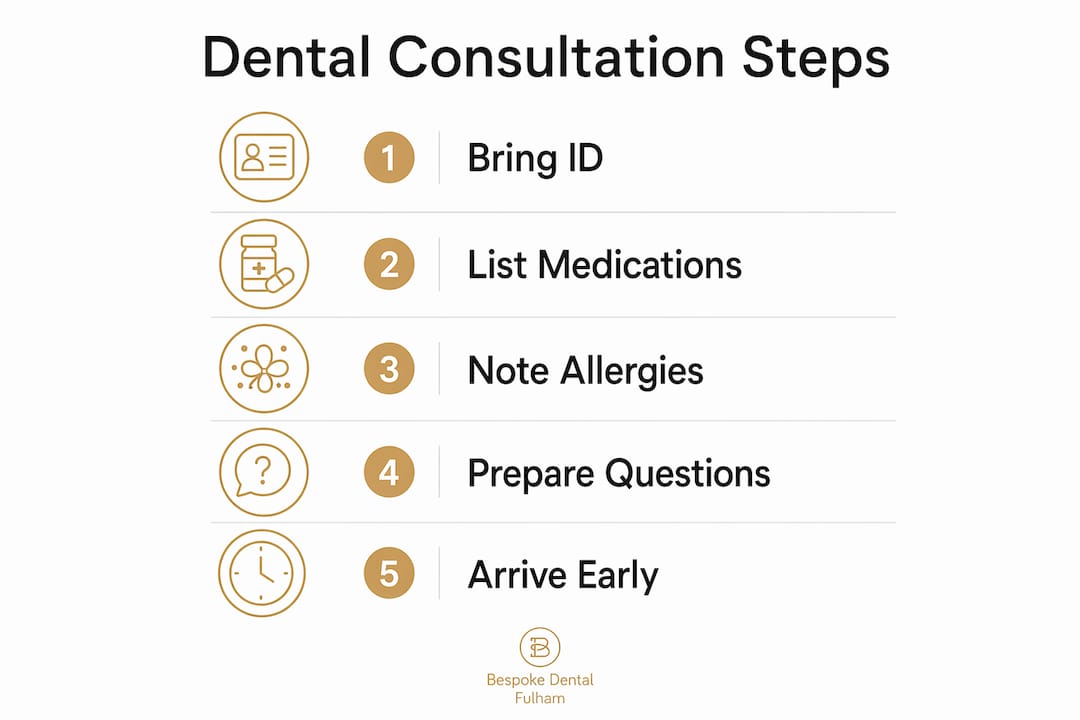
Here is what to gather before your visit:
- Photo ID and payment details. Private practices require identification for new patient registration. Bring a valid passport or driving licence.
- A full medication list. Include prescription drugs, over-the-counter medicines, and supplements. Some medications affect bleeding risk and healing, which directly influences treatment planning decisions.
- Known allergies. Note any allergies to antibiotics, latex, or anaesthetic agents. This is non-negotiable for safe care.
- Previous dental records or X-rays. If you are switching dentists, request these from your former practice. Prior X-rays avoid repeat radiation exposure and accelerate diagnosis, which benefits both your safety and comfort.
- Any dental appliances you currently use. Bring retainers, night guards, or aligners so the dentist can assess fit and condition.
- Comfort items if you feel anxious. Headphones, a stress ball, or a familiar item can make a genuine difference during the appointment.
Pro Tip: Arrive 10 to 15 minutes early. Early arrival reduces stress and gives you time to complete any new-patient paperwork calmly. Many private practices, including Bespokedentalfulham, offer online forms you can fill in before you arrive.
Many patients overlook supplements when compiling their medication list. Vitamin E, fish oil, and aspirin all affect bleeding. A comprehensive list, including supplements, is one of the most clinically useful things you can bring.
What happens during a private dental consultation in Fulham
Understanding the sequence of a consultation removes the anxiety of the unknown. Dental consultations follow a structured sequence covering discussion, examination, possible imaging, and a review of findings with treatment planning. Treatment itself does not typically begin at this stage, which is worth knowing in advance.
A typical private consultation at a practice like Bespokedentalfulham in Fulham proceeds as follows:
- Initial conversation. The dentist asks about your symptoms, concerns, dental history, and goals. This is your opportunity to share everything relevant, including any cosmetic interests or functional problems.
- Clinical examination. The dentist examines your teeth, gums, bite, and soft tissues. This gives a baseline picture of your oral health.
- Diagnostic imaging. Depending on your situation, the dentist may take digital X-rays or a 3D cone beam scan. These reveal what the eye cannot see, including bone levels, root positions, and hidden decay.
- Review of findings. The dentist explains both healthy areas and areas of concern. Transparent communication at this stage is the hallmark of a quality private practice.
- Discussion of treatment options. You receive a clear explanation of what treatment is needed, how urgent it is, and what it costs. Alternatives are presented where they exist.
- Next steps. You leave with a written treatment plan and a clear understanding of what happens next.
The table below summarises what each stage involves and what you should expect from it.
| Stage | What happens | What to expect from your dentist |
|---|---|---|
| Initial conversation | Symptoms, history, goals discussed | Active listening, no judgement |
| Clinical examination | Teeth, gums, bite assessed | Clear commentary as they examine |
| Diagnostic imaging | X-rays or 3D scan if needed | Explanation of why imaging is required |
| Review of findings | Healthy and problem areas explained | Plain-language summary, no jargon |
| Treatment discussion | Options, costs, urgency outlined | Written plan provided before you leave |
The first visit establishes priorities, not immediate treatment. Knowing this eases the pressure many patients put on themselves before they arrive.
How to prepare your questions and communicate effectively
The most productive consultations happen when patients arrive with specific questions written down. Writing down concerns before your visit ensures nothing important is missed and helps the dentist understand your priorities from the start.
Consider preparing questions across these areas:
- Your symptoms. When did they start? Are they constant or intermittent? Does anything make them better or worse?
- Treatment alternatives. Ask whether more than one option exists for your situation and what the differences are in terms of outcome, cost, and recovery.
- Timelines. How urgent is treatment? What happens if you delay?
- Costs. Request a written breakdown. Private consultations should always include transparent fee information.
- Maintenance and prevention. Ask what you can do at home to protect your oral health between visits. Enquire about preventive hygiene care as part of your ongoing plan.
- Cosmetic interests. If you have aesthetic goals, such as whitening, straightening, or improving the shape of your teeth, raise them now. Bespokedentalfulham offers digital smile design and a full range of aesthetic treatments, so the consultation is the right moment to explore what is possible.
Pro Tip: Tell the receptionist about any dental anxiety when you book, not just when you arrive. Disclosing anxiety early allows the team to arrange extra chair time, step-by-step explanations, or sedation options before your appointment begins.
Patient education and transparent communication build trust before the dentist even begins the examination. The team around you shapes your experience as much as the clinician does.
Managing dental anxiety and preparing for sedation appointments
Dental anxiety is common and nothing to apologise for. The key is to communicate it clearly so the practice can respond appropriately. Dental teams encourage patients to disclose anxiety early so they can tailor the experience with extra time, sedation options, and clear step-by-step explanations throughout.
If you are anxious about your visit, consider the following:
- Contact the practice before your appointment. Explain your concerns to the reception team. A good private practice will note this on your file and brief the clinical team.
- Ask about sedation. Bespokedentalfulham offers sedation options in Fulham for patients who need additional support. Conscious sedation keeps you relaxed and responsive without putting you fully to sleep.
- Use relaxation techniques. Controlled breathing before and during the appointment reduces physical tension. Some patients find listening to music through headphones helpful during the examination.
- Wear comfortable clothing. Loose, comfortable clothes reduce physical discomfort during longer appointments.
If sedation or general anaesthesia is planned for a future treatment, preparation becomes more specific. Sedation preparation includes fasting, following medication instructions, wearing appropriate clothing, and arranging for a responsible adult to accompany you home. You cannot drive or use public transport alone after sedation. Plan your transport in advance and arrange for someone to stay with you for the first few hours of recovery.
“Discussing your anxiety with us before the appointment is one of the most helpful things you can do. It allows us to prepare the right environment, the right support, and the right pace for you from the moment you walk through the door.”
For patients considering sedation for more complex procedures, the top sedation options for Fulham patients page at Bespokedentalfulham provides a clear breakdown of what each method involves.
Key takeaways
Preparing for a dental consultation means bringing the right documents, understanding the structured sequence of the appointment, and arriving with clear questions so you leave with a complete picture of your oral health and a written treatment plan.
| Point | Details |
|---|---|
| Bring the right documents | Photo ID, medication list, allergies, and prior X-rays speed check-in and improve care quality. |
| Arrive early | Ten to fifteen minutes early allows calm paperwork completion and reduces pre-appointment stress. |
| Understand the consultation sequence | Consultations cover discussion, examination, imaging, and planning. Treatment rarely starts the same day. |
| Prepare written questions | Note symptoms, treatment alternatives, costs, and cosmetic goals before you arrive. |
| Disclose anxiety in advance | Early disclosure allows the practice to arrange sedation, extra time, or tailored support. |
What I have learned from patients who prepare well
From where I sit, the patients who get the most from their consultation are not necessarily the ones with the most dental knowledge. They are the ones who arrive having thought about what they want to understand by the time they leave. That shift in mindset changes everything about the appointment.
One of the most common misconceptions I encounter is that the first consultation is a test. Patients worry they will be judged for not having visited in years, or for the state of their teeth. The reality is that the consultation exists to understand your situation, not to evaluate your past choices. The moment you walk into Bespokedentalfulham, the conversation is about where you are now and where you want to go.
I also notice that patients who write down their questions in advance ask better ones. Not because they are more informed, but because the act of writing forces clarity. You realise what you actually want to know, rather than what you think you should ask. That specificity helps the dental team give you genuinely useful answers rather than general reassurances.
My honest advice: treat the consultation as a two-way conversation. You are not there to receive instructions. You are there to gather information, ask questions, and decide together with your dentist what the right path forward looks like. That partnership approach, which Bespokedentalfulham builds into every appointment, is what makes private dental care worth the investment.
— Amit
How Bespokedentalfulham supports you from preparation to treatment
Bespokedentalfulham is a private dental practice in Fulham, London, offering consultations that are thorough, unhurried, and genuinely patient-centred. From the moment you book, the team is available to answer preparation questions, note any anxiety, and arrange the right environment for your visit. Whether you are exploring cosmetic dentistry options or attending for a comprehensive oral health assessment, the consultation at Bespokedentalfulham is designed to give you clarity, confidence, and a written plan you can act on. Patients across Fulham, Parsons Green, Chelsea, and Putney are welcome to book directly online or by phone.
FAQ
What should I bring to my first dental appointment?
Bring photo ID, a full list of medications and supplements, details of any known allergies, and any previous dental X-rays or records. Arriving with these documents speeds up check-in and allows the dentist to plan safe, appropriate care from the start.
Will treatment start at my first consultation?
In most cases, treatment does not begin at the consultation appointment. The first visit focuses on examination, possible imaging, and discussing your findings and treatment options. Urgent cases may be an exception, but this will always be discussed with you first.
How do I feel more comfortable at the dentist if I am anxious?
Tell the practice about your anxiety when you book your appointment, not just when you arrive. This allows the team to arrange extra time, sedation options, or step-by-step explanations tailored to your needs before the appointment begins.
What questions should I ask at my dental consultation?
Ask about your diagnosis, available treatment alternatives, costs, timelines, and what happens if you delay. If you have cosmetic goals, raise them at this stage so the dentist can include aesthetic options in your treatment discussion.
How early should I arrive for my dental appointment?
Arrive 10 to 15 minutes before your scheduled time. This gives you space to complete any paperwork calmly and reduces the stress of feeling rushed before the appointment begins.