
Wisdom tooth removal is one of the most common oral surgery procedures in the UK, yet many adults leave the clinic feeling uncertain about what comes next. The first week of recovery can feel daunting, particularly when you are unsure whether what you are experiencing is normal or a sign that something has gone wrong.
According to NHS guidance, full soft tissue healing typically takes 7 to 14 days, with discomfort peaking around days two and three. This guide walks you through each stage of recovery, from the moment you leave the chair to the point where you can eat, speak, and smile with confidence again.
What to expect: timeline and essentials
Understanding the recovery timeline before it begins makes a significant difference to how calmly you manage each day.
A simple extraction typically heals in 5 to 7 days, while a surgical extraction (where the tooth is cut out in sections) can take 7 to 14 days. Dry socket, a painful condition where the blood clot is lost before the wound heals, carries a 5 to 10% risk and is more common in smokers and lower wisdom teeth. Knowing this helps you take the right precautions from day one.
Here is a quick comparison of recovery by procedure type:
| Procedure type | Typical healing time | Key risk |
|---|---|---|
| Simple extraction | 5 to 7 days | Minimal |
| Surgical extraction | 7 to 14 days | Dry socket, infection |
| Impacted tooth removal | Up to 14 days | Higher complication risk |
Before your procedure, prepare a recovery kit at home. The healing times by procedure vary, so having everything ready in advance reduces stress considerably.
Your recovery kit checklist:
- Sterile gauze pads
- Ice packs or a bag of frozen peas wrapped in a cloth
- Soft foods: yoghurt, mashed potato, scrambled eggs, soup
- Plain salt for warm salt water rinses (from day two)
- Prescribed or over-the-counter pain relief (ibuprofen and paracetamol)
- A surgical mouth rinse if recommended by your dentist
- Extra pillows to keep your head elevated
Day 1: Immediate aftercare and pain control
The first 24 hours set the foundation for your entire recovery. As soon as your extraction is complete, you should bite on gauze for 30 to 60 minutes to control bleeding, apply ice packs in 15-minute intervals to reduce swelling, and rest with your head elevated. Eat only soft, cool foods and avoid rinsing your mouth, using straws, or touching the extraction site with your tongue.
Bleeding usually stops within a few hours as a blood clot forms in the socket. This clot is essential. Disturbing it is the primary cause of dry socket, which is why the first day demands particular care.
Here is a step-by-step guide for day one:
- Bite firmly on gauze for 30 to 60 minutes after leaving the clinic.
- Apply an ice pack to your cheek for 15 minutes on, then 15 minutes off.
- Take pain relief as directed before the local anaesthetic wears off.
- Rest at home with your head propped up on pillows.
- Eat cool, soft foods such as yoghurt or a cold smoothie (no straw).
- Avoid alcohol, smoking, and any strenuous activity for the full 24 hours.
- Do not rinse, spit forcefully, or brush near the extraction site.
Pro Tip: Avoid the temptation to check the extraction site by rinsing or spitting. Even gentle spitting creates suction that can dislodge the clot. Quiet rest is genuinely one of the most effective things you can do on day one.
Important: Using a straw or smoking on the day of extraction dramatically increases your risk of dry socket and prolonged bleeding. Both activities create negative pressure in the mouth that pulls the clot away from the socket. Refer to the NHS post-op instructions for full guidance.
Days 2 to 3: Managing discomfort and preventing complications
With the initial bleeding managed, you will enter the most uncomfortable phase of recovery. Discomfort peaks on days two and three, and you may notice increased swelling, bruising along the jaw, and some stiffness when opening your mouth. This is entirely normal and should begin to ease by day four.
Oral hygiene becomes important from day two, but it requires a gentle approach. Brush your other teeth as normal, but avoid the extraction site. You can begin warm salt water rinses from day two: dissolve half a teaspoon of plain salt in a glass of warm water and hold it gently in your mouth for 30 seconds before letting it fall out. Do not swish vigorously.
Signs to monitor during days 2 to 3:
- Swelling that is increasing rather than stabilising
- Pain that is worsening rather than staying the same or improving
- A foul taste or smell from the socket
- Fever above 38°C
- Numbness that has not resolved since the procedure
If you notice any of these, contact your dentist promptly. You can also review our extraction aftercare advice for a full overview.
Pro Tip: Chew exclusively on the opposite side of your mouth during these early days. Even if the pain feels manageable, chewing near the socket can introduce food debris and bacteria into the healing wound.
Smoking and alcohol significantly increase the risk of complications. Resting for 48 to 72 hours after surgery is one of the most effective ways to prevent renewed bleeding and support clot stability.
Days 4 to 7: Returning to activity and normal diet
By day four, most people notice a meaningful improvement. Swelling begins to reduce, pain becomes more manageable with standard over-the-counter relief, and eating feels considerably easier. This is the stage where you can cautiously reintroduce more variety into your diet and begin returning to light daily activities.

According to aftercare guidance from Guy’s and St Thomas’ NHS Foundation Trust, days four to seven typically bring reduced swelling and pain, with most patients able to resume light activities and progress their diet gradually. That said, “light” is the operative word. Avoid the gym, heavy lifting, and anything that raises your heart rate significantly until at least day seven.
Here is how to ease back into your routine:
- Return to work (desk-based) from day three or four if you feel ready.
- Resume gentle walking from day four.
- Avoid strenuous exercise until at least day seven.
- Brush the extraction site very gently from day four using a soft-bristled brush.
- Rinse with salt water after every meal to keep the socket clean.
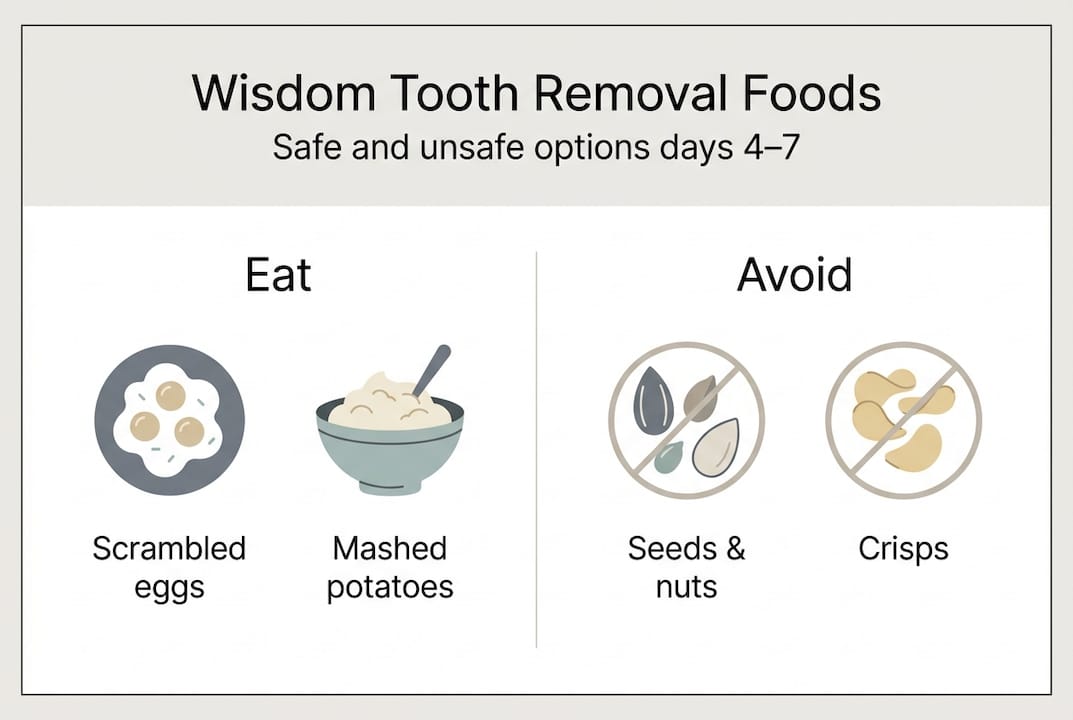
Foods to eat and avoid during days 4 to 7:
| Suitable foods | Foods to avoid |
|---|---|
| Scrambled eggs, soft pasta | Crunchy crisps, nuts, seeds |
| Mashed potato, soft fish | Chewy bread, tough meat |
| Yoghurt, soft fruit | Very hot or spicy dishes |
| Soup, porridge | Carbonated drinks, alcohol |
| Avocado, soft cheese | Popcorn, hard biscuits |
For nutrition during recovery, prioritise foods that are easy to chew, not too hot, and free from small particles that could lodge in the socket.
Complications and when to seek help
Most recoveries are straightforward, but it is important to know the difference between normal healing and a genuine complication. Dry socket is the most common issue, affecting 5 to 10% of patients, with higher rates in smokers and those who have had lower wisdom teeth removed. It typically presents between days three and five.
Signs of dry socket:
- Intense, throbbing pain that worsens rather than improves after day three
- A visible empty socket (no dark clot visible)
- Bad breath or a foul taste that does not resolve with rinsing
- Pain radiating towards the ear or jaw
Infection is less common, occurring in fewer than 1% of cases, but requires prompt treatment. Signs include a fever above 38°C, increasing swelling after day three, pus from the socket, and difficulty swallowing or opening your mouth.
NHS guidance states: Persistent or rising pain three days after surgery is not something to wait out. It requires prompt dental review to rule out dry socket or early infection. Contact your dentist rather than managing it at home with pain relief alone. Full NHS aftercare guidance is available online.
For a thorough breakdown of dry socket risks and solutions, our Fulham team has put together a dedicated patient resource.
What is normal and not a cause for concern:
- Mild oozing of blood on day one
- Swelling that peaks on day two or three then reduces
- Jaw stiffness for up to a week
- Slight bruising on the cheek or neck
- A small amount of discomfort when eating soft foods
Personalised support and dental follow-up in Fulham
Recovering well from wisdom tooth removal is not just about the first week. A follow-up appointment with your dentist confirms that healing is progressing correctly, identifies any late complications early, and gives you the opportunity to ask questions you may not have thought of immediately after surgery.
At Bespoke Dental Fulham, we offer personalised aftercare that goes beyond a standard check-up. Whether you need reassurance that your socket is healing as expected, support with dental hygiene therapy to keep the area clean during recovery, or you are thinking ahead to cosmetic treatments once your mouth has fully healed, our team is here to guide you. As your cosmetic dentist in Fulham, we combine clinical expertise with a calm, discreet environment so that every stage of your dental care feels supported and straightforward.
Get in touch to arrange your follow-up or post-operative consultation.
Frequently asked questions about wisdom tooth removal and its recovery
How long does it take to fully recover from wisdom tooth removal?
Full soft tissue healing takes 7 to 14 days for most adults, though many people feel significantly better by day seven. Bone healing beneath the surface continues for several weeks.
When can I eat normal foods after wisdom tooth extraction?
You can begin reintroducing more solid foods from day four if swelling and pain have eased, but avoid very hot, spicy, or chewy foods for at least a week. Soft and liquid foods are recommended for the first three days.
What are the warning signs of dry socket?
Persistent, worsening pain between days three and five, combined with bad breath or a foul taste, are the key indicators of dry socket and require urgent dental attention.
Is swelling normal after wisdom tooth removal?
Yes. Mild to moderate swelling is a normal part of healing and typically peaks by day three before gradually reducing. If swelling increases after day three, contact your dentist.