TL;DR:
- Following a dental emergency checklist helps you manage acute injuries effectively and improves treatment outcomes.
- Act quickly within 30 to 60 minutes for tooth re-implantation and have an emergency kit prepared in advance.
A dental emergency care checklist is a step-by-step guide that tells you exactly what to do in the first minutes and hours of a dental crisis. Dental emergencies range from knocked-out teeth to severe abscesses, and the actions you take in that window directly affect whether a tooth can be saved. The 30 to 60 minute window for re-implanting a knocked-out permanent tooth is one of the most time-critical facts in all of urgent dental care. This guide gives you a clear, practical emergency dental care checklist to follow at home, on the road, and before you reach a dentist in Fulham or London.
1. Immediate first aid steps during a dental emergency
The first ten minutes of a dental emergency matter more than most patients realise. Staying calm and following a clear sequence reduces damage, controls pain, and gives your dentist the best chance of a full repair.
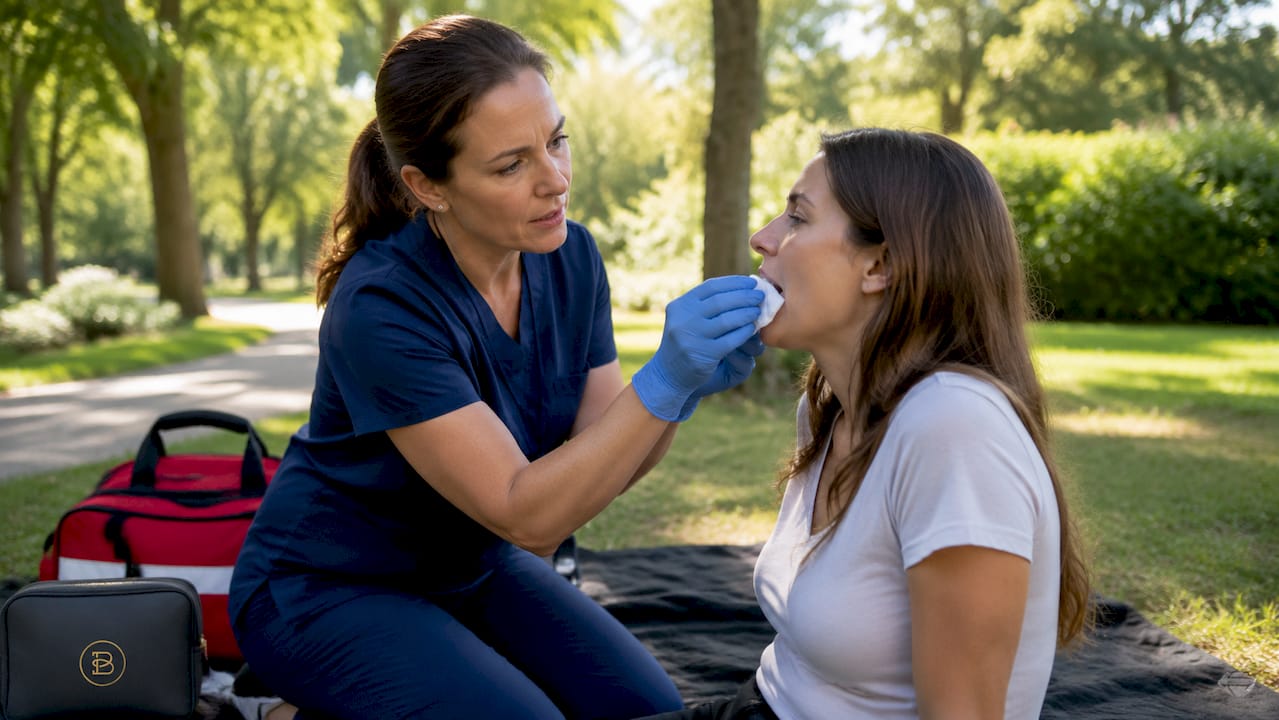
Step 1: Control bleeding first.
Press a folded piece of sterile gauze firmly against the wound. Hold it in place for 10–15 minutes without lifting to check. Releasing pressure too early restarts the clotting process and prolongs bleeding.
Step 2: Handle a knocked-out tooth correctly.
Pick the tooth up by the crown only. Never touch the root. The ligament cells attached to the root are critical for re-implantation success, and handling the root damages them. If you can, gently rinse the tooth with clean water and try to reinsert it into the socket. If reinsertion is not possible, place the tooth in cold milk immediately. Milk’s pH and osmotic balance preserve those ligament cells far better than water or a dry tissue.
Step 3: Manage pain safely.
Take ibuprofen at the recommended dose on the packet. Apply a cold compress to the outside of your cheek. Do not place aspirin directly on your gum or tooth. Aspirin applied topically causes chemical burns on soft tissue, which worsens pain and complicates treatment.
Step 4: Preserve any broken fragments.
Collect any pieces of a cracked or chipped tooth and store them in a small container with milk or saliva. Your dentist may be able to bond them back, or they will at least help with diagnosis.
Step 5: Rinse gently.
Warm salt water reduces bacteria and soothes irritated tissue. Use half a teaspoon of salt dissolved in a glass of warm water and swish for 30 seconds. Avoid vigorous rinsing, which can dislodge a clot.
Pro Tip: Staying calm lowers your heart rate, which slows bleeding and helps you think clearly. Take three slow breaths before you do anything else.
2. What to put in a dental emergency kit
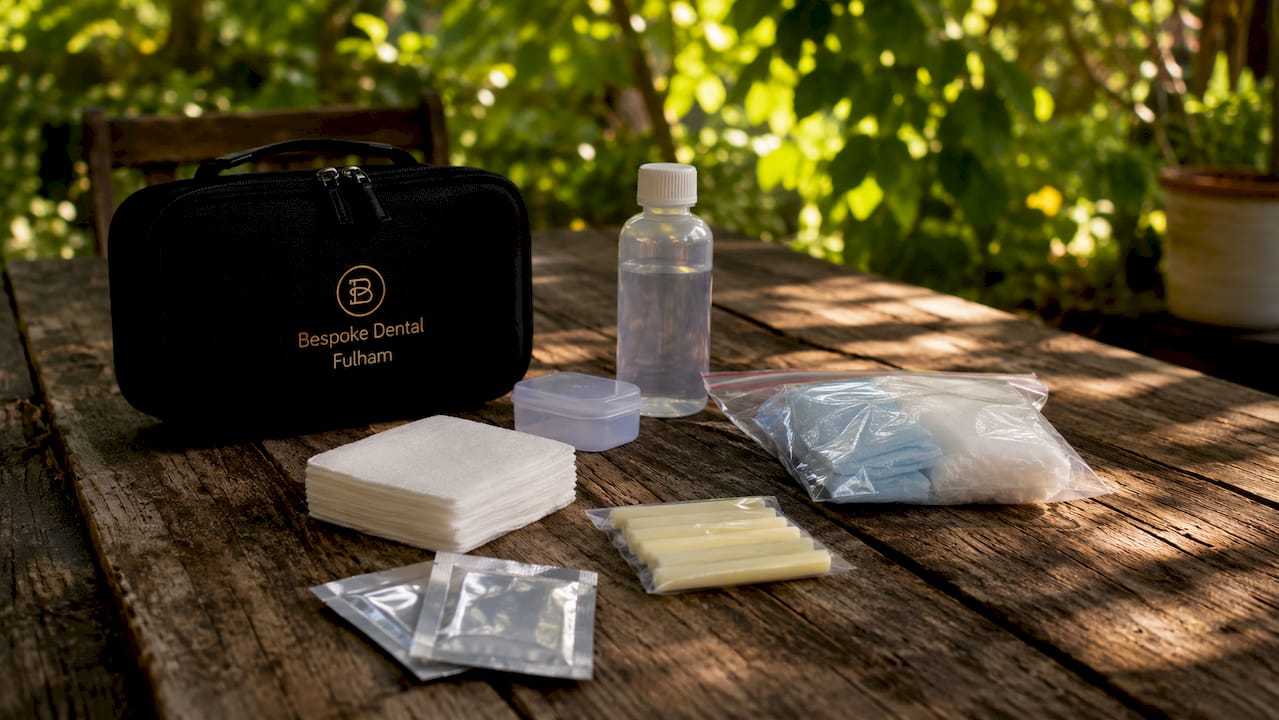
A prepared kit removes panic and supports quicker, calmer decision-making during a dental crisis. Assemble one for home and a smaller version for travel.
Must-have items:
- Sterile gauze pads (at least six)
- Dental wax to cover sharp edges from broken teeth or wires
- A small sealable container for storing a displaced tooth
- Cold compress or instant ice pack
- Ibuprofen (check expiry dates regularly)
- Saline solution or a carton of UHT milk
- Your dentist’s emergency contact number, written on a card
- A digital emergency ID listing your medical history and allergies
| Item | Must-have | Helpful addition |
|---|---|---|
| Sterile gauze pads | Yes | N/A |
| Dental wax | Yes | N/A |
| Sealable tooth container | Yes | N/A |
| Ibuprofen | Yes | N/A |
| Cold compress | Yes | N/A |
| Saline solution | Yes | N/A |
| Emergency contact card | Yes | N/A |
| Clove oil (temporary pain relief) | No | Yes |
| Temporary filling material | No | Yes |
| Small mirror and torch | No | Yes |
Pro Tip: Check your kit every six months. Ibuprofen and saline both expire, and an out-of-date kit gives you false confidence when you need real help.
3. How to assess severity and decide where to go
Not every dental emergency requires a hospital. Knowing the difference between a dental clinic situation and a hospital emergency room situation saves you time and gets you the right care faster.
Go to a hospital emergency room immediately if you have:
- Uncontrolled bleeding that does not slow after 15–20 minutes of firm pressure
- Difficulty breathing or swallowing
- Significant facial swelling that is spreading rapidly
- A suspected broken jaw or facial bone fracture
- Signs of a spreading infection such as high fever, confusion, or neck swelling
Hospital ERs stabilise life-threatening conditions but cannot perform definitive dental repairs. They will manage your airway and prescribe medication, then refer you to a dental practice for the actual treatment. Going to an ER for a severe toothache or a cracked filling wastes hours and leaves the dental problem unresolved.
Book a same-day emergency dental appointment for:
- A knocked-out permanent tooth (act within 30–60 minutes)
- Severe toothache that does not respond to ibuprofen
- A dental abscess with visible swelling or a bad taste in your mouth
- A broken tooth with exposed nerve or sharp edges
- A lost crown or filling causing significant pain
The 30 to 60 minute window for tooth re-implantation is the clearest example of why calling your dentist first is the right move. An emergency dental practice can act on this immediately. An ER cannot.
4. How to manage pain and swelling while you wait
Safe pain management at home keeps you comfortable and prevents you from making the situation worse before you reach professional care.
Follow these steps:
- Take ibuprofen 400–600 mg every 6 hours with food. Ibuprofen at this dose reduces both pain and inflammation, which is why it outperforms paracetamol alone for dental pain. If ibuprofen is contraindicated for you (for example, due to stomach ulcers or kidney conditions), take paracetamol instead.
- Apply a cold compress to the outside of your cheek for 10–20 minutes, then remove it for 10–20 minutes. Repeat this cycle. Continuous cold application can damage skin and tissue.
- Do not apply heat. Heat increases blood flow to the area and worsens swelling and throbbing.
- Avoid topical numbing gels containing benzocaine on broken or exposed tissue without dental advice.
- Elevate your head when resting. Using an extra pillow reduces blood pressure to the head and lowers the throbbing sensation significantly.
- Rinse with warm salt water every few hours to reduce bacteria around the affected area.
Pro Tip: If your pain escalates sharply, you develop a fever, or swelling spreads to your neck or eye area, stop managing at home and seek care immediately. These signs indicate a spreading infection.
Patients who delay seeking care hoping the pain will pass consistently end up with more complex and costly treatment. Prompt triage is always the safer choice.
Key takeaways
The single most important rule in any dental emergency is this: act within 60 minutes for a knocked-out tooth, and call your dentist before you consider an emergency room.
| Point | Details |
|---|---|
| Act within 60 minutes | Re-implantation of a knocked-out tooth succeeds best within the 30–60 minute window. |
| Store teeth in cold milk | Milk preserves root ligament cells better than water or a dry container. |
| Avoid topical aspirin | Placing aspirin on gums causes chemical burns and worsens the injury. |
| ERs treat life threats only | Hospital emergency rooms stabilise but cannot repair dental injuries; go to a dental clinic for dental care. |
| Prepare a kit in advance | A stocked emergency kit with gauze, dental wax, and contact numbers reduces panic and speeds up care. |
Amit’s view: preparation is the real first aid
The most common mistake I see patients make is waiting. They assume the pain will settle overnight, or that a cracked tooth can wait until Monday. By the time they arrive, what could have been a straightforward repair has become a root canal or an extraction. The 60-minute window for a knocked-out tooth is the starkest version of this, but the same principle applies across almost every dental emergency.
The second mistake is heading straight to an A&E department. I understand the instinct. It feels like the safest option. But ERs are not equipped to treat dental injuries. You will wait for hours, receive pain relief and antibiotics, and then still need to see a dentist. Calling an emergency dental practice first is nearly always faster and more effective.
What actually works is preparation. Keep a small kit at home. Write your dentist’s emergency number in your phone contacts right now, not when you are in pain at 11 PM. Know the difference between a dental clinic situation and a hospital situation before you need to make that call. Patients who come to Bespokedentalfulham with a clear account of what happened and what they did in the first few minutes consistently have better outcomes. That clarity comes from preparation, not luck.
— Amit
Dental emergencies in Fulham: how Bespokedentalfulham can help
Bespokedentalfulham provides private emergency dental care for patients across Fulham, Parsons Green, Hammersmith, Putney, and Chelsea. The clinic operates with the discretion and calm you need when something goes wrong unexpectedly.
Whether you have a knocked-out tooth, a severe abscess, or a broken crown, the team at Bespokedentalfulham is equipped to triage and treat on the same day. The clinic’s restorative dentistry options cover the full range of emergency repairs, from stabilisation through to long-term restoration. For immediate assistance, contact Bespokedentalfulham directly or book online. You can also reach the team via the private emergency dentist page for same-day appointments in SW6 and surrounding areas.
FAQ
What is a dental emergency care checklist?
A dental emergency care checklist is a structured list of immediate actions to take when a dental crisis occurs, covering first aid, pain management, and when to seek professional care.
How long do I have to save a knocked-out tooth?
A knocked-out permanent tooth must be re-implanted by a dentist within 30–60 minutes for the best chance of success. Success rates drop significantly after 60 minutes.
Should I go to A&E for a dental emergency?
Go to A&E only if you have uncontrolled bleeding after 20 minutes, difficulty breathing or swallowing, or a suspected jaw fracture. For most dental emergencies, an emergency dental clinic provides faster and more effective treatment.
What should I keep in a dental emergency kit?
A dental emergency kit should contain sterile gauze, dental wax, a sealable container, ibuprofen, a cold compress, saline solution, and your dentist’s emergency contact number.
Is ibuprofen safe for dental pain?
Ibuprofen at 400–600 mg every 6 hours is the recommended first-line pain relief for dental emergencies because it reduces both pain and inflammation. Use paracetamol instead if ibuprofen is contraindicated for you.