TL;DR:
- Composite bonding is a quick, reversible cosmetic dental treatment that preserves most of your natural enamel. It offers a lower-cost alternative to veneers with a lifespan of 3–7 years, requiring ongoing maintenance and professional polishing. It effectively corrects chipped, gapped, or stained teeth, especially when teeth whitening is done beforehand, making it suitable for minor to moderate aesthetic concerns.
Composite bonding is a cosmetic dental treatment where tooth-coloured resin is applied and sculpted directly onto your teeth to improve their appearance with minimal alteration of natural enamel. It is one of the most accessible entry points into cosmetic dentistry, completing in a single appointment of 30–90 minutes per tooth at a fraction of the cost of porcelain veneers. The procedure is considered fully reversible because it preserves 95–100% of your natural tooth structure. Patients in Fulham and London who want a faster, lower-commitment route to a better smile consistently find composite bonding worth serious consideration. Bespokedentalfulham offers this treatment as part of a wider cosmetic dentistry programme built around your individual smile goals.
Why choose composite bonding over other cosmetic options?
Composite bonding is defined clinically as a direct resin restoration applied to the outer surface of a tooth without the irreversible enamel removal required for veneers or crowns. That single distinction drives most of the treatment’s advantages. Clinicians follow a tissue-conservation hierarchy that places composite bonding as the first recommended option for minor corrections before escalating to more invasive procedures. This is not simply a cost consideration. It reflects a genuine clinical preference for preserving what you already have.
The reversibility of composite bonding matters more than most patients initially realise. If your aesthetic goals change, or if a more advanced treatment becomes appropriate later, your natural teeth remain largely intact. Porcelain veneers require permanent enamel reduction to accommodate the shell. That decision cannot be undone. Composite bonding gives you the ability to test cosmetic changes without committing to an irreversible procedure.
Cost is another clear advantage. Composite bonding costs significantly less per tooth than porcelain veneers, making it accessible for patients who want visible results without a large upfront investment. The one-appointment format also means less time away from work and no need for temporary restorations while a laboratory fabricates a permanent fixture.
How durable is composite bonding compared to other treatments?
Composite bonding lasts an average of 3–7 years, while porcelain veneers last 10–20 years. That gap is real and worth understanding before you commit. Veneers are made from ceramic, which is harder and more resistant to wear and staining. Composite resin is softer, which makes it easier to sculpt and repair but also more susceptible to chipping and surface degradation over time.
Several factors determine how long your bonding actually lasts. Teeth grinding, nail biting, and biting hard foods all accelerate wear. Lifestyle habits such as smoking, drinking coffee, tea, or red wine increase the rate of discolouration. The skill of the clinician applying the resin also plays a decisive role. Precise application and finishing during mechanical etching and sculpting determine whether the result looks natural or appears bulky and uneven.
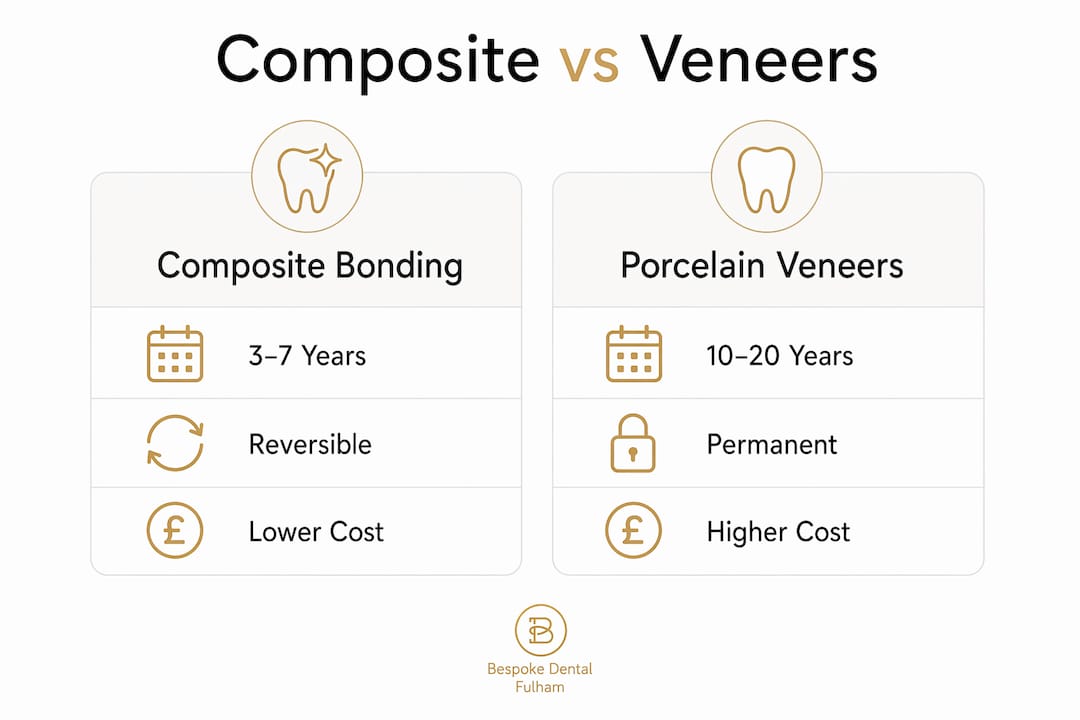
| Factor | Composite bonding | Porcelain veneers |
|---|---|---|
| Average lifespan | 3–7 years | 10–20 years |
| Enamel removal required | Minimal to none | Permanent reduction |
| Repairability | Easy, in-chair repair | Requires full replacement |
| Stain resistance | Moderate | High |
| Upfront cost | Lower | Significantly higher |
Pro Tip: Ask your dentist to check your bite before bonding. An uneven bite places excess pressure on bonded teeth and shortens their lifespan considerably.
Regular professional polishing every 6–12 months and full replacement every 5–7 years keeps composite bonding looking its best. Factor those maintenance visits into your long-term budget. The overall cost across a decade may be closer to veneers than the initial price suggests, though the lower entry point and reversibility still make bonding the right starting point for many patients.
What aesthetic improvements can composite bonding offer in Fulham and London?
Composite bonding addresses a wide range of cosmetic concerns that affect how your smile looks day to day. The resin is colour-matched to your existing teeth, sculpted by hand, and hardened with a curing light, giving your dentist precise control over the final shape and shade. The result, when done well, is indistinguishable from natural tooth structure.
Common issues that composite bonding corrects include:
- Chipped or cracked teeth where a small amount of resin rebuilds the missing portion
- Gaps between teeth that are closed by widening adjacent teeth with added resin
- Misshapen or uneven teeth that are reshaped to create a more balanced smile
- Surface stains that cannot be removed by whitening, covered with a thin layer of resin
- Short teeth that are lengthened to improve proportion and symmetry
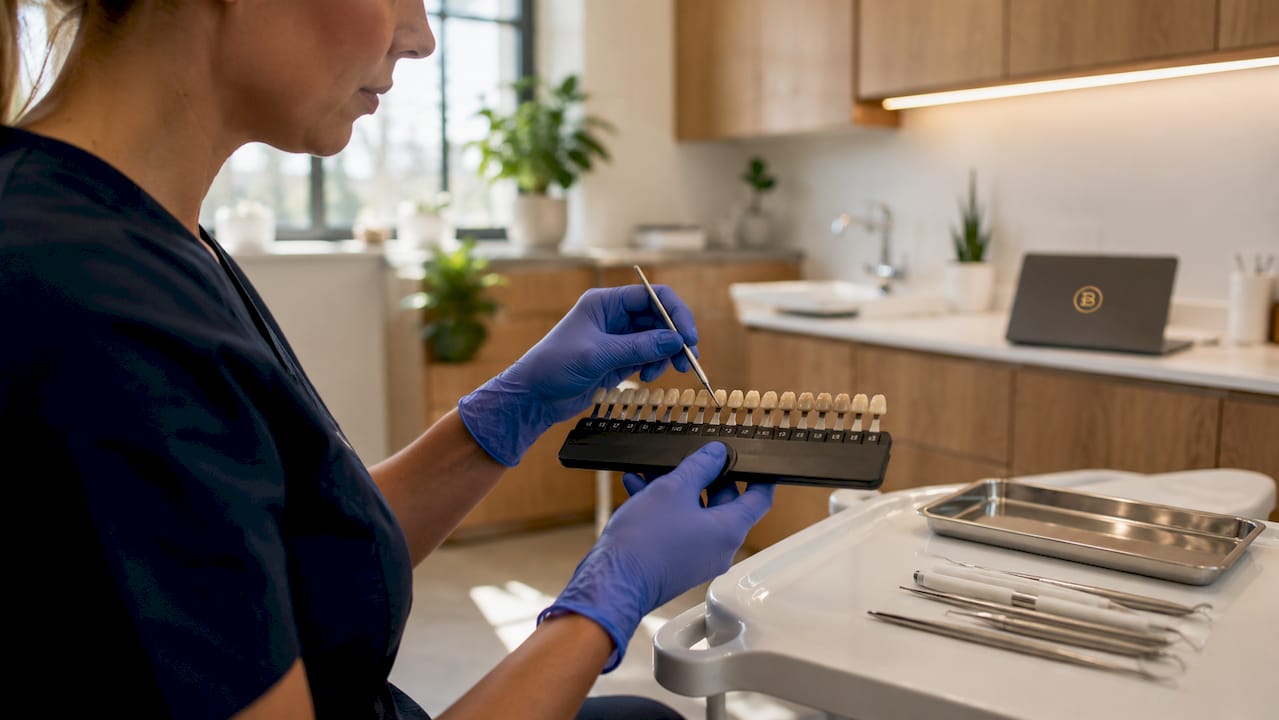
Shade selection is one of the most important steps in the process. Your dentist matches the resin to your natural tooth colour using a shade guide. This is why teeth whitening before bonding is strongly recommended. Composite resin cannot be whitened after it has cured. If you whiten your teeth first, the bonding is matched to your new, brighter shade rather than a darker baseline.
Pro Tip: Complete any teeth whitening at least two weeks before your bonding appointment. This allows your enamel to restabilise and gives your dentist an accurate shade to match.
Bespokedentalfulham uses digital smile design to plan composite bonding treatments, which means you can preview the expected outcome before any resin is applied. That level of planning reduces the risk of surprises and ensures the final result aligns with what you actually want. You can read more about the benefits of cosmetic dentistry and how treatments like bonding contribute to long-term confidence.
What should you know about maintenance and long-term care?
Composite bonding requires consistent care to maintain its appearance. The resin surface is slightly porous, which means it absorbs pigment from food and drink more readily than ceramic restorations. Composite stains 50–70% faster than ceramic over a three-year period. That is a significant difference if you drink coffee or tea daily.
A practical maintenance routine for composite bonding in London and Fulham looks like this:
- Brush twice daily with a non-abrasive toothpaste. Abrasive formulas scratch the resin surface and accelerate staining.
- Floss daily around bonded teeth to prevent gum inflammation, which can affect how the resin sits at the gum line.
- Attend professional polishing every 6–12 months. Your hygienist uses specific polishing pastes that restore surface smoothness without damaging the resin.
- Limit staining drinks such as coffee, tea, and red wine. When you do consume them, rinse with water immediately afterwards.
- Avoid biting hard objects including ice, pen lids, and fingernails. These habits chip resin faster than normal wear.
- Report any rough edges or sensitivity to your dentist promptly. Early repair is far simpler and less costly than replacing an entire bonded tooth.
Signs that your bonding needs attention include visible discolouration that polishing cannot resolve, a rough or uneven texture when you run your tongue across the surface, or a chip that has altered the tooth’s shape. These are not emergencies, but they do warrant a dental appointment within a few weeks. Bespokedentalfulham offers dental hygiene therapy in Parsons Green, which supports the long-term appearance of composite bonding through regular professional maintenance.
One advanced option worth knowing about is the hybrid approach. Placing porcelain veneers on prominent front teeth combined with composite bonding on lateral teeth balances durability and cost across the full smile. This technique suits patients who want the longevity of ceramic where it matters most, without paying for a full set of veneers. It is a conversation worth having during your consultation at Bespokedentalfulham.
Key takeaways
Composite bonding is the most conservative cosmetic dental option available, preserving nearly all natural tooth structure while delivering visible aesthetic improvements in a single appointment.
| Point | Details |
|---|---|
| Reversible and conservative | Composite bonding preserves 95–100% of enamel, unlike veneers which require permanent reduction. |
| Shorter lifespan than veneers | Bonding lasts 3–7 years on average; plan for professional polishing every 6–12 months. |
| Whitening must come first | Resin cannot be whitened after curing, so complete teeth whitening before your bonding appointment. |
| Staining is a real risk | Composite absorbs pigment significantly faster than ceramic; limit coffee, tea, and red wine. |
| Clinician skill is decisive | Precise etching and sculpting determine whether results look natural or uneven. |
My honest view on composite bonding as a first step
Patients often arrive at a cosmetic dentistry consultation expecting to be told they need veneers. The reality is that composite bonding resolves the vast majority of common cosmetic concerns without touching the underlying tooth in any meaningful way. That matters enormously from a clinical standpoint, and it should matter to you as a patient.
What I have observed is that composite bonding suits patients who are realistic about maintenance. It is not a permanent fix. It is a high-quality, accessible treatment that requires ongoing care and periodic replacement. Patients who understand that from the outset tend to be far more satisfied with their results than those who expect it to perform like a ceramic restoration indefinitely.
The consultation stage is where outcomes are won or lost. A thorough assessment of your bite, your lifestyle habits, and your aesthetic goals determines whether bonding is genuinely the right choice or whether a different approach would serve you better long-term. Bespokedentalfulham takes that assessment seriously. You can explore what composite bonding involves in detail before committing to anything.
My recommendation is straightforward. If you have minor to moderate cosmetic concerns and you value preserving your natural teeth, composite bonding is the right place to start. If your concerns are more extensive, or if you want a result that lasts closer to two decades, a conversation about porcelain veneers is worth having alongside the bonding discussion.
— Amit
Composite bonding at Bespokedentalfulham in Fulham
Bespokedentalfulham provides composite bonding treatments at its Fulham clinic, using digital smile design to plan your results before any resin is applied. The practice serves patients across Fulham, Parsons Green, Chelsea, Hammersmith, and Putney, offering a calm and private environment for cosmetic dental care.
Whether you are considering bonding for the first time or returning to refresh a previous treatment, the team at Bespokedentalfulham will assess your teeth, discuss your goals, and recommend the approach that fits your lifestyle and budget. Explore the full range of cosmetic dentistry benefits or book a consultation to discuss your options directly. You can also view composite bonding treatment details to understand what to expect at your appointment.
FAQ
How long does composite bonding last on average?
Composite bonding lasts 3–7 years on average with proper care. Regular professional polishing every 6–12 months and avoiding hard foods extend its lifespan.
Is composite bonding reversible?
Composite bonding is considered fully reversible because it requires little to no removal of natural tooth enamel. Your underlying tooth structure remains intact throughout the procedure.
Can composite bonding fix gaps and chips?
Composite bonding repairs chips, closes gaps, and reshapes uneven teeth by applying and sculpting tooth-coloured resin directly onto the affected area. Results are visible immediately after the appointment.
Should I whiten my teeth before composite bonding?
Teeth whitening before bonding is strongly recommended because composite resin cannot be whitened after it has cured. Whitening first allows the resin to be matched to your new, brighter shade.
How does composite bonding compare to veneers in terms of cost?
Composite bonding costs significantly less per tooth than porcelain veneers upfront. However, because bonding requires replacement every 5–7 years, the long-term costs over a decade are closer than the initial price difference suggests.