
TL;DR:
- Dental implants are titanium roots surgically placed into the jawbone to support permanent teeth.
- Their success depends on osseointegration, which stabilizes the implant through bone growth and fusion.
A dental implant is an artificial tooth root made of biocompatible titanium, placed surgically into the jawbone to support a permanent replacement tooth. Understanding how dental implants work helps you make a confident, informed decision before committing to treatment. The process involves several clinical stages, a biological healing phase called osseointegration, and a final crown fitting that restores both function and appearance. Patients in Fulham and across London are increasingly choosing implants over dentures because the results feel and behave like natural teeth.
What is the dental implant procedure, step by step?
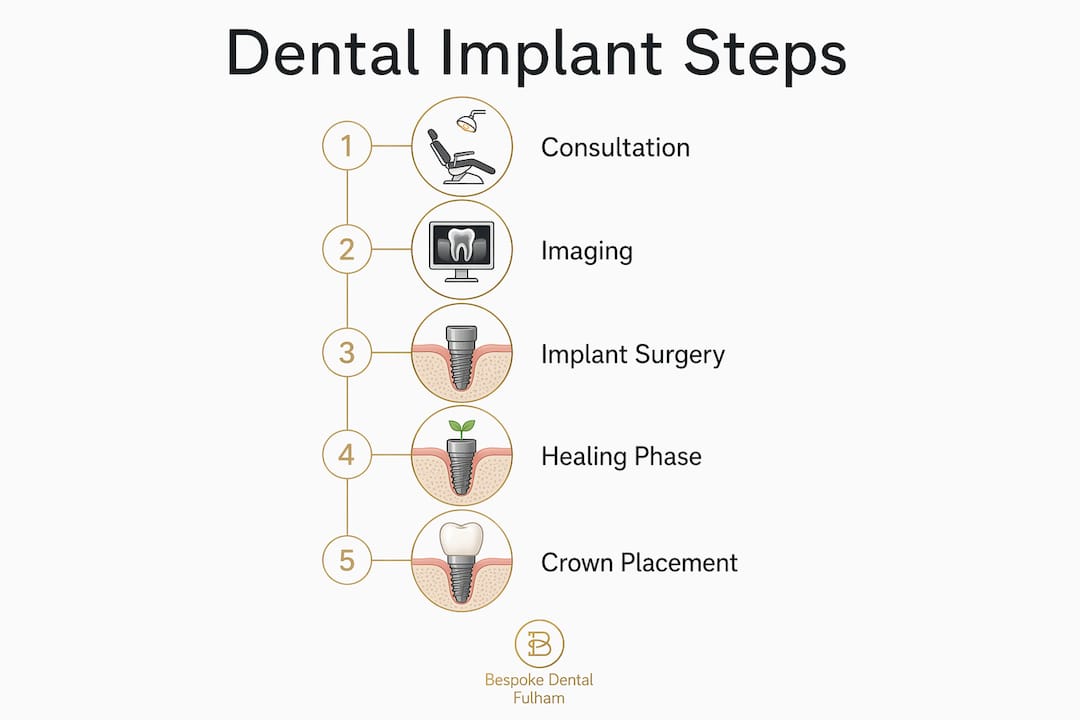
The dental implant procedure begins with a comprehensive oral examination. Your dentist takes X-rays and, in many cases, 3D scans to assess your jawbone volume, gum health, and overall oral condition. This diagnostic stage determines whether you are ready for surgery or need preparatory treatment first.
The surgical steps follow a clear sequence:
- Gum incision. The dentist makes a small cut in the gum to expose the jawbone beneath.
- Drilling the bone. A precise channel is created in the jawbone to receive the implant post.
- Implant placement. A titanium post is inserted into the jawbone as the new artificial root.
- Gum closure. The gum is stitched back over the implant while healing begins.
- Healing phase. Gums typically heal within 1–2 weeks. Full bone integration takes 3–6 months.
- Abutment fitting. Once the implant is stable, a small connector piece called an abutment is attached.
- Crown placement. A custom-made crown is fixed to the abutment, completing the restoration.
The full treatment timeline commonly spans 3–6 months from surgery to crown placement. That figure can extend considerably if preparatory procedures such as bone grafting or sinus surgery are required. Every patient’s timeline differs based on anatomy, healing rate, and overall health.
Pro Tip: Ask your dentist for a written treatment plan with estimated timescales at your first consultation. Knowing each stage in advance reduces anxiety and helps you plan around work or travel.
If your jawbone is too thin or shallow to hold an implant securely, bone grafts or sinus surgery may be needed before the implant can be placed. These preparatory steps add healing time but are often the difference between a successful outcome and a failed one. Your dentist will discuss whether you need them during the diagnostic phase.
How does osseointegration make implants stable?
Osseointegration is the biological process by which bone tissue grows directly onto and around the implant surface, locking it firmly in place. This is what separates implants from every other tooth replacement option. A denture rests on top of the gum. An implant becomes part of the bone itself.
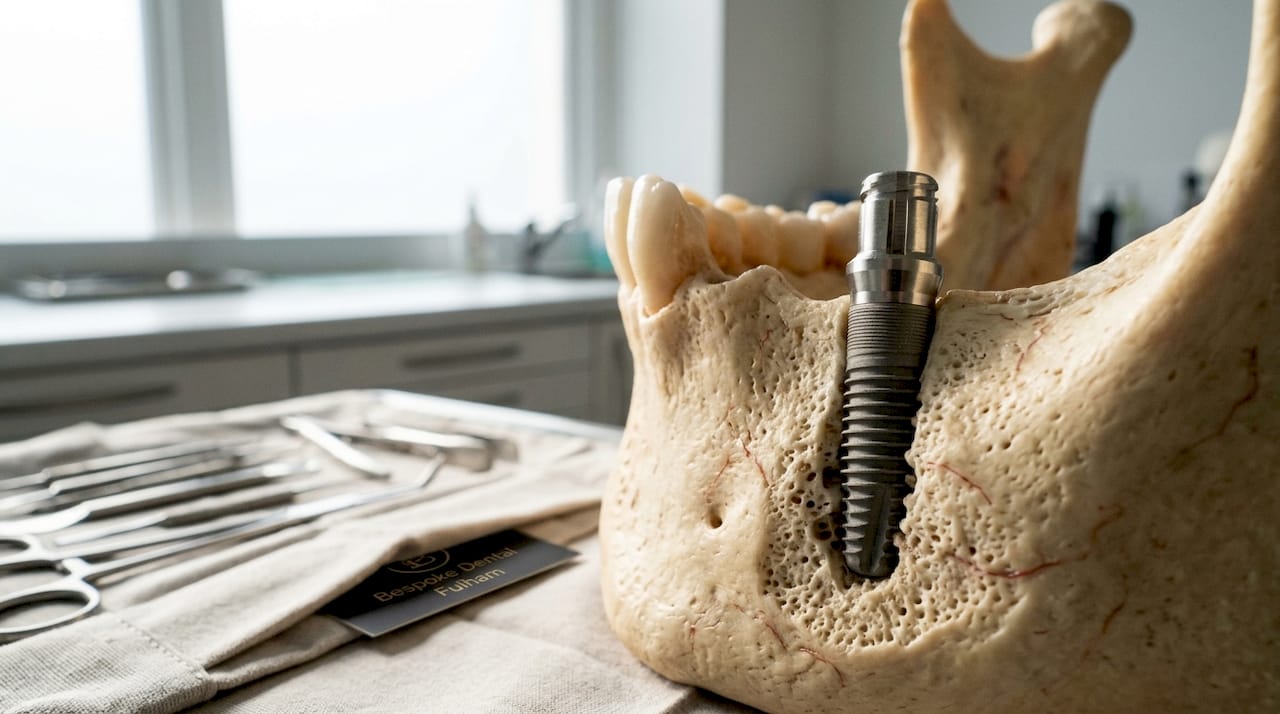
The process occurs in two phases. Primary stability is achieved immediately after surgery through the mechanical fit of the titanium post within the drilled channel. Secondary stability develops over the following weeks and months as bone cells remodel and fuse to the implant surface. This biological anchorage is what makes the implant capable of bearing the full load of a crown.
Timing the crown placement correctly depends entirely on secondary stability. Fitting a crown too early, before bone integration is complete, risks implant failure. Delayed placement protocols are often preferred precisely because they allow full healing before any load is applied. Individual factors such as bone density, age, and general health all influence how quickly osseointegration completes.
Pro Tip: Avoid smoking during the healing phase. Smoking restricts blood flow to the bone and is one of the most significant factors that can slow or disrupt osseointegration.
Benefits of dental implants vs dentures or bridges
Dental implants offer advantages that dentures and bridges cannot match in several key areas.
- Stability. Implants are fixed in the jawbone and do not shift during eating or speaking. Dentures can move, causing discomfort and affecting confidence.
- No decay. Implants do not decay like natural teeth. The titanium post and ceramic crown are not susceptible to cavities.
- Bone preservation. Chewing through an implant stimulates the jawbone, preventing the bone loss that typically follows tooth extraction. Dentures provide no such stimulation.
- Natural function. Implants restore chewing strength and speech quality to levels close to natural teeth.
- Longevity. With proper care, implants can last many years. Dentures and bridges typically require replacement or adjustment over time.
- Confidence. A fixed, natural-looking tooth improves self-confidence in ways a removable appliance rarely achieves.
| Feature | Dental implant | Denture |
|---|---|---|
| Fixed in place | Yes | No |
| Stimulates jawbone | Yes | No |
| Can decay | No | N/A (but gums can suffer) |
| Feels like natural tooth | Yes | Partial |
| Long-term durability | High | Moderate |
The dental implant process is highly individualised, which means the benefits you experience depend on your specific anatomy and health. Patients who are good candidates and who maintain their oral hygiene consistently tend to achieve the best long-term outcomes.
Are dental implants safe? Risks and how to reduce them
Dental implants are safe for the vast majority of patients, but like any surgical procedure, they carry risks that you should understand before proceeding.
- Infection. Bacteria can enter the surgical site during or after placement, leading to inflammation or abscess.
- Peri-implant mucositis. This is inflammation of the soft tissue around the implant. Mucositis affects up to one-third of patients and is the early, reversible stage of implant-related gum disease.
- Peri-implantitis. A more serious condition involving bone loss around the implant. Left untreated, it can lead to implant failure.
- Technical complications. Issues such as crown fracture or abutment loosening occur in a meaningful proportion of cases and require attention.
The 10-year implant survival rate exceeds 90%, which reflects a strong track record when patients are well-selected and well-maintained. That figure underlines why candidacy assessment and aftercare matter as much as the surgery itself.
A history of periodontal disease significantly raises the risk of implant failure. Patients who have lost teeth due to gum disease need careful monitoring and consistent supportive periodontal therapy after implant placement. When complications such as peri-implantitis do develop, antibiotic adjuncts like metronidazole and amoxicillin improve outcomes when used alongside surgical or non-surgical treatment. Good daily hygiene, regular professional cleaning, and prompt attention to any discomfort are the most effective ways to protect your implant long term.
What patient factors affect implant candidacy?
Not every patient is immediately ready for implant surgery. Two conditions are non-negotiable: healthy gums and adequate jawbone volume. If either is compromised, preparatory treatment is required before implants can be placed.
- Gum health. Active gum infection or untreated periodontal disease must be resolved first. Placing an implant into infected tissue dramatically increases failure risk.
- Bone volume. The jawbone must be dense and deep enough to anchor the titanium post securely. Insufficient bone volume is one of the most common reasons patients need additional procedures.
- Bone grafting. If the jawbone has shrunk following tooth loss, a graft uses bone material to rebuild volume before implant placement.
- Sinus surgery. In the upper jaw, the sinus cavity sometimes sits too close to the bone surface. A sinus lift procedure creates the space needed for a stable implant.
- Diagnostic imaging. 3D cone beam CT scans give your dentist an accurate picture of bone depth, nerve positions, and sinus anatomy before any surgery begins.
Bone grafts and sinus procedures require their own healing phases before the implant can be placed. This extends the overall treatment timeline but does not reduce the likelihood of a successful outcome when managed correctly.
Pro Tip: If you have been told in the past that you are not a candidate for implants due to bone loss, ask about grafting options. Advances in bone augmentation mean that many patients who were previously excluded can now proceed with treatment.
Your dentist will build a personalised treatment plan based on your diagnostics, medical history, and lifestyle. Realistic expectations from the outset make the multi-stage process far easier to navigate. You can read more about managing implants long term to understand what ongoing care looks like after treatment is complete.
Key takeaways
Dental implants work by fusing a titanium post to the jawbone through osseointegration, creating a permanent, bone-anchored foundation for a replacement tooth.
| Point | Details |
|---|---|
| Osseointegration takes time | Bone integration typically takes 3–6 months and must complete before a crown is fitted. |
| Gum and bone health are prerequisites | Active gum disease or insufficient bone must be treated before implant surgery can begin. |
| Ten-year survival exceeds 90% | Implants have a strong long-term track record, but maintenance and hygiene are essential to achieving it. |
| Periodontal history raises risk | Patients with a history of gum disease face a higher failure risk and need consistent supportive care. |
| Preparatory procedures extend timelines | Bone grafts and sinus lifts add healing phases but make implants possible for patients with bone loss. |
What I have learned from watching patients go through this process
Patients often arrive expecting implants to be a quick fix. The reality is that the treatment rewards patience more than almost anything else in dentistry. The biological process of osseointegration cannot be rushed, and the practices that try to shortcut it tend to produce the failure cases I hear about most often.
The single biggest predictor of long-term success I have observed is not the surgery itself. It is what happens in the years after. Patients who attend their hygiene appointments, who address early signs of gum inflammation promptly, and who do not smoke consistently achieve better outcomes. The supportive periodontal therapy that many patients view as optional is, in practice, what keeps the implant stable for decades.
I also think the fear of pain is often overstated. The surgical phase is performed under local anaesthetic, and most patients report that the discomfort in the days following is manageable with standard pain relief. The harder part is the waiting. Months of healing with a temporary solution in place tests patience. Knowing that in advance makes it easier.
If you are considering implants in Fulham or London, choose a practice that takes diagnostics seriously and gives you a clear, written timeline before any surgery begins. The quality of the planning phase tells you a great deal about the quality of the treatment you will receive.
— Amit
Dental implants at Bespokedentalfulham in Fulham
Bespokedentalfulham offers dental implants in Fulham with a thorough diagnostic process, personalised treatment plans, and clear timescales from the first consultation. The practice serves patients across Fulham, Parsons Green, Chelsea, Hammersmith, and Putney.
Every implant case at Bespokedentalfulham begins with detailed imaging and a full assessment of gum and bone health. Preparatory treatments, where needed, are managed in-house so your care remains consistent throughout. The team also provides guidance on restorative dentistry options if implants are not the right fit for your situation. To discuss your options and find out whether you are a candidate, contact Bespokedentalfulham to arrange a consultation.
FAQ
How long does the dental implant process take?
The dental implant process typically takes 3–6 months from surgery to final crown placement, though preparatory procedures such as bone grafting can extend this timeline further.
Does getting a dental implant hurt?
The surgical procedure is carried out under local anaesthetic, so you should not feel pain during placement. Some discomfort and swelling in the days following surgery is normal and manageable with standard pain relief.
How long do dental implants last?
Ten-year survival rates exceed 90% for dental implants. With consistent oral hygiene and regular professional maintenance, implants can remain functional for many years beyond that.
Who is not suitable for dental implants?
Patients with active gum disease, insufficient jawbone volume, or certain systemic health conditions may not be immediately suitable. Many of these issues can be addressed with preparatory treatment before implant placement proceeds.
What is the difference between an implant and a denture?
A dental implant is fixed permanently into the jawbone and stimulates bone to prevent loss, while a denture rests on the gum surface, can move during use, and provides no bone stimulation.