TL;DR:
- Composite bonding is a quick, minimally invasive cosmetic dental procedure that uses tooth-colored resin to reshape and improve smiles within an hour or two. It is ideal for minor to moderate concerns like chips, gaps, or discoloration and is reversible, making it a popular choice for natural-looking results. Proper maintenance and realistic expectations are essential for long-lasting, satisfactory outcomes.
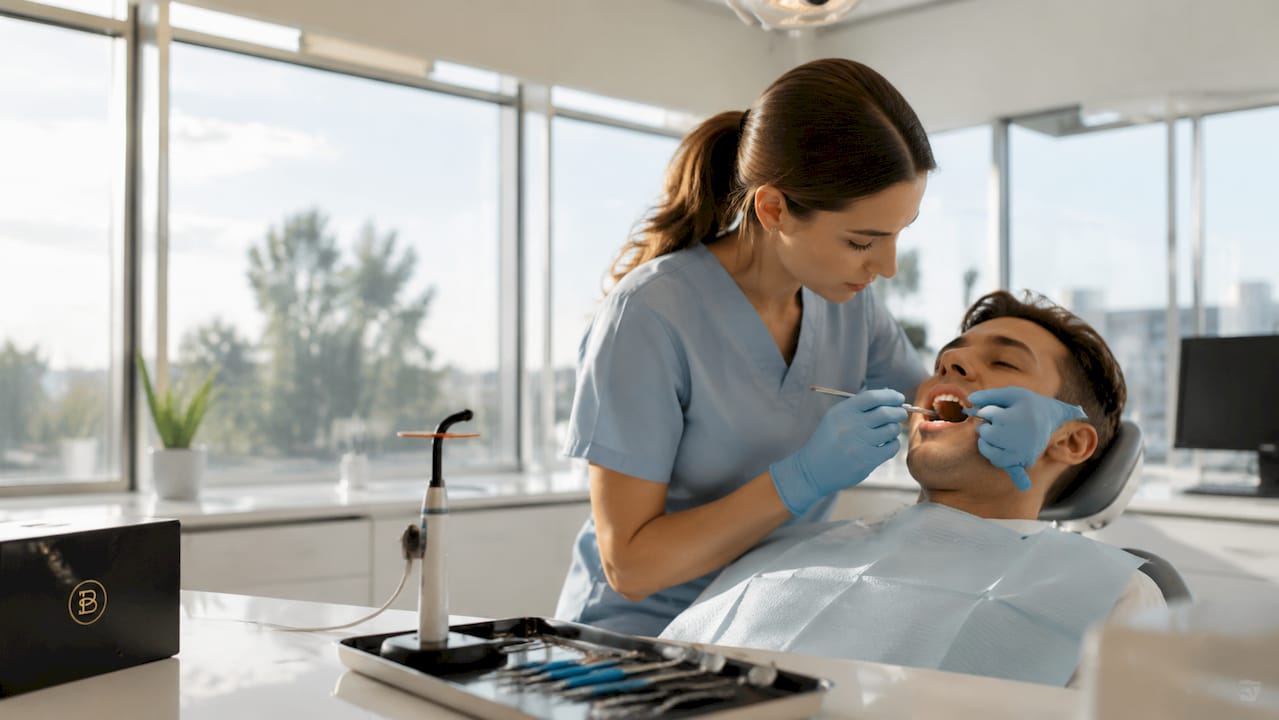
Composite bonding is a cosmetic dental procedure that applies tooth-coloured resin directly to the surface of your teeth, reshaping and restoring your smile with minimal preparation and no anaesthesia in most cases. In clinical terms, it is also called direct composite resin bonding, and it is one of the most requested treatments at private practices across Fulham and London. The procedure is completed in 30–60 minutes per tooth, which means many patients leave with a noticeably improved smile in a single visit. This guide to composite bonding covers the full process, who it suits, what it costs in terms of commitment, and how to make your results last.
What does the composite bonding process involve?
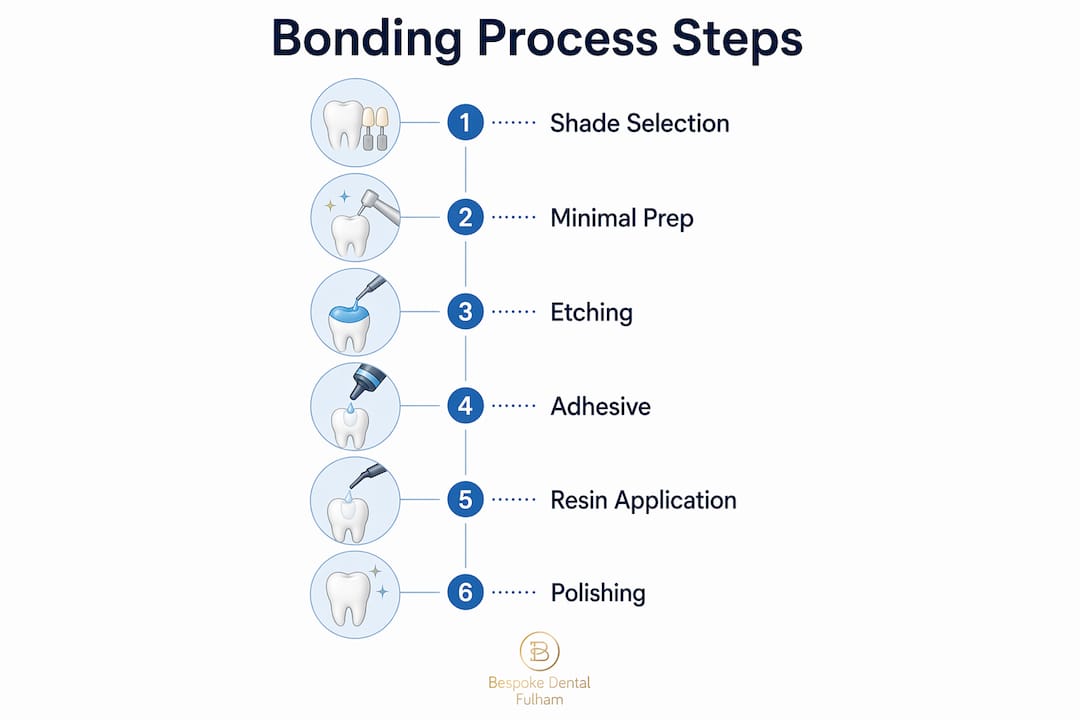
The composite bonding procedure follows six clinical steps: shade selection, minimal preparation, etching, adhesive application, resin layering with blue-light curing, and final polishing. Each step is straightforward, and most patients find the experience comfortable throughout.
Step-by-step: what happens at your appointment
| Step | What Happens |
|---|---|
| 1. Shade selection | Your dentist matches the resin colour to your natural teeth or your whitened shade |
| 2. Surface preparation | The tooth surface is lightly roughened; little to no enamel is removed |
| 3. Etching | A mild conditioning gel is applied to help the resin bond securely |
| 4. Adhesive application | A bonding agent is painted onto the tooth surface |
| 5. Resin layering and curing | Composite resin is applied in layers and hardened with a high-intensity blue light |
| 6. Contouring and polishing | The dentist sculpts and polishes the resin to a natural finish |
The entire appointment typically takes one to two hours for multiple teeth. Because anaesthesia is rarely required, you can drive yourself home and return to normal activities immediately.
One detail that surprises many patients is the importance of timing your teeth whitening correctly. Whitening must be completed two to four weeks before your bonding appointment because composite resin does not respond to bleaching agents. If you whiten after bonding, your natural teeth will lighten but the resin will not, creating a visible colour mismatch.
Pro Tip: If you are planning to whiten your teeth before bonding, book your whitening appointment at least four weeks in advance. This gives your enamel time to stabilise and allows your dentist to select the most accurate shade for your resin.
Who is a good candidate for composite bonding?
Composite bonding is best suited to adults with minor to moderate cosmetic concerns, including chipped teeth, small gaps, mild discolouration, uneven tooth shapes, and slight misalignment. It is a conservative treatment for aesthetic improvements, not a solution for significant structural damage or advanced dental disease.

When bonding works well
You are likely a good candidate if you have healthy gums, no active tooth decay, and realistic expectations about what resin can achieve. The treatment works particularly well for closing small gaps between front teeth, repairing chips on incisors, and evening out teeth that differ in length.
Composite bonding is not suitable for patients with severe structural damage, active gum disease, or heavy bruxism (teeth grinding). These conditions need to be addressed before any cosmetic work is considered. Patients who grind their teeth heavily are at higher risk of chipping the resin, and a night guard is often recommended after treatment.
How does bonding compare to veneers and crowns?
| Treatment | Invasiveness | Reversibility | Typical Cost Range | Lifespan |
|---|---|---|---|---|
| Composite bonding | Minimal | Reversible | Lower | 5–7 years |
| Porcelain veneers | Moderate (enamel removal) | Irreversible | Higher | 10–15 years |
| Crowns | High (significant tooth reduction) | Irreversible | Highest | 10–20 years |
Composite bonding offers a reversible alternative to veneers and crowns, with the clear advantage of preserving your natural tooth structure. For patients who want to trial a cosmetic change before committing to a more permanent option, bonding is often the most sensible starting point.
What are the benefits and limitations of composite bonding?
Composite bonding preserves more of your natural tooth than almost any other cosmetic procedure. Because little to no enamel is removed, the treatment is considered reversible, which is a significant advantage over porcelain veneers or crowns.
The honest pros and cons
Benefits:
- No enamel removal in most cases, preserving your natural tooth structure
- Immediate visible results, often in a single appointment
- More affordable than porcelain veneers or crowns
- Reversible, so you are not permanently committed to the change
- Repairs chips, gaps, and discolouration without surgery
Limitations:
- Resin is porous and more susceptible to staining than porcelain
- Less durable than veneers; typically lasts 5–7 years before touch-ups are needed
- Results depend heavily on the dentist’s sculpting skill
- Not suitable for patients with heavy grinding habits or significant structural issues
- Can add slight bulk to teeth if not precisely shaped
The final aesthetic depends heavily on the dentist’s skill in layering and sculpting. Nano-hybrid composite resins used in 2026 have improved both durability and natural translucency, but no material compensates for poor technique. This is why choosing an experienced cosmetic dentist matters as much as the material itself.
For complex cases, digital smile design or mock-ups are recommended before treatment begins. A mock-up lets you preview the result and flag any concerns before resin is applied to your teeth.
Pro Tip: Ask your dentist to show you before-and-after photographs of their own composite bonding cases, not stock images. The quality of their sculpting and shade matching will tell you far more than any brochure.
How do you care for composite bonding after treatment?
Composite bonding typically lasts between five and seven years with proper care. That lifespan is directly influenced by your oral hygiene, lifestyle habits, and how well you protect the resin from physical stress.
Here is a practical maintenance routine to follow after your bonding treatment:
- Brush twice daily with a soft-bristled toothbrush and a non-abrasive fluoride toothpaste. Abrasive pastes scratch the resin surface and accelerate staining.
- Floss daily to keep the margins of the bonded teeth clean and prevent decay forming at the edges of the resin.
- Attend a professional polish every 6–12 months. Regular professional polishing is critical because rough resin surfaces absorb pigments faster, leading to visible discolouration over time.
- Limit staining foods and drinks. Coffee, red wine, tea, and tomato-based sauces all contribute to resin staining. Rinsing your mouth with water after consuming them reduces the impact.
- Avoid smoking. Tobacco stains composite resin significantly faster than it stains natural enamel.
- Do not bite hard objects. Avoid using your bonded teeth to open packaging, bite nails, or chew ice. These habits cause chipping.
- Wear a night guard if you grind your teeth. Bruxism causes premature bonding failure, and a custom night guard is one of the most effective ways to protect your investment.
- Book a review appointment annually. Your dentist can spot early wear or staining and carry out minor touch-ups before the problem worsens.
You can also explore smile enhancement options that complement bonding, such as teeth whitening, to keep your overall result looking fresh year on year.
Key takeaways
Composite bonding delivers immediate, reversible cosmetic improvements with minimal tooth preparation, but long-term success depends on skilled application and consistent patient maintenance.
| Point | Details |
|---|---|
| Procedure is quick and comfortable | Most bonding appointments take one to two hours with no anaesthesia required. |
| Whiten teeth before bonding | Complete whitening two to four weeks prior so shade matching is accurate. |
| Best for minor cosmetic concerns | Bonding suits chips, gaps, and discolouration but not severe structural damage. |
| Lifespan is 5–7 years | Regular polishing and avoiding staining habits extend the life of your resin. |
| Clinician skill is critical | Choose a dentist with a strong cosmetic portfolio; technique determines the result. |
Composite bonding in fulham: what i have observed over the years
Composite bonding is one of the most satisfying treatments to deliver, and also one of the most misunderstood. Patients often arrive expecting it to solve problems it was never designed for, and that gap between expectation and reality is where most disappointments occur.
What I have found is that the consultation matters more than the appointment itself. When a patient understands that resin is a skilled craft rather than a quick fix, they engage differently. They ask better questions, they commit to aftercare, and they are far more satisfied with the outcome. Long-term success depends on patient commitment to maintenance and realistic expectations about material limitations.
The other thing worth saying plainly: not every dentist offering composite bonding has the same level of artistry. In Fulham and across London, the demand for cosmetic dentistry has grown significantly, and so has the number of practitioners offering it. The material is only as good as the hands shaping it. I always encourage patients to look at real case photographs and ask direct questions about a dentist’s training and experience in cosmetic work before committing.
Bonding is a genuinely excellent option for the right candidate. It is conservative, reversible, and when done well, the results are natural and lasting. The key is going in with clear information and a dentist you trust.
— Amit
Explore composite bonding at Bespokedentalfulham
Bespokedentalfulham is a private cosmetic dental practice in Fulham, London, offering composite bonding alongside a full range of cosmetic dentistry treatments tailored to your individual smile. Every treatment plan begins with a thorough consultation, using digital smile design to map your result before any resin is applied.
Whether you are in Fulham, Parsons Green, Chelsea, Putney, or Hammersmith, Bespokedentalfulham provides Harley Street standard care in a calm, discreet environment. The practice works with patients at every stage, from initial shade planning through to long-term maintenance. If you are ready to find out whether composite bonding is right for you, book a consultation with the team at Bespokedentalfulham and take the first step towards a smile you feel confident about.
FAQ
How long does composite bonding last?
Composite bonding typically lasts 5–7 years with good oral hygiene and regular professional polishing. Lifestyle factors such as smoking, coffee consumption, and teeth grinding can shorten this lifespan.
Does composite bonding damage your teeth?
The procedure involves minimal to no enamel removal and is considered one of the most conservative cosmetic treatments available. Because it is reversible, it does not permanently alter your tooth structure in the way veneers or crowns do.
Can i whiten my teeth after composite bonding?
Composite resin does not respond to bleaching agents, so whitening must be done before bonding, ideally two to four weeks prior. Whitening after treatment will lighten your natural teeth but leave the resin unchanged, creating a colour mismatch.
Is composite bonding suitable if i grind my teeth?
Heavy bruxism increases the risk of chipping the resin, making bonding less predictable without protection. A custom night guard is strongly recommended post-treatment to protect the restoration and extend its lifespan.
How much does composite bonding cost in fulham?
Costs vary depending on the number of teeth treated and the complexity of the case. Bespokedentalfulham offers personalised treatment plans with transparent pricing; booking a consultation is the most reliable way to get an accurate quote for your specific needs.